

As the Thanksgiving season is upon us, it is time to consciously think about things we are grateful for. Sure, we all go through the list of family, friends, a place to live, a job, food to eat, etc. Now, before you jump down my neck and say, how can you be grateful for a global crisis that, according to Worldometer, has now affected over 250,000,000 people and has caused, along with other comorbidities, 5,000,000 plus deaths?”, let me explain.

In a few short months, we will be two years into what started out as “two weeks to flatten the curve”. Sometimes it is hard to wrap my head around the fact that two years have nearly passed and that I will have been living in Poland for two years and have received temporary residency. My original plan, although I should probably say “my original thought” as I didn’t really have a solid plan, was to spend just over a year in Poland.

Then I wanted to return to Bali and my Balinese family for a special ceremony that was planned at the temple in Peliatan. After a few months in Bali, possibly move on to a WorkAway in India, Kenya, or Tanzania and then consider a return to Poland. A mere six weeks after I arrived in Poland, the world stopped turning.

As the pandemic progressed, information from the State Department in the USA, encouraged American citizens abroad to return home. Having a job and a flat, I chose to stay in Warsaw. A choice in no way I regret and am thankful for. Henry Rollins once said, “a great way to learn about your country is to leave it.” Looking at my country, it seemed a bit chaotic. Since this is somewhat of a gratitude post, I’m not going to address that here. Other than working remotely, my life in Warsaw was copacetic. Although, it was becoming obvious that “two weeks to flatten the curve” wasn’t happening.
Today, I started a one-on-one English lesson with a new student. She asked me to “tell her my story”. I’m sure she had no idea what she was getting herself into. I finally ended my story explaining that because of the pandemic, I am still in Poland and have agreed to another school year and I have residency until 2024. I guess she is a glutton for punishment, she then asked me to tell her my feelings about Warsaw and life in Poland. Wait a minute, I’m supposed to be the teacher here, but her question made me think. I didn’t need to think about how I felt about life in Poland, but it made me realize how much I came to appreciate Poland because of or maybe despite the pandemic. Without further ado, reasons I am grateful for the pandemic.
Having visited Warsaw once before in 2014, I knew it would be a great home base for travel throughout Europe. I pictured weekends in Paris, visiting family and friends in Germany, seeing Erwin in Norway, heading off to Finland or Sweden to see the Northern Lights, and picking up some new stamps in my passport along the way. Of course, those plans were shattered when the pandemic hit, and Poland closed its borders. I had a choice to sit at home or go out and explore my city. Although many things were closed, I started walking around my neighborhood.
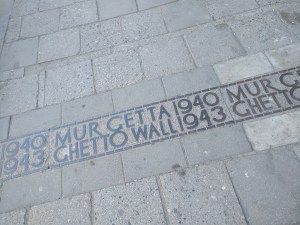
This led to the discovery of remnants of the Mur Ghetto or Ghetto Wall. The memorials show the outline of the former ghetto which in 1940 had a total length of about 18km. There is a line on the sidewalk or street reading “mur getta”. I learned that if you can read the words straight on, you are outside the ghetto and if they appear upside down, you are inside the ghetto. Finding these memorials, I became curious as to what I didn’t know about Poland and WWII. As I researched, I discovered more and more places I wanted to visit not only in Warsaw but all of Poland.
Not usually being one for historical fiction, I was suddenly drawn to novels about Poland and WWII. With the pandemic in full swing, I had plenty of time to up my reading habit. Books like, “The Lilac Girls”, “The Zookeeper’s Wife”, “The Rabbit Girls”, and “The Book of Lost Names” piqued my interest in other places in Warsaw and other cities across Poland.
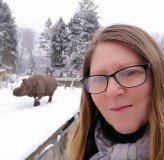
Although I love zoos and often visit them, after reading “The Zookeeper’s Wife” and learning how Jan and Antonina Zabinski began smuggling Jews and hiding them in empty cages and even in their villa, I knew my visit to the Warsaw Zoo would have me see it in a different light. “The Lilac Girls” introduced me to Lublin, Poland, and the State Museum at Majdanek.
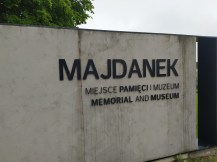
I had never heard of the Majdanek Concentration Camp and Lublin was only just over 2 hours by train from Warsaw. It was an easy day trip and one spring day I caught the train and because of a book, I visited a place I may never have known about.
Walking my neighborhood, I found out I was a couple of blocks away from the Warsaw Uprising Museum. The Warsaw Uprising broke out on Tuesday, August 1, 1944, at 17:00 PM. The interactive museum is difficult to take in during just one visit. Also near me is the Polin Museum. The Museum is a modern institution of culture – “it is a historical museum which presents the 1000 years of Jewish life in the Polish lands.” Again, too much to wrap your head around during just one visit. I live in the Wola District of Warsaw.
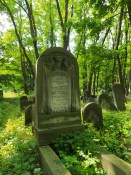
As I walked around my neighborhood, I noticed more and more markers on the street, signs on walls of buildings, and free-standing monuments. With so much history of Jewish Poland right in my neighborhood, I also spent time wandering around the Jewish Cemetery which is just a few tram stops from my house.
The city had me intrigued and I started t look for unique things to do and see. That’s how I discovered the Neon Museum and the Pinball Museum. Places I probably wouldn’t have discovered were it not for the pandemic situation. I also visited the Vodka Museum and the Stacja Muzeum (Train Museum). While visiting the Stacja Muzeum, I learned of a narrow-gauge rail museum in a nearby city. As restrictions around the country began to be eased, I started taking short day trips from Warsaw. One was to the city of Sochaczew to the Narrow-Gauge Railway Museum which also offered a short train ride to the Kampinos Forest and a cookout. I didn’t know Poland had lavender fields and one day found myself on a train to the city of Żyrardów. From there I took an Uber to a Lawenda pod Skowronkami and came home with bouquets of fresh-picked lavender. In Warsaw I was enjoying the many parks, wandering around Old Town, and life near the Vistula River.


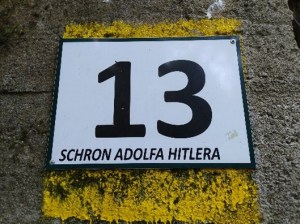
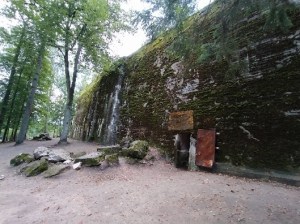
As summer was ending, I decided to take more than just day trips. My first adventure took me to the city of Kętrzyn which was the city nearest to Gierłoż. What caught my interest in Gierłoż? By this time I had been in Poland for over 6 months, I was hungry for more and more information especially related to WWII. As I was scrolling Facebook one day, I came across information about Hitler’s “Wolf’s Lair” or “Wilczy Szaniec”. Hitler’s abandoned eastern front military headquarters during WWII and site of an assassination attempt is an eerie reminder of the atrocities of the Nazi regime. Located in Gierłoż forest, I discovered I could stay on the grounds in a renovated WWII bunker and explore the grounds. I spent a day and a half wandering the grounds where Hitler spent more than 800 days during the war.
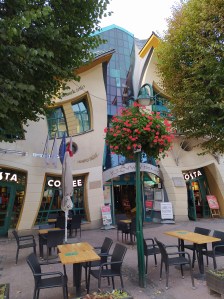
Come October, I decided to spend a few days at the Polish seaside on the Baltic Sea. I visited the tri-cities of Gdansk, Sopot, and Gdynia with a side trip by train to Hel Peninsula which is a 35-kilometer-long sand bar peninsula separating the Bay of Puck from the Baltic Sea. At the end of the Peninsula is the town of Hel. From Hel, I took a ferry back to Gdynia. The tri-cities are connected to each other by an intercity train which makes going back and forth quite simple. While in Gdansk I went to Westerplatte which was the site of the first clash between Poland and Germany thus the beginning of WWII. In Sopot, I discovered the longest wooden pier in Europe and the famous “crooked house”. Because of the pandemic, I was working remotely so it was great being able to travel and work at the same time.


The end of November brought thoughts of Christmas as Warsaw started to light up for the holidays. I took a late afternoon trip to Wilanów and the Garden of Lights. Wilanów is home to the Wilanów Palace often called the Polish Versailles and was the second home to various kings. I toured the Palace and by the time I finished the gardens were lit with thousands of lights and many displays. Old Town in Warsaw was brightly decorated and a great place to stroll while sipping a warm cup of grzane wino or mulled wine.

As December rolled in I decided to spend Christmas with friends, and we headed to the Tatra Mountains and the city of Zakopane. It was perfect as we were hiking the mountain on Christmas morning and light snow began falling. Christmas evening I took a sleigh ride around the city and to the base of the mountains at nightfall in that lightly falling snow. It was magical.
After Christmas, the pandemic restrictions tightened up a bit. Between that and the cold weather, I spent the first 3 months of the year mostly working and enjoying my city. As soon as the weather broke and restrictions were lifted, I was ready to see more of this country I was now calling home. Through my English classes and one of our lessons, I learned that many people in Poland make a Pilgrimage to the city of Częstochowa. The city is known for the famous Pauline Monastery of Jasna Góra, which is the home of the Black Madonna painting, a shrine to the Virgin Mary. Every year, millions of pilgrims from all over the world come to Częstochowa to see it.
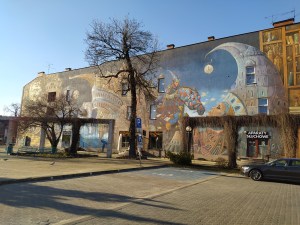
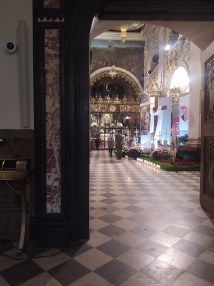 I decided to pay a visit to Częstochowa and see the Black Madonna over Easter weekend. Probably not one of my brightest decisions being there were still some restrictions and Poland being a very religious country, most everything was closed the entire weekend. No matter, I made the best of it by walking around the Old Town which had some amazing sculptures and eating kebabs, pizza, and McDonald’s as those were about the only restaurants open. I also visited the Jasna Góra twice. The Black Madonna is only available for viewing during certain hours, but I did manage to get in to see it. I was also able to be there for a part of Good Friday services. The other thing about Częstochowa was the beautiful building murals. My main goal was to see the Black Madonna at the Jasna Góra and I accomplished that task.
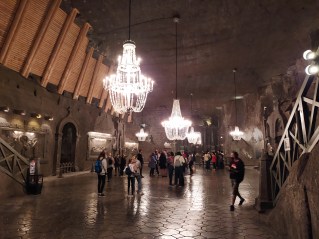
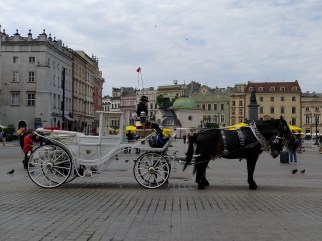
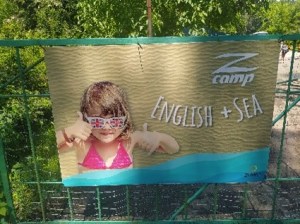
The first weekend in June I headed for Kraków. Kraków is home to the company I work for here in Poland, English Wizards. I had a checklist of things I wanted to accomplish while in town. I wanted to meet up with the people who had hired me (I was in China when I applied and everything was done by Skype), hang out in the Old Town, wander the streets of the Jewish Quarter, visit Auschwitz, see Wawel Castle, and go to the Wieliczka Salt Mine. A lot to pack into a long weekend, but I’m happy to report that all items got ticked. I spent the first evening bar hopping in the Kazimierz District with my fellow wizards and eating late night/early morning zapiekanki (Polish Pizza) at the Okrąglak. My hotel was in Old Town, so I had plenty of opportunities to wander the streets and eat and drink at the cafes. Making a visit to Auschwitz is an experience I will never forget. The Wieliczka Salt Mine was fascinating and walking around the Jewish Quarter in the Kazimierz district was very educational. I ended my long weekend with a BBQ at the English Wizard headquarters and got to meet many of my co-workers. Three hours by train and I was back in Warsaw. June flew by and before I knew it, it was time for my first trip out of Poland in 16 months. I was off to spend the summer in Bulgaria at Z-Camp, a youth sports and language camp on the Black Sea.
How can I be thankful for a global pandemic? I’m grateful for the opportunities it forced me to take. Don’t get me wrong, it’s heart-wrenching when I think about friends and family who have suffered and even died due to the pandemic. The divisions it has caused between friends and family are sad. Yes, the big picture of the last nearly 2 years is often bleak, jobs and businesses were lost. I am one of the fortunate ones who was able to work more because of the situation. I also decided to take advantage of the city and country where I chose to stay during this crisis. I know I saw more of Warsaw and Poland than I would have if the world hadn’t stopped turning and there is a good chance I wouldn’t even be in Poland right now. I am grateful that my eyes have been opened to a beautiful country that I knew so little about. I am more understanding of their horrific history, appreciative of their culture and traditions, grateful to my students who I now call friends, and in awe of the beautiful country, I am currently calling home. I challenge everyone during this season of Thanksgiving to look back and find something to be grateful for.
Thank you, Poland for making me feel like one of your own.
Credit for feature photo to Tomeyk_Krakow

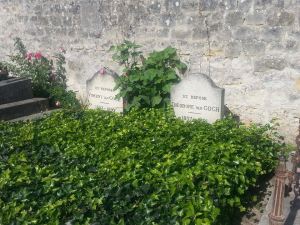
 Suffering from severe depression and poverty which led to his suicide at age 37, Vincent Willem van Gogh (1853 – 1890) posthumously became one of the most famous and influential figures in art history. A Dutch post-impressionist painter, he created more than 2000 works in the last decade of his life, most of which date during his last two years.



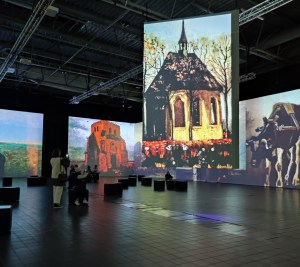
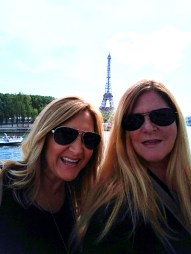
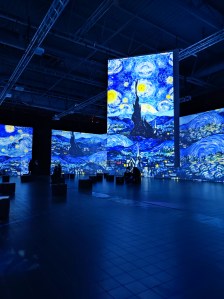 So I cleared my thoughts, found a seat ( there were fewer than 20 people in the room), and got ready to be immersed. The images were amazing although I felt like I was watching versus being one with them. The music was, meh. It just didn’t move me or draw me to the stories in the paintings. The show lasted 30 minutes and I didn’t hear Don’t Let Me Be Misunderstood, which was one of my favorites from the Paris show. Did I miss it? I wanted to sit through it again to see if I was just being a Paris snob. In all honesty, after two viewings, I just didn’t think it was as good. Underwhelmed (is that a word), I took advantage of the beautiful weather and walked a bit before catching a bus to Old Town. I say underwhelmed because I wasn’t disappointed. It was, after all, a beautiful display of many of Van Gogh’s life works. I still encourage everyone to take advantage of the opportunity if you can. What I am disappointed in is what they are charging for tickets in the USA, but that’s all I’m going to say about that subject.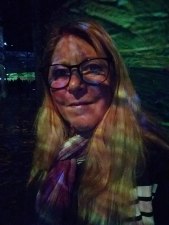











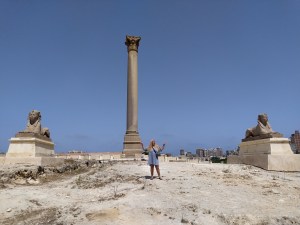


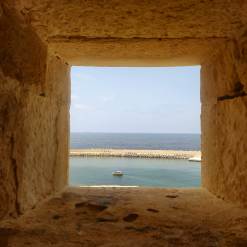
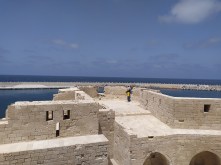







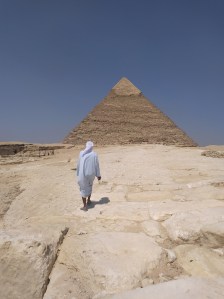
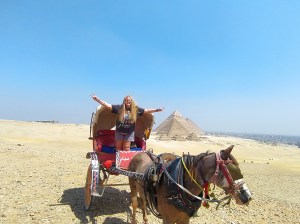
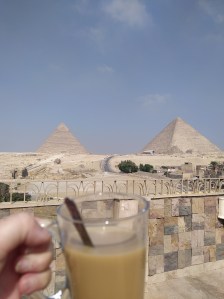 I am currently sitting at my guesthouse in Giza, Egypt sipping my morning coffee and staring at the Giza Pyramid Complex. On the Giza Plateau sit the Pyramids of Giza and the Great Sphinx. Three pyramids dominate the landscape and each one was built as the final resting place for a king from the 4th Dynasty also known as the “Golden Age” of the Old Kingdom. The 4th Dynasty lasted from 2613-2494 BC. It was a time of peace and prosperity.






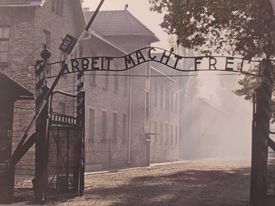
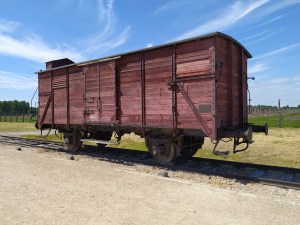
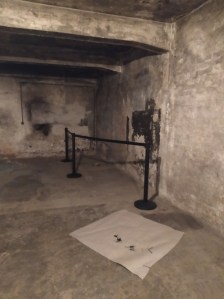
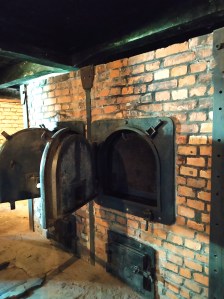
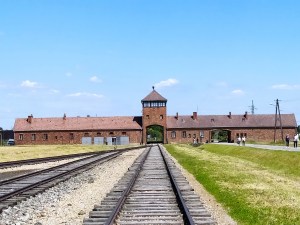
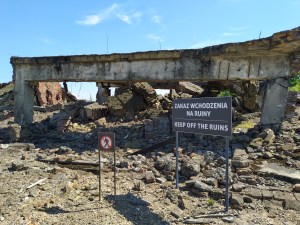
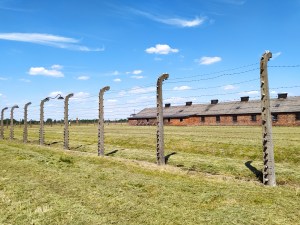
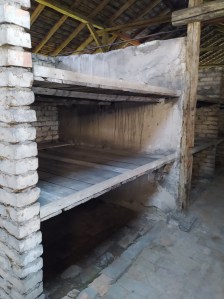
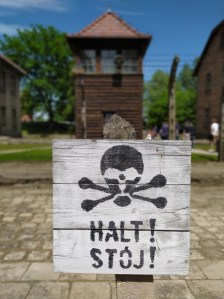 Since arriving in Poland in February of 2020, I have visited Auschwitz I, Auschwitz-Birkenau, and Majdanek. Although, I will dedicate this post solely to Auschwitz I and Auschwitz Birkenau and address Majdanek in a future post.
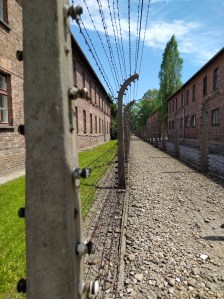 prepare you for the reality of coming face to face with the entrance to Auschwitz I with the inscription Arbeit macht frei (work will make you free). The guide, with his gentle, soft voice and sad undertone led us solemnly through the gate, and then we stopped at the rear of a building, the camp kitchen. This, he told us, was where the camp orchestra played. Nice touch, right?!…prisoners playing music is the first thing you see/hear upon coming to camp…NOT. Of course, there was a more sinister use of the music which was played as the inmates left camp in the early morning and returned in the late evening from their labor. As one inmate stated, “the coordination of the marching labor commandos to the inexorable rhythm of the music, which many inmates sensed only subliminally because of exhaustion and apathy.” Another prisoner said, “we often returned from the field with a comrade’s corpse in our arms and had to march to the beat of the music with our left leg.” The music was also played during public punishments and executions as a demonstration of unlimited SS power. However, another prisoner, Franz Danimann, said that the Leonore Overture from Beethoven’s Fidelio which was performed by the official band during roll call in the summer of 1943, strengthened his will to survive.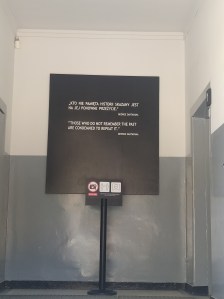
 Next, you walk into a room, and behind that glass wall are pairs of children’s shoes…not just 10 or 20 pairs but 100s or 1000s…then comes the room filled with the shoes of adults. 110,000 pairs of shoes were found after the camp was liberated. You see a glass wall behind which are some of the 88 pounds of eyeglasses left behind. Then there are the 246 prayer shawls and the 12,000 pots and pans brought to the camp by people who thought they would be resettled. Finally, behind a glass wall, the 100s of empty canisters of Zyklon B. Zyklon B was the trade name of a cyanide-based pesticide invented in Germany in the early 1920s. It consisted of hydrogen cyanide, as well as a cautionary eye irritant. Our guide told us 1 canister contained enough pellets to kill 1000 people. Imagine…this is just one building at one camp.

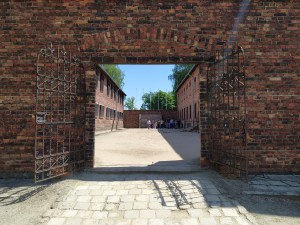
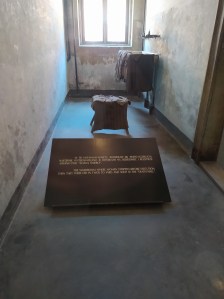
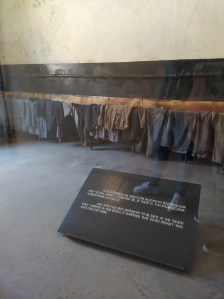 with no fresh air, and standing cells which held 4 prisoners for 3 to 10 days with only room for them to stand. The first trials of mass killing of people with Zyklon B were held in the basement. Finally, exiting the building you walk past the death wall.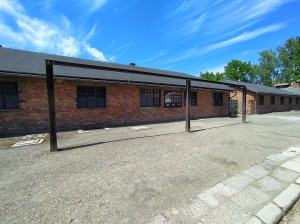



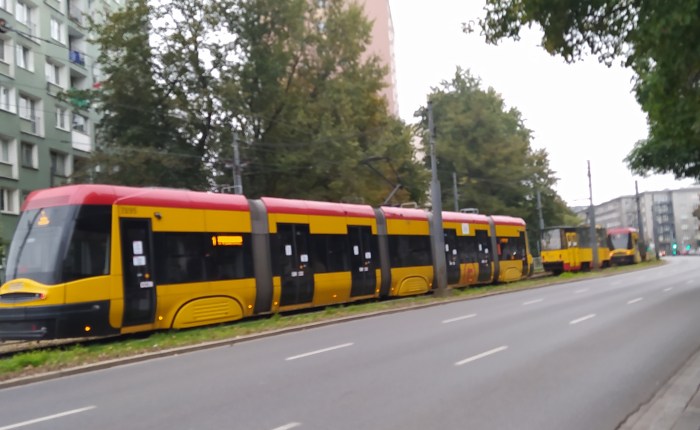
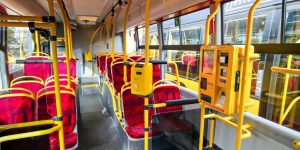

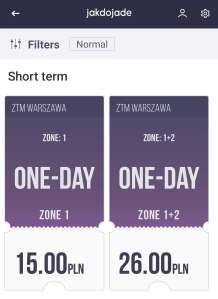
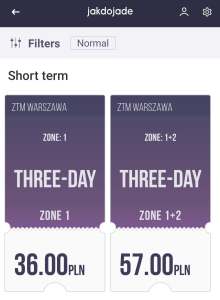
 Jakdojade is a public transportation app that provides detailed directions and transport options for most cities in Poland. I have used the free version for almost a year and a half and haven’t felt the need to upgrade to the paid version. The paid version has no ads. So, how do you use it? Since it is a mobile app, you will need an Android,
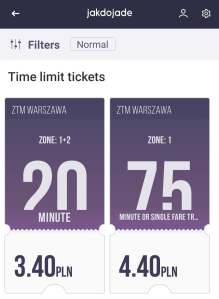
 Windows or iOS smartphone and an active data connection. After downloading the app, you will need to create a profile and set up a payment method(s). There are options to put funds in a wallet, use BLIK (through my local bank), google pay, or add a card. I have all 4 options set up. Now let’s go somewhere….
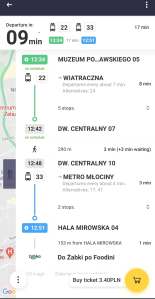
 You can choose the current location or physically enter a starting point. Then enter where you want to go. There is also an option to choose from on the map. After putting in the starting and ending points there are some other options available. You can change the time if you are looking for a future departure or if you prefer a certain mode (bus, tram, metro or train) you can select those now.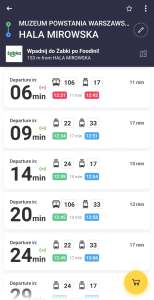











 Down the Rabbit Hole