The day began with a trip into town to order the benches for the school under the tree. Along the way, we passed out biscuits to the curious young faces that greeted us in the dusty settlement. Their smiles and excitement were infectious, and it was impossible not to smile back.


From there, it was mostly a day of travel as we continued toward Archer’s Post. The journey included yet another mountain crossing, breathtaking views, and the usual wildlife traffic jams that have become a normal part of traveling in Kenya.

As we crossed a dry riverbed, we came upon two young girls digging into the sand. At first glance it seemed unusual, but Sammy explained they were searching for water beneath the riverbed. During the dry season, water often continues to flow underground long after the surface has dried up. By digging down through the sand, people can access water for drinking, cooking, washing, and livestock. Wildlife also depends on these hidden water sources. Elephants, in particular, are known to dig their own wells in dry riverbeds using their trunks and feet, uncovering water that can then be used by other animals as well.
Late that afternoon, we encountered another obstacle. A rainstorm higher up in the mountains had triggered a small flash flood, blocking our route. Positioned at the base of the mountain, we watched as muddy water rushed downhill and poured over a bridge, bringing traffic in both directions to a standstill.


Soon, local authorities arrived to assess the situation, relying heavily on the knowledge of local residents who had also been delayed by the flood. These men knew the mountain, understood how the water behaved, and no one was going to attempt a crossing until it was deemed safe.
Dusk arrived quickly. After nearly two hours of waiting, the first vehicle cautiously attempted the crossing in the darkness. We were about the third vehicle to make our way through the floodwaters and continue down the road.
About twenty minutes later, I needed a bio break. Granton pulled the vehicle over, and as I climbed out, Sammy immediately instructed me not to wander away from the vehicle.
“I’m just going behind the car,” I replied.
“No,” he said. “Stay as close to the side of the vehicle as possible.”
Considering I trust Sammy and Granton with my life, I followed instructions, took care of business beside the vehicle, and quickly climbed back inside.
A few minutes later, I understood exactly why they had been so adamant.
Out of the darkness, a large elephant emerged and crossed directly in front of us before disappearing into the forest on the other side of the road.

Between the floodwaters and the unexpected elephant encounter, I had experienced more than enough excitement for one day. As we continued toward Archer’s Post under the African night sky, I was more than happy to leave the adventures of day three behind us.
We arrived in Archer’s Post just after dark, checked into our rooms, and then headed out to a local club for a nightcap and something to eat. It was there that I met Rosie, someone who would unexpectedly play a role in my next journey to Samburu.
We called it an early evening, knowing an early morning game drive awaited us.


After a hearty breakfast, we loaded up and made our way to Samburu National Reserve.


Nestled along the banks of the Ewaso Ng’iro River in northern Kenya, Samburu National Reserve protects roughly 165 square kilometers (64 square miles) of semi-arid wilderness. Unlike the greener parks farther south, Samburu’s landscape is defined by acacia woodlands, rocky outcrops, open scrubland, and the iconic doum palms that line the river. The Ewaso Ng’iro is the lifeblood of the reserve, drawing wildlife from miles around, especially during the dry season. It is one of Kenya’s most distinctive ecosystems and home to several species found primarily in the country’s northern rangelands.

The previous day’s rains and flooding turned out to be a blessing. The landscape seemed refreshed, and the wildlife was incredibly active. We happened to arrive just as families of elephants were making their way toward the Ewaso Ng’iro River. Watching these gentle giants file quietly toward the water was mesmerizing. Being a Sunday morning, I couldn’t help but think of Alison Krauss singing Down to the River to Pray. The song stayed with me as the elephants disappeared down the riverbank.

The morning only got better. We were fortunate enough to see all of the Samburu Special Five—the Grevy’s zebra, reticulated giraffe, Somali ostrich, gerenuk, and Beisa oryx. These remarkable animals have adapted to the harsh, semi-arid conditions of northern Kenya and are rarely found together anywhere else in the country. Spotting all five during a single game drive felt like winning the wildlife lottery.

Another feature of Samburu quickly became one of my favorites: the doum palms. Unlike most palm trees, the doum palm branches into multiple trunks, creating an unmistakable silhouette against the African sky. Growing along rivers and seasonal waterways, they provide shade, food, and nesting sites for birds and other wildlife. They are one of the defining features of Samburu’s landscape, and somehow they make the reserve feel different from every other place I’ve visited in Kenya.
After an incredibly rewarding game drive, we left the reserve and visited a nearby Samburu community.

The Samburu are semi-nomadic pastoralists whose lives revolve around their cattle, goats, sheep, and camels. Livestock are far more than a source of income; they represent wealth, status, tradition, and survival. Because grazing conditions change throughout the year, families may relocate several times, building temporary villages that can be dismantled and rebuilt wherever fresh pasture can be found.
Each village, or manyatta, is surrounded by a thorn-fence enclosure known as a boma. Every evening the livestock are brought inside the boma, where thick walls of acacia thorns help protect them from predators such as lions, leopards, and hyenas. Since a family’s wealth often walks on four legs, keeping the animals safe through the night is one of the community’s highest priorities.

Their homes are simple but remarkably practical. Built from branches woven together and sealed with mud, grass, and cow dung, the huts provide shelter from both the heat of the day and the cool desert nights. Inside, comfort takes a back seat to function. Beds are typically made from stretched animal hides, while bundled branches or carved wooden headrests serve as pillows. Life here is built around necessity, and very little is wasted.
One of the men demonstrated how they traditionally make fire without matches. Using two pieces of wood and plenty of patience, he rapidly spun one against the other until a tiny ember appeared. A few careful breaths, a handful of dry tinder, and within moments there was fire. Watching such an ancient skill performed so effortlessly was a reminder that some knowledge has been passed from one generation to the next for centuries.


Before we left, several of the men invited me to play Mancala, one of the oldest strategy games in the world. The long wooden board, carved with rows of small holes, was filled with stones that were moved according to a set of rules that looked deceptively simple. They patiently explained the game and demonstrated a few rounds, but I never quite got the hang of it. Judging by their laughter and smiles, they enjoyed watching me try just as much as I enjoyed learning.
As the afternoon came to an end, we said our goodbyes and climbed back into the vehicle. It had been one of those days that perfectly captured why I love traveling. Not just because of the wildlife or the spectacular scenery, but because of the people willing to share a small piece of their lives, their traditions, and their culture with a stranger from halfway around the world.


On our way back to Nanyuki, we stopped in Isiolo for lunch. Often referred to as the “Gateway to Northern Kenya,” Isiolo sits at the crossroads of northern Kenya, where traders and travelers have passed through for centuries. Today it is a predominantly Muslim town, home to communities including the Borana, Somali, Samburu, Turkana, and Meru. The call to prayer drifting through town, the bustling markets, and the mix of cultures give Isiolo a character unlike anywhere else I’d visited in Kenya.

For lunch, we had pilau, a fragrant rice dish cooked with spices such as cumin, cardamom, cinnamon, cloves, and black pepper. The meal immediately brought back memories of Poland, where my Azerbaijani friend Zaka’s mother once spent an afternoon teaching me how to prepare what she called plov. While the names vary from country to country, the dishes share the same roots, having spread across trade routes that connected Asia, the Middle East, and East Africa centuries ago. Sitting in a small restaurant in Isiolo enjoying Kenyan pilau, I found myself thinking back to that day in Poland. Once again, I was reminded that food has a remarkable way of connecting people and places separated by thousands of miles.
From Isiolo, it was tarmac the rest of the way back to Nanyuki. As the kilometers slipped by, I found myself replaying the last few days. The flooded roads, the children digging for water, elephants crossing in the dark, the Samburu and Turkana communities, and the wildlife that had made the journey so memorable.
It had been a trip filled with unexpected moments, many of which could never have been planned. Those are often the experiences that stay with me the longest.
Back in Nanyuki, life quickly returned to normal, but northern Kenya had given me a deeper appreciation for a part of the country that many travelers never see. I had left with a phone full of photographs, but more importantly, with a better understanding of the people, the landscapes, and the realities of life beyond the places most visitors ever reach.



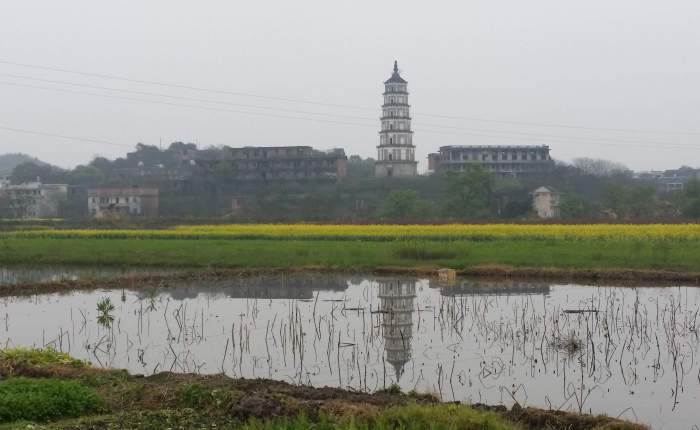
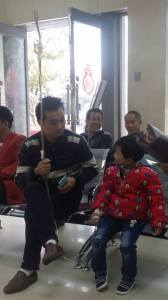
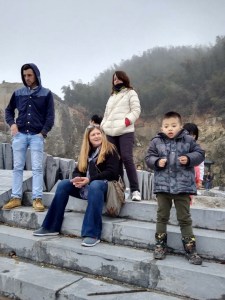
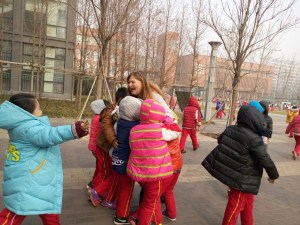 When it came time to leave Xiashan, it didn’t feel like just leaving a place. It felt like leaving a piece of myself behind. I hadn’t realized how much it had become home until that moment. It wasn’t just the people or the place. It was who I had become there. The laughter, the late-night hot pots, the impromptu concerts, and the everyday magic of life there had settled into the corners of my heart. “Only in China,” I thought, as we gathered one last time beneath strings of colored lights and a haze of nostalgia with voices rising in celebration and farewell. I didn’t know it then, but that night marked the beginning of my education in the art of leaving. Learning to say goodbye without truly letting go.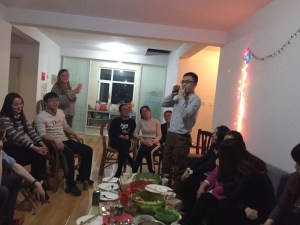


















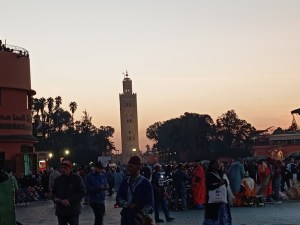
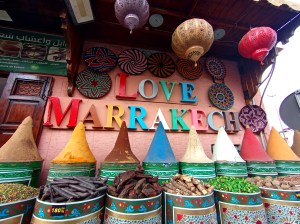
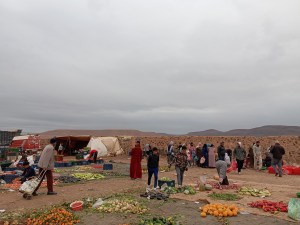
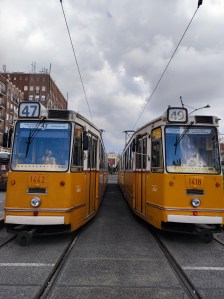
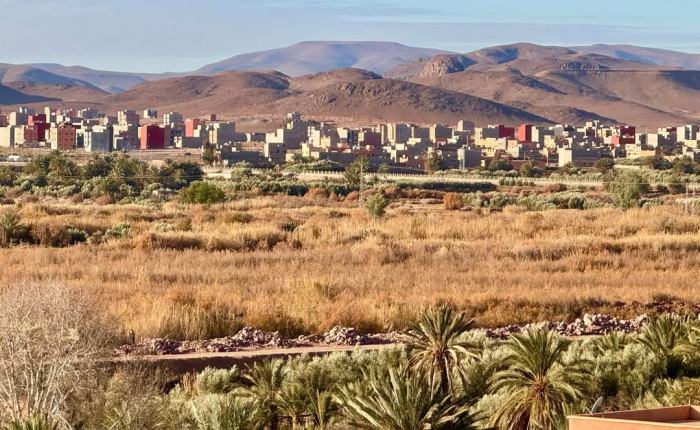
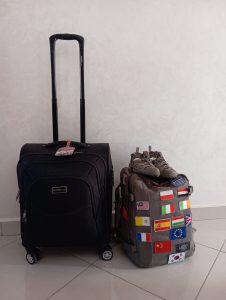
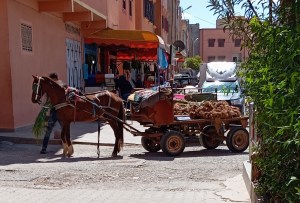
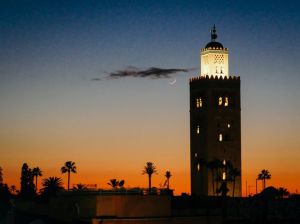
 By the time I landed in Poland, February 3, 2020, I had already lived through years of goodbyes – each one leaving its own ache. Cities blurred into each other, friendships formed fast and ended faster, and I had become practiced in the art of leaving. I thought I knew how to keep things temporary. How wrong I was. China was meant to be 6 months and turned into four years. Poland was meant to be just another stop – Eighteen months, maybe less. But something unexpected happened. I stayed almost five years. Life there unfolded gently. Life in Poland was easy: trams ran on time, quiet cafes where hours slipped by, twenty minutes to the airport and I could be anywhere in Europe in under three hours, and those Friday night deep conversations with people who knew me in a way only time allows. I had roots, rhythms and a sense of belonging I hadn’t planned to find. And then, suddenly it was mid-December 2024, I was in Marrakech, Morocco…a land of heat and dust, where nothing moved quietly. While Poland had been calm and predictable, Morocco pulsed with noise, color, and movement…exhilarating, disorienting, yet comfortably familiar. I had been here before, yet each moment felt newly alive, as if the country were reintroducing itself with every step.