I Used to Think I Knew the World
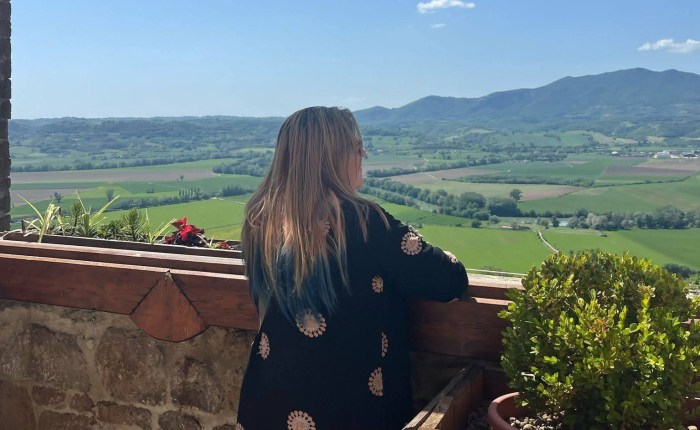
Not in an arrogant way. At least I don’t think so. I was curious about the world from a very young age. I read about it. I watched documentaries. I studied history and geography. I paid attention to what was happening beyond my own little corner of Ohio.
And eventually, I started traveling.
Then I started living in the places I had once only read about. I thought the more of the world I saw, the more I would understand it. Instead, somewhere along the way, something unexpected happened. The more of the world I saw, the less certain I became that I understood it.
I had ideas about what poverty looked like. What wealth looked like. What made a country safe or dangerous. What China would be like. What Europe would be like. Africa would be like. What it meant to be successful. Even what it meant to have a good life.
Some of those ideas weren’t entirely wrong. They just weren’t nearly complete. Because countries aren’t headlines. Cultures aren’t documentaries. And people certainly aren’t the labels we give them.
I’ve sat with people who had very little materially and never once thought of themselves as poor. I’ve met people whose lives looked completely foreign to mine and discovered that we worried about many of the same things, laughed at the same ridiculous things and wanted many of the same things for the people we loved.
I’ve learned that sometimes the people you expect to teach you the most don’t, while someone you meet completely by accident changes the way you see something forever.
And sometimes you think you know someone before you’ve ever met them.
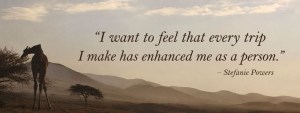
I certainly thought I knew who Stefanie Powers was.
I’d admired her for most of my life. To the outside world, she’s a successful Hollywood actor, a star of stage and screen, a singer, and an icon, really. That’s the Stefanie Powers I knew from a distance.
Then I sat down with her in Kenya.
For several hours we talked about wildlife, conservation, travel, places we’d both been, people we’d encountered and the changes we’ve watched happening in the world.
But much of what I discovered that day wasn’t about Stefanie Powers the actor at all. It was about the work that has been such an important part of her life for decades.
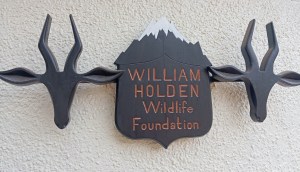
Following the death of her longtime partner William Holden in 1981, Stefanie established the William Holden Wildlife Foundation to continue his commitment to conservation in Africa. Today, its work centers on something I’ve come to believe strongly in myself: education.
At the William Holden Wildlife Education Center near Nanyuki, conservation isn’t presented simply as protecting animals. It’s about understanding the relationship between people, wildlife and the environment, and finding practical, sustainable ways for all of them to coexist. Its work reaches beyond the Education Center into rural schools and communities, teaching everything from biodiversity and habitat conservation to sustainable farming and alternatives to practices that damage the environment.
Walking around the Foundation with Stefanie gave me a very different perspective on work she has devoted much of her life to. Her passion came through naturally in our conversation.
She talked about what she knew, listened to what I had to say, told stories and asked questions. We talked about our travels and the places we’d both seen change over the years. Somewhere during those hours, I stopped thinking about the famous woman sitting across from me. I was simply talking with a remarkably down-to-earth woman who cared deeply about the planet and had spent decades doing something about it.
And once again, the person I thought I knew from afar became much more interesting when I actually met her.
Maybe that’s one of the greatest gifts travel has given me. It has made it harder to put people into boxes. It has also made it harder to put cultures and communities into boxes.
What Does It Mean to Be Wealthy?
We tend to measure wealth in things we can count.
Income. Houses. Cars. Possessions. Square footage. Money in the bank.
Travel has changed that definition for me.
I’ve met people who have very little by the standards I grew up with but don’t necessarily see their lives as lacking. That doesn’t mean hardship should be romanticized.
I’ve seen circumstances that absolutely need to change. The lack of clean water, limited access to education or healthcare, environmental changes threatening livelihoods and communities struggling because of circumstances largely beyond their control.
People want opportunities. They want their children educated. They want clean water, security and the ability to provide for their families. But that doesn’t mean they want to become us.
That’s something it took me a long time to understand.
For much of my life, I think there was a little bit of “save the world” in me. I saw a problem and immediately wanted to figure out how to fix it. Travel has taught me that most people don’t need or want to be saved.
Sometimes they need support. Sometimes they need resources. Sometimes circumstances have made the way they’ve lived for generations increasingly difficult or unsustainable. But the answer isn’t necessarily to arrive with our idea of what their lives should look like.
The first step is much simpler.
Listen.
What do you need?
What do you want to accomplish?
What are your goals?
And how can I help you get there?
I’ve learned not to try to change people, but to listen to what they tell me they need and, when I can, help them achieve the goals they’ve chosen for themselves. That’s very different from deciding what someone else needs based on my definition of a better life.
Progress Doesn’t Have to Mean Becoming the Same
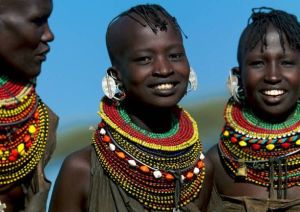
The world is changing rapidly. I’ve seen communities trying to balance education, technology, conservation, environmental pressures and economic opportunity with traditions that have defined them for generations. They may want change. They may need change. But that doesn’t mean they want to lose who they are in the process.
A community can want better access to water without wanting to abandon its traditions. Parents can want their children educated without wanting them disconnected from their culture. People can embrace technology while still wanting to preserve the language, customs, stories and ways of life that tell them who they are.
I’ve come to understand that progress and cultural identity don’t have to be opposing ideas. Maybe real progress isn’t making everywhere look more like the places we consider “developed.” Maybe it’s giving people the opportunity and the resources to decide for themselves what progress looks like.
Money Helps. But Money Isn’t Always the Answer.
Of course money matters. Money can build a classroom. Drill a borehole. Pay school fees. Buy medicine. Improve sanitation. Create opportunities. It can certainly make life more comfortable. But I’ve also learned that because something can be bought doesn’t mean buying it is always the solution.
Sometimes knowledge matters more.
Sometimes access matters more.
Sometimes training matters more.
Sometimes helping someone create a sustainable source of income is far more valuable than simply giving them money.
And sometimes the most important thing you can do is listen before deciding that you have the answer.
I’ve also started questioning our obsession with having more. More space. More clothes. More gadgets. More choices. More upgrades. The more I’ve traveled, the more I’ve found myself moving in the opposite direction. Less is often better. Not because having less automatically makes anyone happier. It doesn’t. But having more doesn’t automatically make us happier either.
Maybe wealth is simply having enough.
Enough food. Enough security. Enough opportunity. Enough people around you who care whether you come home at night. Enough time to sit together. Enough purpose to get up in the morning.
And everyone’s definition of “enough” is different.
Somewhere Along the Way, I Stopped Counting
I don’t remember exactly when I stopped counting countries. I just realized the number didn’t tell me anything about what I’d actually experienced. And then, I suppose, I stopped counting most things. I don’t count how many places I’ve been, how many extraordinary experiences I’ve had or how many things I’ve checked off some imaginary list.
I’m much more interested in being present for whatever is happening right now. A conversation I didn’t expect. A place I never planned to find. Sitting with someone whose life looks nothing like mine and discovering how much we have in common. Learning something that makes me question something I thought I already knew.
Maybe that’s another thing the world has taught me. Life isn’t something I need to keep score of. I don’t need the most countries, the biggest adventures or an impressive collection of experiences.
I just want to keep showing up for the life I’m fortunate enough to be living and be curious about what’s around the next corner, but not so focused on getting there that I miss where I am.
Years ago, I thought seeing the world would eventually give me answers. Instead, it has taught me to ask better questions.
What do you need?
What matters to you?
What do you want to preserve?
What do you want to change?
What can I learn from you?
And before I assume I understand your life, your culture, or your needs, perhaps the most important question:
What am I missing?
The more I experience, the more comfortable I’ve become saying three words I probably didn’t say often enough when I was younger: “I don’t know.” And maybe that’s not ignorance. Maybe that’s curiosity.
The greatest thing the world has taught me isn’t how much I know about it. It’s how much I still don’t know. And I hope I never stop being curious enough to keep learning.