From Desert to the Heart: How Ramadan – and Morocco – Shifted My Sense of Self Part II

In the first part of my blog, Ramadan in Morocco: A Journey of Reflection and Cultural Awakening, what might have appeared as a mere cultural curiosity, has, in reality, unfolded into a profound lived experience, giving valuable lessons in patience, presence and belonging.

What began as an intent to observe, to learn, and to respectfully witness the sacred rituals of another culture that I knew little about, gradually transformed into something far more personal.

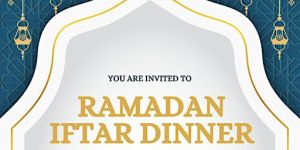
The holy month of Ramadan ended on Sunday, March 30, 2025. After fasting the entire month, I was privileged to spend my final Iftar (breaking of the fast) with co-workers from the English School of Kelaa and the staff and young people of the Center for Children in Difficult Situations here in Kelaa. Together – with the support of colleagues and friends on Facebook – Said and I raised funds to provide a beautiful meal for that evening.

After everything I learned and experienced throughout the month, I can’t imagine a more meaningful way to have spent the final night of Ramadan.

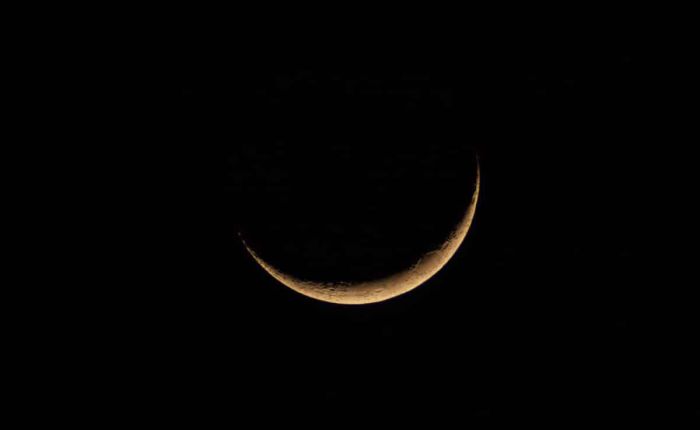
That evening was nothing short of magical. Walking home through the warm night air, the crescent moon – the same moon that marked the start of this journey – hung once again in the sky. As the scent of orange blossoms drifted through the air, I smiled – grateful to have been not just welcomed, but embraced. I had been invited into traditions whose depth and beauty I no longer simply observed, but had begun to understand in a way that felt deeply lived.

Yes, the fasts had ended – but something, hopefully lasting, had settled within me.

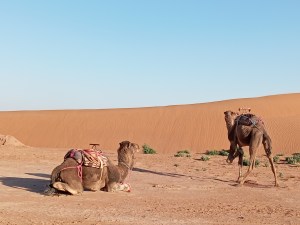
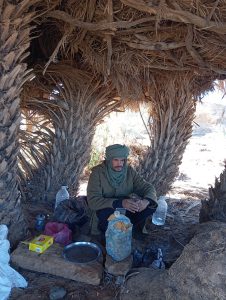
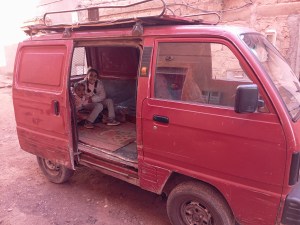
I didn’t come to Kelaa on purpose. My original plan had me somewhere else entirely- another city, another path. But life, as it often does, unfolded on its own terms. After spending two days in the desert, led by the patriarch of the Berber family from my first WorkAway, followed by a 4.5 hour bus journey over the High Atlas Mountains, a middle ear infection sidelined me for one week in Marrakech. It rerouted my plans and quite literally forced me to pause. It was that pause, uncomfortable and unwell at first, that opened the door to something quieter and more meaningful.

When I accepted the last-minute WorkAway in Kelaa, I had no idea I was stepping into a chapter that would realign me. I thought I was simply filling a void in my travel itinerary – but what I found was a sense of stillness. Life here moved slower. There was time to notice things: the rhythm of the Adhan (call to prayer), the way the light changed in the afternoon, the sweet scent of orange blossoms, the patience it takes to truly listen – to others, to myself.

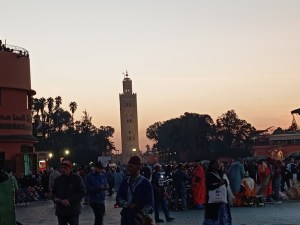
Stock Photo – Not Mine

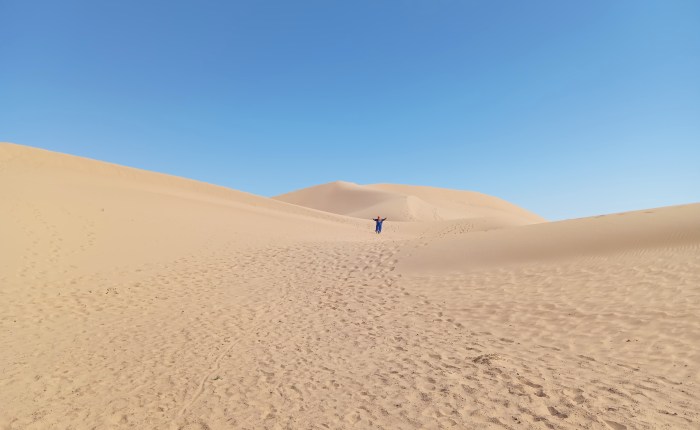
I mentioned in part one that in January I found myself two days deep in the Sahara, sitting beside the dying embers of a fire with the moon still hidden beyond the horizon. Out there, the silence wasn’t just quiet. It was deafening. Stripped of noise, distraction, and even the need to speak, I looked up at the Milky Way stretched across the sky like a river of ancient light. In that vast stillness, something inside of me settled.

There was no need to reach or strive. Just breath. Just stars. Just being.

Morocco – and perhaps that night in particular – wasn’t asking me to do anything. It was inviting me to be. To simply exist with what was right in front of me.

Ramadan is traditionally divided into three ten-day sections known as Ashra an Arabic word meaning “ten”. Each Ashra represents a distinct spiritual focus. The first ten days are known as the days of Mercy – Rehmat.

For me, the mercy came slowly.

Those first ten days – especially – the first five – were the most difficult. I struggled to find my rhythm. My body resisted the sudden change in pace and nourishment. Iftar, the evening meal to break the fast, became a daily milestone I deeply looked forward to. After hours without food or water, simply sitting down to sip cool water and taste the first sweet bite of a date felt like a quiet celebration – succulent, grounding, and deeply satisfying.

The exhaustion, in part was my own doing. My sleep schedule was off, and I missed Suhoor the pre-dawn meal meant to sustain you through the long day. Without that nourishment, the fast felt especially long and difficult. Eventually, I found a pattern that worked: a small bowl of yogurt, a few nuts, and some water in the early hours of the morning before falling asleep around 2 or 3 am.

Gradually, something began to shift. My energy returned, and with it came a sense of clarity. I started to understand the “vibe” of Ramadan that so many had mentioned – the quiet sense of purpose, the feeling of unity, the slowing down. It wasn’t just about abstaining from food and drink. It was about intention…following through. About carving out space in the day for reflection, gratitude, and presence.

By the end of the first Ashra, I wasn’t just surviving the fast – I was stepping into its rhythm.

The second ten days of Ramadan, known as the Ashra of Forgiveness – Maghfirah, mark a deepening of spiritual focus. If the first ten days were about finding rhythm and mercy, the next ten called me to open more fully – to others, to grace, to gratitude.

It was during this Ashra that I was invited to my first Iftar at the home of a student. Iftar is more than just a meal – it’s a celebration of faith, gratitude, and community. It’s a moment that transcends borders, languages, and cultures. Each night across the globe, millions of people pause to share food, conversation, and reflections. And it’s not just a practice among Muslims. One of the most beautiful aspects of Iftar is the way it invites others in. Friends, neighbors, colleagues – regardless of faith – are welcomed with open arms.

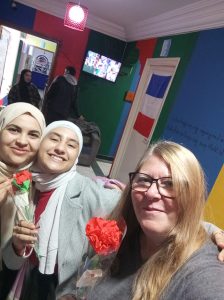
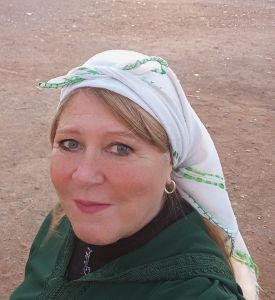
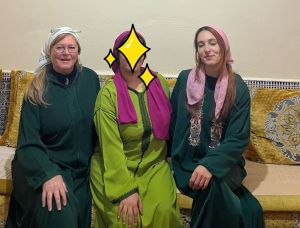
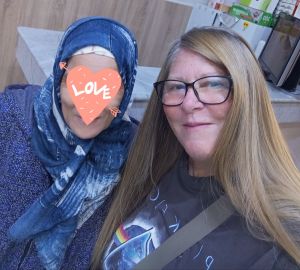
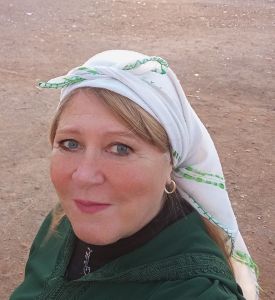
I was deeply honored to receive such an invitation. My student Hajar, extended her home and her heart, and I couldn’t have been more excited to experience this sacred tradition with her and her family. My colleague Maria and I arrived at Hajar’s home with eager anticipation – and were immediately invited to change into traditional Moroccan garments. Slipping into colorful jellabas and headscarves felt festive and fun, but we had no idea the garments were actually gifts. The gesture of generosity was just the beginning.

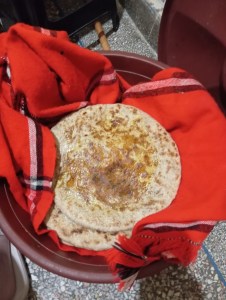
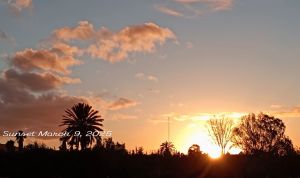
Before the meal, we crossed the street to a nearby field where children kicked a soccer ball back and forth and women gathered around a traditional clay oven, baking msemen – a traditional Moroccan flatbread. One of the women handed us some, still warm from the fire. As the golden light of evening began to soften the sky, we stood there, bread in hand, watching the sun lower itself behind the horizon. A cannon blast signaled the breaking of the fast, and moments later the Adhan, the call to prayer echoed from the nearby mosque.

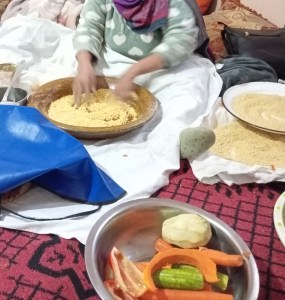
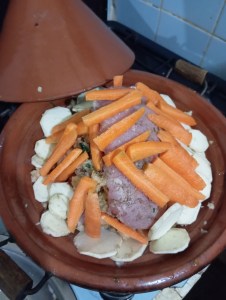
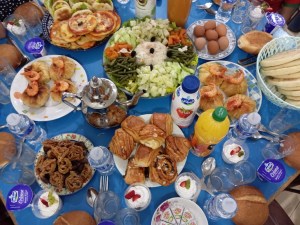
Back at the house, we began the meal as tradition dictates – with dates and water. Then came the feast: tajine, harira, fresh breads, sweet and savory dishes passed with joy and laughter. It wasn’t just delicious, but filled with intention. The kind of meal that nourishes more than hunger.

After dinner, we stepped outside to sit under the moon and stars. The night air was crisp and despite language barriers, the conversation flowed easily. I remember walking home with Maria afterward, the familiar scent of orange blossoms surrounding us. Once again, I felt that unmistakable magic of Morocco – an enchantment that felt like a scene from the Arabian Nights, blurring the line between myth and reality.

That night marked the first of several Iftar celebrations I would be invited to before the end of Ramadan. Each one a window into the soul of a culture that continues to surprise me with its hospitality, warmth and depth.

In the second Ashra, I began to understand that Ramadan isn’t just about personal reflections – it’s about connection. And in that connection, forgiveness doesn’t just mean seeking pardon – it means opening your heart wider to others.

The final ten days of Ramadan – known as the Ashra of Salvation – Nijaat– came upon me faster than I could have imagined. Time, which had been slow and heavy during the first days of fasting, now moved with a kind of lightness.

I found myself more grounded, more attuned – not just to the rhythm of the fast, but to the subtle energies around me: the unspoken kindness in a neighbor’s smile, the quiet reverence before sundown, and the hum that seemed to vibrate throughout the city as we neared the end of this sacred month.

I’ll never forget the excitement in a stranger’s eyes when they learned I had been fasting the entire month. It wasn’t just surprise – it was joy and pride. In that brief exchange, I felt seen not as an outsider observing a tradition, but as someone who had genuinely participated. That moment reminded me that shared experience can transcend background, belief, and language. It was acknowledgement: You walked with us. You felt what we felt. And that connection – unexpected, sincere, and deeply human – was one of the greatest gifts of Ramadan.

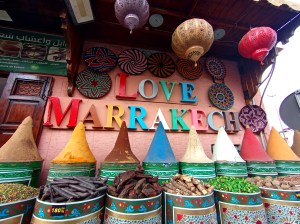
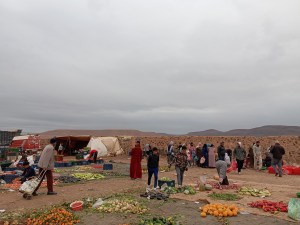
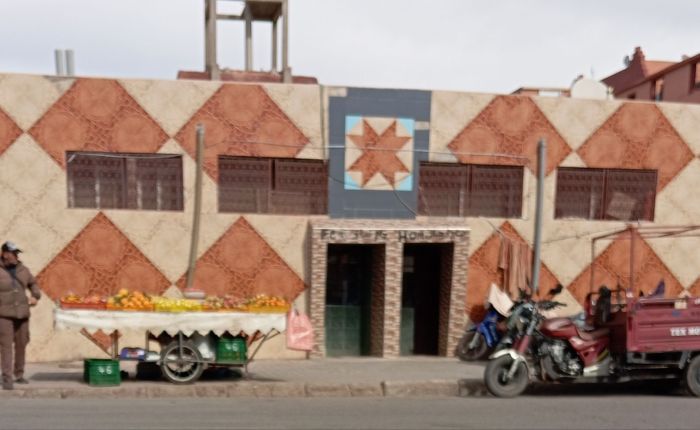
As the final days ticked by, the streets of Kelaa pulsed with festive energy. Markets were alive with color and chatter as families shopped in preparation for Eid al-Fitr, the celebration that marks the end of Ramadan.

In a time when the world often feels divided, Morocco – and Ramadan – showed me a different truth: that human connection transcends borders, languages, and beliefs. Morocco gave me magic. Somewhere between the desert stars, the scent of orange blossom, and the sound of a stranger’s voice saying “Eid Mubarak”, I didn’t just come to Morocco – I became part of it. Because the magic I found – the kind that lingers long after the crescent moon fades – is only revealed when we surrender to the present and let life show us where we are meant to be. I came here by accident, but stayed on purpose.

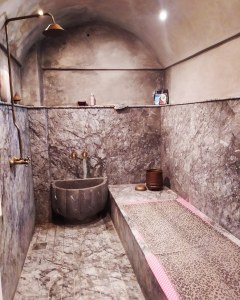
Becoming Water: The Day I Melted into the Hammam

Becoming Water: The Day I Melted into the Hammam

Back in September 2021, I wrote a piece titled “That Time I let a Stranger Bathe Me – My Experience at a Moroccan Hammam”.  At the time it seemed like a bold immersion into Moroccan culture.  But now, after living in Morocco for five months, I can see it for what it truly was: a Westernized introduction. The hammam I experienced then was tucked inside a luxurious spa in the Riad where I was staying.  It was private, serene, and indulgent – what many would call “the royal treatment”.

Even in that controlled setting, the experience pushed boundaries. After all, allowing someone to bathe you – scrub you – is intimate, vulnerable, and far from anything most Westerners are used to. Still, it was more spa than tradition, an experience meant to ease foreigners in gently. You might call it “hammam-lite”.

Living here now, I understand just how different the real thing can be.

In Arabic, the word hammam means, “spreader of warmth”. A hammam is a place of bathing, and they can be public and private. When I arrived in Kelaa in January of 2025, I discovered one of my students had a spa which I visited almost immediately. I also learned they had a hammam – perfect timing, since the villa I was living in had no hot water. A warm, relaxing weekly hammam quickly became a luxury.

These days, although my hammam is still inside a spa, I have my own kessala. A kessala is the woman who performs the scrubbing ritual in the hammam. Mine is named Fatima. She’s Moroccan and only speaks only Darija (the dialect of Arabic spoken in Morocco), a few words of French – maybe even fewer than I do – and she can’t read which rules out Google translate. Still, we smile in the same language and somehow, we always understand each other.

There’s a threshold you cross when you step into the hammam. The door clicks shut behind you, and the outside world—its traffic, schedules, languages, and labels—fades. The air is thick, ancient, and pulsing with warmth. It wraps around you like a memory.

Without giving too much detail, I’ll just say this: it’s a wet room. I am unclothed, and so is Fatima, aside from the briefs she wears. Most days I am the only one there, but now and then, the room fills with three or four women. I don’t mind public hammams – in fact, I’m quite comfortable in them – but I’ve grown fond of having Fatima each week. I also take advantage of other spa perks while I am there, like massages or a quick hair treatment.

But make no mistake – this is not the Westernized, serene experience I had the first time around. It’s raw, real, and deeply human. And I’ve come to love it.

I used to think the hammam was about scrubbing – peeling away the layers of dead skin, and even a sense of foreignness. In my first post, I described the complex emotions it stirred in me, including the vulnerability of letting a stranger bathe me. It felt like surrender, like exposure. Over time, though, visits to the spa’s hammam became not just a luxury but a weekly ritual. For nearly three months, I never missed a Saturday. Then came a two-week holiday to Paris and Rome. By the time I returned to Kelaa, it had been more than three weeks since I’d had a proper scrubbing.
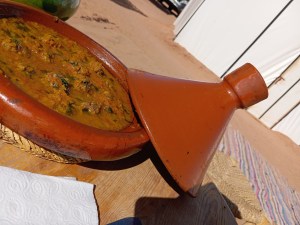
When I stepped back into the warm, steamy room and greeted my kessala something had shifted. The ritual no longer felt foreign or performative. My first step into the hammam felt like stepping into another world: warm and dim, with steam swirling in the air and the fragrant scents wafting around me. Fatima, the softly smiling kessela with kind eyes, led me gently through this cleansing ritual. She let me settle on the marble bench, her strong hands massaged the soap over my skin. Then, for a moment, I flinched as she scrubbed me vigorously with the coarse kessa glove. Such rough exfoliation would feel harsh back home, but afterwards I noticed the rosy flush of fresh skin and felt a surprising glow.

There is no hiding in the hammam. Not from your body, not from your heart. The scrub doesn’t just strip away skin – it uncovers the invisible layers, the ones you didn’t realize you were still carrying. My limbs were limp beneath her rhythm, and something unexpected stirred. A memory, maybe—a moment I’d forgotten. A person I haven’t forgiven. The heat opens doors I didn’t know were still closed. That quiet Saturday, I wasn’t scrubbed, rinsed, or handled. I simply dissolved. Surrounded by steam and silence, I stopped feeling like a self-conscious outsider. I became water.

Afterwards, I sat on the white leather chaise, wrapped in a towel that clung to my damp skin. My hair was slicked back, my cheeks flushed, and I felt raw in the best possible way. Maryam came in and offered me mint tea and water. I sipped in silence. I had been undone and reassembled, no longer the water I had melted into.

When I went outside, the sun felt too sharp, too fast. The world started to spin quickly again, but something inside me was slower. Emptied. Calmer.

When I leave Morocco, I know I will miss the colors, the call to prayer, the clinking of tea glasses. But more than anything, I’ll miss the ritual of the surrender – the hammam. I’ll miss the sound of echoing water and the quiet acceptance of bare skin. I’ll miss being just another body, melting into the steam, reminded again and again that letting go is its own kind of cleansing. I will miss becoming water.

Ramadan In Morocco: A Journey of Reflection and Cultural Awakening Part I

Ramadan In Morocco: A Journey of Reflection and Cultural Awakening Part I

Sometime last year, as I made the decision to leave Poland, a few WorkAways in Morocco caught my eye. WorkAway is the largest and safest community for cultural exchange, working holidays, volunteering, and house-sitting in 170 countries. I bid my farewells and departed Poland on December 16, 2024. Upon arriving in Marrakech, I took a few days to catch my breath as I prepared for a new chapter in my life. My original plan—though it has since changed—was to stay in Morocco until April 9th, when I would head to Paris to meet a friend.

There were a few reasons I chose April for my departure. First, since I was no longer a resident of Poland, I had to adhere to the Schengen Visa rule of 90 days within a 180-day period. Although I had reapplied for temporary residency in Poland, my application was still pending when I left, meaning I couldn’t enter any Schengen countries before March 15th. Secondly, a friend was coming to Marrakech for a yoga retreat in early April, and I wanted to see her while she was here.  Lastly, Ramadan, the ninth month of the Islamic calendar, was set to begin on March 1st or 2nd, depending on the moon sighting. I couldn’t think of a better way to immerse myself in the culture than by experiencing this sacred month firsthand.

On December 19th, I boarded a bus with all my belongings for a 5-hour scenic ride over the High Atlas Mountains to Ouarzazate, Morocco, the Gateway to the Desert, for my first WorkAway. I was met at the bus station by two young ladies, 2 of the daughters from my WorkAway family. The Berber family with whom I would spend the next 5 weeks, but that’s another story for another time. However, they are part of the inspiration for this post.

When my time in Ouarzazate came to an end, I returned to Marrakech, where I developed an inner ear infection that sidelined me for about a week. That unexpected turn of events ultimately led me to El Kelaa on January 28, 2025, for my current, unplanned WorkAway – though that’s a story for another time.
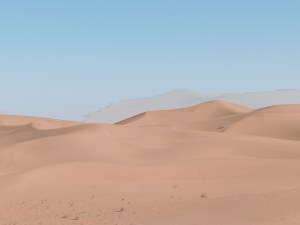
El Kelaa is a small city in central Morocco with a population of around 100,000, known primarily for its olive tree cultivation. After spending a few weeks here, I realized it would be the perfect place to experience Ramadan.

As this month-long celebration now nears its close, I felt inspired to write this short introductory piece while walking home from the English School a couple of nights ago.

El Kelaa, isn’t a tourist destination, so there’s a good chance I’m the only person with blonde hair in town. As a result, I’m easily recognized as I go about my day. I walk everywhere since taxis are rarely necessary-living near the city center means everything is in walking distance: my school, my souk, my spa, the laundry service, and plenty of cafes and restaurants. Except for about 7-10 days near the start of Ramadan, when it rained every day, the weather has been quite temperate, even for late night walks.

For some reason, on my way to school, around 20:30 (8:30 pm) that evening, it struck me – I was walking down a street in North Africa, in a town that now felt like home. As I walked, the call to prayer echoed from the mosque and as I rounded the corner, I took a moment to really notice the 50+ men praying both inside and outside. I pass this mosque everyday, but that night, I truly reflected on how deeply woven it is into the fabric of their culture. As I continued on, turning the next corner, a group of young boys kicked a soccer ball back and forth. They greeted me, as they always do, with cheerful calls of “Hello”, “Ciao”, “Hola”, “Salaam”, and “Bonjour”. Sometimes, they even kick the ball my way. But that night it made me think about how fortunate they are to grow up multi-lingual – here, it is common for kids to speak two to four languages with ease.


A few moments later, I arrived at the school, ready to teach a late-night English class. Even though we don’t finish until 22:30 (10:30 pm), my students were eager to learn. Our lessons often lead to meaningful conversations, and more often than not, I find myself learning just as much as they do.

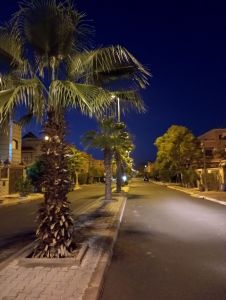
El Kelaa has little light pollution, and as I was walking home from school that night around 23:00, the sky was crystal clear, filled with stars that even the glow of the last-quarter moon couldn’t diminish. The streets were fairly quiet and as I turned onto my street, lined with orange trees, a gentle breeze rustled the  branches, carrying the intoxicating scent of orange blossom through the air.

When I arrived home, I went up to my rooftop terrace, the scent of the orange blossoms still lingering in the air as I gazed up at the night sky. I have always been fascinated by the stars, and that night, I was reminded of three other times when I was overwhelmed with emotion looking towards the heavens.

The most recent was during a two-day journey deep into the Sahara, led by the Patriarch of my Berber family. I was sitting by the dying embers of a fire, the moon had yet to rise, and the words of the Eagles’ Peaceful, Easy Feeling came to mind: “I wanna sleep with you in the desert tonight with a billion stars all around”. Out there, 50 km deep in the desert, with zero light pollution, the Milky Way stretched across the sky so vividly it felt like I could reach out and touch it. And in that moment, it truly looked like a billion stars above me.

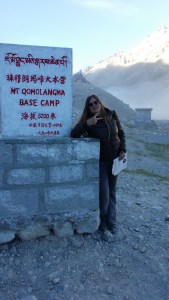
In 2016, I camped at Mount Everest Base Camp on the Tibetan side. Around 04:00, I stepped out of my tent, and despite the biting cold at 5,200 meters (17,060 ft), I stood mesmerized for nearly 20 minutes, unable to tear myself away from the breathtaking beauty before me.
The final memory that came to mind was from the early 2000s, on a mountaintop in Fornalutz, on the island of Mallorca. A little drunk on wine and lost in love, we lay on a blanket for hours, watching shooting stars and passing satellites, feeling as if we were the only two people on Earth witnessing such magic.

So, what does all of this have to do with Ramadan?

Ramadan is a time of deep spiritual reflection, self-discipline, and a strong sense of community.

Over the past couple of weeks, friends have made a few comments that stuck with me. One told me I’ve never looked more vibrant. Another said Ramadan seems to have made me more introspective – that I was glowing. A third friend agreed. Maybe their words led me into a deeper reflection that night, or maybe it’s simply the energy of Ramadan itself.

As for self-discipline, I have been fasting for 25 days now, and by the end of Ramadan, it will be 30. And the spirit of community? I feel it every day, especially when I have been invited to share Iftar, the meal to break the fast at sunset, with students and friends in the community.

I’ll share more about my month-long expereince in Part II of this post after Ramadan comes to an end. For now, I’ll leave with a quote I’ve often turned to from Gene Wilder, “My only hope is that even for a moment, I helped you see the world a little bit different.”

Be The Change

Be The Change

Change – an act or process through which something becomes different”

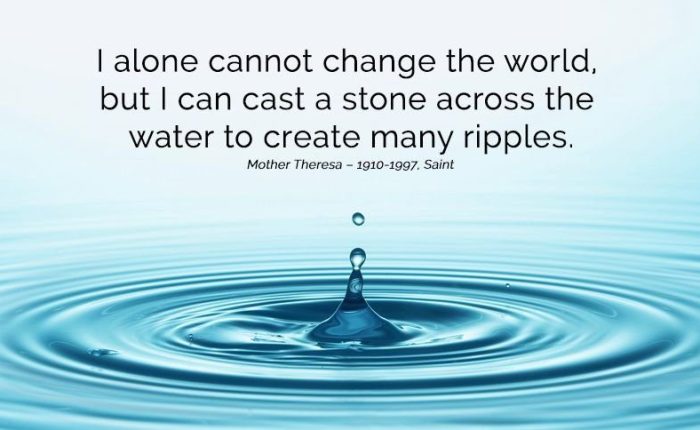
“Be the Change” – I use this phrase a lot in my social media posts along with two of my favorite quotes. The first one is from Mother Teresa, “I alone cannot change the world, but I can cast a stone across the waters to create many ripples”, and the second by Mahatma Gandhi, “Be the change that you wish to see in the world.”

Currently I am living in a predominantly Muslim country. Officially, 99% of the population are Muslim. The second largest religion in the country is Christianity, but most Christians are foreigners. I am living in the town of el Kelaa, Morocco, a smallish town about 80 km (50 miles) from Marrakech.

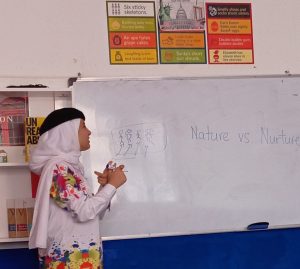
I am here on a WorkAway volunteering at an English school. Students at the school receive 4 hours of English lessons per week from a Moroccan English teacher. Then, depending on the availability of English speaking volunteers (usually native speakers), they can have a one-to-one, one-to-two or a small group session with one of the volunteers. It is a one hour conversation session as most students want to improve their speaking/communication skills. I would like to note that I tell the students if I ever ask any questions they are uncomfortable answering or just don’t have an answer, they can pass. Honestly, I don’t think I have had anyone pass.

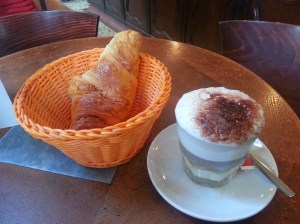
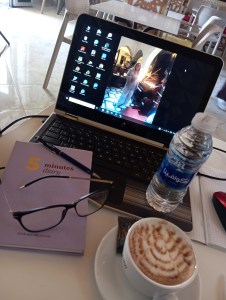
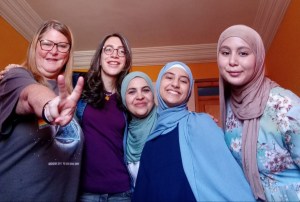
Recently, I had the opportunity to have back-to-back one-to-one classes with two lovely teenage girls. After the classes, I went across the street to my usual cafe for a cafe creme. I was lost in thought, the two girls were polar opposites and I had an epiphany. I made a few notes on my phone, but knew I needed to put the pen to the paper and share my thoughts.
I remembered a blog post I had written in 2019 when I was living in Bali. I went back and reread it. Two of the passages are relevant to my current mindset. The first one, “I have been blessed to live and travel to many places around the globe that don’t practice Christianity. I’ve been to Mosques and listened to the prayers of those of Islamic faith. I have sat with monks in Buddhist temples. I have attended a service of Caodaism (cultivating self and finding god in self) in Tay Ninth, Vietnam. I have sat in monasteries in Tibet and read the teachings of the Dalai Lama. I have been at a Hindu cremation ceremony in Kathmandu, Nepal which follows closely to the Hinduism of India.”

The second relevant passage from that blog is, “Growing up Christian, we heard stories of missionaries in far-off lands converting these “pagans”, “non-believers”, and even those of other faiths to Christianity. Through my travels, I have come to question this practice and ask, “Why?” Why do we in the west think that our religion is the one true and right religion that everyone else should follow?” Why do we often seek to change others. Hear me out – this post isn’t about religion, though the idea was lingering in the back of my mind. It is more about understanding and accepting people’s choices, in religion, in relationships, in life.

My first student of the day was a 16 year old girl, wise beyond her years. She came into my class in a niqab, which means the only thing I could see were her eyes. Don’t let anyone tell you the eyes can’t smile. I was greeted with the biggest, brightest smile that put an equally big smile on my face. I sat across from her and we went through my usual intro stuff…name, age, are you originally from el Kelaa, etc. I have to be honest here, I had no idea what to expect from this young lady with the beautiful eyes. I had no idea how traditional she was, although based on her dress I had to guess very traditional. Traditional, for example, when approaching a Muslim woman (whether she wears a hijab (head scarf) or not) – it’s respectful to wait for her to offer her hand and give her the opportunity to show you if she doesn’t mind shaking hands, or you can place your hand on your chest as a gesture of polite greeting. I was curious and intrigued with countless questions racing through my mind.

My one-to-one sessions mainly consist of me asking a lot of questions, some easy, some deep, some just fun. I decided to start with my usual opening question, “Why is it important for you to learn English?” She replied that by learning English she would become a more confident woman. She also said that it would help her in all areas of life…her education, job opportunities, travel, etc. Very profound for a young lady without much worldly experience. Another question I ask comes from Twenty Questions to the World. The original concept of 20Q was started in 2016. Since then the same twenty questions have been asked to thousands of people around the world and their answers recorded…from a nomad in Mongolia to the little old man in a coffee shop in Spain to me when I was volunteering in Wasso, Tanzania.

I then asked question 3 from the original 20, “If you could choose one thing to teach in every school in the world, what would it be?” I also usually add, “and why?” She told me she would teach everyone to understand Islam because it is often misunderstood. To which she added, “No offense, but especially in America.” I couldn’t say I disagreed with “especially in America”. We continued to have a beautiful conversation and at some point I asked her what was the best thing about Morocco. She told me, “It is the people and our culture. We are kind, welcoming, don’t judge and most importantly we respect all. That is part of the basis of Islam. I respect your choice of religion and maybe if more people understood Islam, they would respect mine.” Did I tell you she was wise beyond her years? As our time came to an end, she surprised me with a big hug, a thank you, and a request for a selfie.

She had my head spinning but I didn’t have time to process my thoughts because a bubbly 12 year old was walking into the room and was my next one-to-one. She sat down and started talking without even being prompted. When I say polar opposites from the young lady before her, I wasn’t kidding. She came in dressed in western attire…meaning jeans, a sweatshirt, tennis shoes and no head scarf. We chatted about school, her family, their travels. She is one of the few young people I have met that has traveled outside of Morocco. Both of her parents have careers and if I recall correctly she has a younger brother. I change up my questions based on the age and English levels, so one of the questions I asked was, “What do you want to be when you grow up?” Well, the question was barely out of my mouth before she started into a discertation on becoming an airline pilot and how she wanted to see the world. I didn’t need to ask the why is it important for you to learn English question because she answered that in her I want to be a pilot. She knew that English is the language of the skies and she would need it to fulfill her dream. Next, I decided to also ask her the if you could teach one thing question. Not surprisingly she said she would teach that you can be anything you want to be. We finished up talking about Morocco, its culture and religion of which she was very knowledgeable. She also told me about being excited for Ramadan because it is very important in their culture/religion.

I left the school and walked across the street to the cafe to just sit, sip my cafe creme and try to organize my thoughts as they were racing around my head. I immediately started writing this post when I got home. I had just about finished and decided to sleep on the ending until morning. Somehow, when I went to work on it the next day, it was lost in cyberspace as a corrupted file on my SD card. I was crushed and angry but started again fresh. Now it has taken me about 3 weeks to finally conclude. I have had so many interesting conversations with students during this time, I wish I could tell every story.

Every conversation I have gives me deeper meaning to “be the change”. I have a PhD student, a Professor of Philosophy, some 40 something housewives who just want to learn English, and a young teenage boy who asked me what I thought love was, because he thinks he is in love.

I am sitting here tonight on the third day of Ramadan. I am following the fasting for thirty days. No one has said I have to do this. I also have an English version of the Quran that I read a little on occasion. I am doing this not because I want to convert and no one has asked me to, but because I want to see the world, their world, their culture through their eyes, not mine. In turn, I hope I can share with you what I see, what I taste, what I feel. I want to be one of those ripples. I overuse this quote by Gene Wilder, “My only hope is that even for a moment I helped you see the world a little bit different.”

When I say “Be the Change”, I don’t want to change anyone but myself. Be the change isn’t about changing others, but understanding ourselves and our view of the world. Mahatma Gandhi’s quote, “Be the change you wish to see in the world,” tells me that if I make the change within me, I have the power to create a better world.

I want to end on a lighter note with a quote from the Dalai Lama, “If you think you are too small to make a difference…try sleeping with a mosquito.”

#BeTheChange

“Buchette del Vino” – “Vinous Adventures: Two Girls and Florence’s Hidden Gems”

“Buchette del Vino” – “Vinous Adventures: Two Girls and Florence’s Hidden Gems”

The Oxford dictionary tells us: Vinous – resembling, associated with, or fond of wine.  In case you didn’t figure it out from the title alone, yes, this is a blog about two girls (I decided against “women” because we ran around Florence like “giddy schoolgirls”) searching for “Buchette del Vino”.

Since I made the decision to leave Poland and ultimately Europe at the end of this year, several friends have mentioned traveling across the pond for a holiday.  So when my friend Teri messaged me earlier in the year and asked me to meet her in Paris in autumn, I didn’t have to think twice.  She also added, “Do you think we can go to Italy, too?”  Once you get on the European continent the rest is easy.  I told her to get to Paris and I would plan Italy.  We decided on Florence with a day trip to Rome.  Once we got dates nailed down, the rest was easy.

First Wine Window

Teri also mentioned a bucket list item – le buchette del vino or wine windows.  Hence this blog.

Before I get to the fun stuff, a little history.  The Medici family was from the agricultural Mugello region north of Florence. Sadly, there are no descendants of the Medici left today.  The family ended with the death of Anna Maria Luisa.  She died in the Pitti Palace on 18 February 1743, at the age of 76.  She was buried in the Medici Chapels, in the San Lorenzo church, where she still rests.  Okay, so what does the Medici family have to do with our quest for buchette del vino?

Not to get into their rise and fall and rise to power again, or anything like that, just know the Medici Dynasty returned to power in Florence in 1532.  I don’t know if they were good or bad but I do know that sometime in the middle of the 16th century, Duke Cosimo I de Medici allowed wealthy landowners to sell their own wine directly to customers through the wine windows.  Anxious to take advantage of this opportunity, many noble wine-producing families began fitting their Florentine palazzos with a buchette.  They could sell their own wine to the public through this window/door.  People would knock, and it would be opened by a server who would be handed a vessel.  They would rinse the vessel, fill it with wine, hand it over, and receive money in exchange.  Florence’s nobility, while hungry for profits, weren’t thrilled with the idea of having lower classes or drunken people in their homes, so these wine windows were ideal.  When the bubonic plague hit Florence in 1630, the need for “social/physical distancing” became more important than “class distancing”.

Matteo Faglio, who in 2015 started a foundation for the preservation of these windows, states, “Right after the black plague, in 1634, historian Francesco Rondinella wrote a book in which he recounts the wine windows playing an essential function during those years, namely to allow the contactless sale of wine to prevent contagion.”

Another fascinating fact I discovered since I have returned home is that if you look at a map of Florence (I will link to a map I have created that documents the windows we visited), several buchette del vino are in one of Florence’s former Red Light Districts. Not really knowing much about them, but having fun trying to find them, on day two in Florence, Teri and I stumbled upon a wine window with a large plaque above it (in Italian of course and we didn’t translate at the time).  The window was on Via Delle Belle Donne (the street of Beautiful Women). Teri knocked and we were disappointed that no one answered.  It was either closed at that time or possibly permanently closed.


“Fake” Wine Window in Phuket

Before I tell you what I discovered about this particular window, let me add that there are over 180 windows in Florence (158 in the historic center) with over 100 in about 30 other localities throughout Tuscany.  These unique architectural features did not exist anywhere else in the world until….drum roll…first, who knew that like the bubonic plague, a global pandemic would make them popular again in Florence, secondly, they would become Instagram famous…good ole social media.  New, fake wine windows are now showing up in places like Buenos Aires, Argentina; Brooklyn, New York; Phuket, Thailand; and Los Angeles, California.

Okay, back to the window with the plaque. On the corner of Via delle Belle Donne and Via della Spada is what was one of the red light district’s most popular buchette del vino with the original marble signage noting the selling time and the period open, “The cellar is open for sale from November first till April from 9 am to 2 pm and from 5 to 8 pm.  From May first till October from 8 am till 3 pm and from 6 to 9 pm.  On holidays open until 3 pm.  I also learned that business had become so good that it became necessary to stop customers from knocking on the doors at all hours of the day and night.  According to Matteo Faglia, “Only soldiers departing for battle or women who had just given birth had the right to purchase wine after hours. It was considered an important source of food.  ‘Wine makes blood,’ as they used to say.”

Window with the Original Marble Signage

Hopefully, you have enjoyed reading a bit about the wine windows of Florence.  Teri and I visited 10 windows which we knew were in service.  However, two were not open when we visited.  The following is our “vinous adventure” to discovering Florence’s hidden gems.  We didn’t follow a set route but searched them out as we strolled the streets of beautiful Florence, Italy. Here is a link to the map I created should anyone want to check them out on a visit to the city.  The windows we visited have a pin in burgundy with a wine glass.

Osteria San Fiorenzo
  1. Osteria San Fiorenzo – Borgo dei Greci 1R 50122  This was the first wine window we visited.
  2. Osteria Belle Donne – Via Belle Donne 16R  50123 
  3. Caffe Duomo – Piazza del Duomo 29 50122

4.  La Buchetta Food and Wine – Borgo Santa Croce 11R 50122  I got to visit this wine window from the inside as well as the outside.

5.  Babae – Via Santo Spirito 21R 50125  Featured in In Episode 5 of CNN’s “Stanley Tucci: Searching for Italy”

6.  Giunti Odeon Library and Cinema – Via Degli Anselmi, Piazza Degli Strozzi 3-5-7 50123

7.  Cantina de Pucci Bar – Via de Pucci 5R 50122  The server loved to make you ring the bell here.

8.  Ristorante Pietrabianca – Piazza dei Peruzzi 5R 50122


Il Latini

9.  Il Latini – Via dei Pachetti 6R 50123  Closed when we were there.  It opens at 19:30 (7:30 pm)

Fiaschetteria Fantappie


10. Fiaschetteria Fantappie – Via dei Serragli 47 50124  Closed when we were there.  Opens at 17:00 (5 pm)


There you have it.  Our trail of buchette del vino.  Yes, the wine is a Euro or two or three higher than in some other places, but the experience…priceless.  Soon we were noticing many now defunct wine windows.  Some had been turned into mailboxes or business signage.  Some are just graffiti collectors, but all are fascinating to find.  We even discovered one serving gelato!

“Here’s to the nights we will never remember with the friends we’ll never forget.” Author Unknown

Saluti and a favorite quote from The Age of Adaline:

Escape My Blog

Escape My Blog

According to Lee SU Kim, lecturer in ESL, “There is a common perception that all learning should be serious and solemn in nature, and that if one is having fun and there is hilarity and laughter, then it is not really learning.  This is a misconception.  It is possible to learn a language as well as enjoy oneself at the same time.  One of the best ways of doing this is through games.”

This week at Zenira Camp, my students range from 9-12 years old with A1 and A2 language levels.  Our weekly theme is Detectives and Whodunits.  Wanting to engage and motivate my students while developing cognitive and problem-solving skills I decided to challenge them to an “escape the classroom in time for lunch” English language game.  They had 10 language challenges which would give them a number to the “keypad” to leave the room for lunch.  Of course, there was no real keypad and the door wasn’t locked, but they had a picture of a keypad to insert the missing digits.  Because of the different ages and levels, I allowed them to work together as needed, to ask me questions to help and I wrote some hints on the whiteboard.  We had great fun with this and yes, we escaped in time to go to lunch.  A couple of campers were surprised they didn’t know quite as much as they thought they did.

I now challenge you to test your language skills and Escape My Blog.

Clue for Digit #1:  How many of these words can be used with the word snow to form a real compound word?

bean, ball, cup, storm, yard, flake, bow, man, fire, light, board and shine


Clue for Digit #2:  Make each of these singular words plural.  How many of the plural words use the suffix –es?

dog, wish, peach, boy, box, card, church, bowl, teacher, chair, frog and basket

Clue for Digit #3:  Each of these sentences are missing a piece of punctuation at the end.  How many of them are missing a question mark?

It is scary being stuck in a classroom

How long will I be stuck here

What an unfortunate event this is

I must tell Miss Calvin about this tomorrow

Will the caretaker notice that I am here

How worried will my mother be

I should never have come back into school on my own

 Clue for Digit #4:  Each of these sentences is missing a conjunction.  It is either and or but.  How many sentences are missing the conjunction but?

I will be home late ____ my dad will be worried.

I know I shouldn’t have come back ____ I wanted to do my homework.

The caretaker might be cross ____ I’m sure she will understand.

The classroom is dark ____ it is quite scary.

Mrs. Calvin is my teacher ____ she comes to school quite early.

I have finished my homework ____ I have read my reading book.

I know that it is late ____ I think some teachers might still be here.

Clue for Digit #5:  Some of these words are missing an apostrophe to show that letters are missing.  How many words are missing an apostrophe?

Should, will, cant, must, Im, could, when, shouldn’t, didn’t, Ive, wont and sure

Clue for Digit #6:  The following story is missing some commas.  Add in the commas and count the number that were missing.

Linda Frank and Norman went on a school trip.  They had packed crisps chocolate and sweets for the journey and they shared them with Pat Barney and Kyle on the coach.  When they were halfway there, Linda started to feel a little bit sick.  So did Frank Norman Pat and Barney.  There weren’t enough sick buckets to go around!  Mrs. Calvin Mr. Diaz and Miss Ross told the children that they weren’t allowed to eat any more crisps chocolates or sweets on the coach from now on.

Clue for Digit #7:  Read the clue and write the answer with one letter in each box.  Spell the answers correctly to reveal the hidden number in the pink squares.

ful and –less are both one of these.

      PINK    


Long and sad are both one of these.

            PINK    


Slowly and quickly are both one of these.

     PINK      


Run, hop and jump are all one of these.

  PINK    

Clue for Digit #8:  Read the sentences below and decide what tense they are written in.  How many of them are written in the present tense?

I am stuck in the classroom.

I came back into the school on my own.

I didn’t tell anyone what I was doing.

Now I’m alone and feeling scared.

I am running out of things to do.

I read my book and finished my homework.

I’m wondering how long I will be here for.

Clue for Digit #9:  Some of these root words can be given the opposite meaning by adding –un to them.  How many?

happy, wrong, do, load, fair, lock, honest, well, true, jump, dress, and cry

Clue for Digit #10:  There are lots of capital letters missing from the story below.  Add them in and count how many were missing.

Last thursday, betty went on a trip to london.  She had always wanted to see buckingham Palace and perhaps even see the King!  Betty rode on a big, red bus and went shopping on oxford street.  she had a wonderful time.

There you have it, the language game my students played today.  Before I give you the answers so you can check to see if you are able to “Escape My Blog”, I hope this gives you a better understanding of how incorporating games into an ESL classroom for young learners not only makes learning more enjoyable but also enhances language acquisition, social interaction, and cognitive development in a well-rounded and effective manner.

Let’s see how you did!

Camp Time

Camp Time

It’s somehow the first Friday in August.  I once wrote a blog called “Time Passages”; how time is a paradox.  I titled the post with Al Stewart’s song in mind.  The lyrics go like this:

“Well I’m not the kind to live in the past

The years run too short and the days too fast

The things you lean on are the things that don’t last

Well it’s just now and then my line gets cast into these

Time passages”

As I mentioned in my earlier blog, which was also a “first Friday”, time moves differently at camp.  One minute it’s day one and the campers are excitedly arriving looking for familiar faces and scanning the crowd to take in the new ones.  Staff are anxiously waiting and bursting with great ideas for activities and lessons.  Suddenly, “BAM”, ← (nice use of onomatopoeia, it is an English Camp after all) we’re wrapping up week 5.  We’ve moved beyond the halfway point and the above lyrics could read, “ The weeks run too short and the days too fast”.

After a hearty breakfast, most camp mornings start with a trip to the beach or once in a while we may just hang out at the pool.  Today happens to be one of those days.  My idea for today’s blog was to spice it up a bit and link you to some music to help you visualize our day.  Even though today is a pool day, I want you to imagine a sandy beach on the Bulgarian Black Sea with the waves rolling ashore and kids playing in the sand or frolicking in the waves.  When you have that vision in your mind, you can click this link to the Beach Boys’, “Catch a Wave”. I hope you enjoy your morning at the beach as much as we do.

After the beach/pool, it’s time for an English lesson. Mind you, we have 25 hours of English classes and English immersion activities per week.  Each week has a theme and I’ll get to that in a minute.  I’m probably going to show my age here, but I was taken back to the mid-80s and the American Rock Band Timbuk 3.  You’re probably asking yourself what could this possibly have to do with Zenira Camp and English.   Well, when you have a group of kids coming to summer camp to learn or improve their English and the camp is located at the seaside of the Bulgarian Coast, their “Future’s So Bright I (They) Gotta Wear Shades”.

After a late morning English class, it’s off to lunch followed by the ever-popular “Buba Bank”.  This is when kids can get some cash to purchase some pre-approved snacks.  When Buba Bank closes for the day, it is time for an afternoon of English classes.

As I mentioned above, each week of camp has a theme.  Coinciding with the 2024 Olympics in Paris, France, this week’s theme is the Olympics.  Because tonight is “Project Night” we spend much of the afternoon working on our projects.  You might think that if we are working on projects we aren’t as focused on English, but you would be wrong.  This gives us a chance to use our imagination, be creative, and still work on our English.  Let me explain, for tonight’s project we will hold a Zenira Olympics.  Camper’s invented their own countries and designed a flag which they will present to the whole camp during “Opening Ceremonies”.  For the younger, less advanced campers this was a great opportunity to teach vocabulary such as population and currency.  They also invented games to be played during the Project Olympics.  Campers will present their countries and games to the rest of the camp, all done in English.  It’s a huge breakthrough for a young child who was basically a non-English speaker when they arrived at camp to get in front of a group of kids, introduce themselves, and give 4 or 5 sentences of information.  It’s also a great time for more advanced campers to increase their vocabulary and work on their pronunciation and delivery. Project night always seems to fly by with lots of laughter and fun.  Then it’s off to bed and the best we can hope for is that the kids are not only having fun while learning English, but they are also making memories that last a lifetime.

In conclusion, I am writing this blog for Roscoe who had to leave camp early.  Since it was his day, I asked for his input.  He asked me to add a quote about time from T.S. Elliot, “Time present and time past are both perhaps present in time future, and time future contained in time past.”

Happy Camping!

Playlist:

Time Passages – Al Stewart

Catch a Wave – The Beach Boys

The Future’s so Bright I Gotta Wear Shades – Timbuk 3

Money – Pink Floyd

Olympic Fanfare – John Williams and the Boston Pops Orchestra

Theme from Chariots of Fire – Vangelis

Photograph – Nickelback

Zenira Camp Has Heart

Zenira Camp Has Heart

I arrived in Kiten, Bulgaria on Wednesday, June 26, 2024, for my fourth year at Zenira Camp.  Kiten, Bulgaria is a seaside resort town on the Bulgarian Black Sea Coast.  When I first agreed to spend the summer at a youth language and sports camp in Bulgaria, I was somewhat surprised to find out it was hosted at a hotel, Hotel Green Park.  Memories of summer camp in my youth, many, many moons ago, were cabins in the woods in the mountains of Pennsylvania with toilet and shower facilities in a separate “cabin-like” building.  We had to bring flashlights in case we needed to use the bathroom in the middle of the night.  I discovered camps housed in hotels are quite common in Europe.  I also thought it would be nothing like the experience I had as a youth at summer camp.  How wrong I was.

How can camps be so drastically different in appearance, yet be cherished by campers and staff alike?  Why do kids love camp?  Because camp is fun, right?  Sure, we have a lot of great things to do…beach days, windsurfing, basketball, volleyball, football, etc.

We have specialty clubs like engineering, science, music, British vs American, British slang, drama, debate, and journalism.  Evening activities include the staff vs campers challenge, movie night, board game night, murder mystery, karaoke, project night, award night, and a campfire, to name a few.  We go on amazing off-site excursions each week.

High Ropes

The campers visit Beglik Tash which is a prehistoric rock sanctuary.  They take a boat ride down the Veleka River, visit a camel park and the historic cities of Nessebar and Sozopol.  There is a trip to an Aqua Park and a chance to play mini golf and test their skills on high ropes.   So, the reason kids love summer camp must be because it’s fun???

Ahhh, but we also have 25 hours of English classroom lessons and immersion activities per week.  I should also add that screen/phone time is limited to about 30-40 minutes per day.


If it isn’t the fun of the activities that bring kids back every year, what is it?  I am sitting in my room this morning after 08:00.  I am at the end of the boys’ corridor and hear loud singing and laughter coming down the hallway.  It is a group of boys just happy to be here and headed to the morning beach activities.  What is the key ingredient that sparks so much laughter, singing, dancing, and excitement throughout the days and leads to rivers of tears on that last night if it isn’t fun?

Camp is more than just fun.  Through fun, kids unknowingly develop skills they will need later in life.  At Zenira, they spend 2 weeks (sometimes more) in a close-knit community that forces them to cooperate, communicate, and compromise.  Within their day, as they interact with staff, mentors, and fellow campers, they encounter caring, kindness, and understanding.  As the days go by, during “phone time”, you notice campers making that call to mom, dad, grandma, or grandpa, and then they put their phone away instead of using up all their allotted time.  Instead of using screen time as entertainment, they are kept physically active and entertained through creativity and interpersonal engagement. Zenira Camp is a place without the social pressures and expectations to “be” a certain way.

When I say Zenira Camp has heart, you may think it refers to the camp’s emphasis on creating a nurturing, supportive, and enriching environment.  And you would be correct.  We also try to foster a sense of community and prioritize the emotional well-being of campers.  Character-building activities are designed to teach core values like teamwork, respect, responsibility, and kindness.  Campers are encouraged, but not forced, to try new things and take risks in a positive environment without fear of judgment or failure.  Through inclusive activities, Zenira strives to ensure that every child finds something they can enjoy and excel at.  Most of all, we try to create lasting memories through meaningful and fun activities, traditions, and shared experiences. Memories that will last a lifetime and positively shape their future attitudes and behaviors.

All those things shape the heart of Zenira, but to me, when I say Zenira has heart, it is something far more personal. It’s when a camper from a previous year comes up to you and asks if you remember them.  You smile and say, “Of course”.  Then they proceed to tell you their story;  that time the summer before they told you their dream was to go to the USA and live and work.  At the end of that camp, you gave them a one-dollar bill and told them not to give up on their dream.  Then they continue and say they have the dollar taped to their computer and anytime they want to give up on their dream, they look at the dollar and think of you and your words.

At the end of the last session of camp, on the last night before they head off to bed, one of your students (the one who seemed disinterested, and you didn’t think you got through to) comes up and hugs you and says thank you with wet eyes.  Then you look over and see one of the biggest kids in camp bawling his eyes out and giving a giant bear hug to one of your colleagues, who happens to be 6’ 10”.  The start of this session, a camper came up to me and asked if remembered her.  Again, I answered with, “Of course”.  She then reminded me that we had talked about the book, “Le Petit Prince”.  She told me every time she reads that book she thinks of me and Zenira Camp.  Today at lunch, a young lady sat at my table and reminded me she was in my class 3 years ago.  She said, “I’ll never forget, you gave us mango and that was the first time I ever ate mango.

Zenira has heart because you never know what effect you have on these kids just by being you.  Zenira “Camp is where you discover the ‘you’ you never knew existed.” Author unknown


What Long-Term Travel Has Taught Me

What Long-Term Travel Has Taught Me

In a few short months, not only will I celebrate that milestone birthday that makes me eligible for social security, but I will have spent 10 years living outside of my country of birth.  I sat here today staring at maps, calendars, WorkAway options, Visa requirements, and things I will need to consider as I embark on the next chapter.  There are thousands of blogs, articles, and stories about “What Long-Term Travel Has Taught Me”.  I have seen this planet we live on referred to as “The World’s Biggest Classroom”.  For the last ten years, I have mostly had a “home base” and often a job somewhere.  As I was contemplating my next chapter, I started thinking about what I have learned in those years that will help me in what could be a radically different journey.  So, like thousands before me, here are a few, who am I kidding, here are more than a few things long-term travel has taught me.

My “cheese”

About five years ago, I wrote a blog called “No Cheese in China”.  It coincided with my leaving China, and I always say that when I write a book, that will be the title.  As I look back, I remember how much I thought I missed cheese.  There may not be any cheese in China, and I have more cheese than I can eat living in Europe, but I have discovered more than enough wonderful people, places, and experiences in this world to replace it.  I have learned I don’t need cheese.

I have learned to listen to understand, not to respond.  How many times have you been talking with someone, and they say something that makes you want to reply with your own story?  The rest of the time they are talking you go over what you want to say in your head and miss most of what they are saying.  Or, in the worst-case scenario, you interrupt to have your say.  If someone is telling you of their experience unless they ask, don’t tell them how you had the same thing happen to you.  Listen to understand, to learn.  If they want you to reply, they will ask.  Don’t “one-up” their story.   When traveling, communication is important, and more often than not it is with people whose first language is not English.  Sometimes accents are hard to understand, therefore you must listen carefully to understand, or it could lead to big misunderstandings.  You would be surprised how many non-native speakers have pronunciation trouble with “beach” and “bitch” and “six” and “sex”.  Imagine the direction those conversations could go.  Before entering a conversation, I try to silence myself, clear meaningless thoughts and if necessary, calm any emotions.  Listen to understand.

I have learned patience and flexibility.  You will need to trust me on this one.  I can’t think of any specific stories but long queues at airport security, long waits for Visa approvals, no ATMs, canceled flights, language barriers, getting lost in a strange city, navigating public transportation, and local customs and traditions will all at some point try your patience and force you to be flexible.

Long Lines – Train Station China

Food takes on a new meaning when you are outside your home country.  Amy Choi tells us in her article, “What Americans Can Learn from Other Food Cultures” that food is the single great unifier across cultures.  It also tells us that how and why you eat your food is very cultural.  In China, people eat food not necessarily for taste, but for texture. Food in France is about pleasure and food in Italy is love, while food in Arabic cultures is about community. While I have experienced this about these cultures, my food lessons are a bit different.  I have always had a thing for street food.  Tom always told me one day it would bite me in the ass.  Knock on wood, I have avoided, Bali Belly, the Thailand Trots, Costa Cramps, Montezuma’s Revenge, or anything else it may be called.

Street Corn Istanbul

My first food lesson is cheap food (i.e. street food) tastes the best!  My cheap bowls of Lanzhou LaMian in China or my 2€ crepe fromage in Paris, the $1 ear of roasted street corn in Istanbul…simply delicious.

Fresh Picked Guava

Before moving to China I never encountered, let alone heard of durian or dragon fruit.  I discovered many new fruits and vegetables in Asia.  I have learned that you have not really tasted an avocado or a mango or a guava, etc. until you have tasted it picked fresh off the tree.  When I was in Wasso, Tanzania at Bright English Medium School, they spent approximately 280,000 shillings ($120) to feed 300+ students, teachers, and volunteers 3 meals per day.  Can you imagine feeding that number for $120?  The teacher’s and students’ meals consisted of porridge for breakfast and beans and rice for lunch and dinner.  It was the same 7 days per week.  We as volunteers got chapati, fresh fruits, rice, spaghetti, and sometimes stew. It was difficult not to feel guilty, but I learned that food can be used to show appreciation. 

Eggplant Stew

Living abroad teaches you that traveling is a privilege.  I am not inferring wealth with privilege.  You don’t have to be rich to travel.  You do need a certain amount of freedom, especially for long-term travel and you need a passion for it.  I have also learned that you shouldn’t feel guilty about this privilege because I hope that I can use my privilege to inspire and educate others and maybe even change lives.

I have learned to always carry toilet paper or tissues.

I have learned to appreciate the beauty of language.  I don’t mean the ability to say hello or order a coffee in multiple languages.  It is the beauty of hearing someone say “foot fingers” because their language doesn’t have a word for toes or calling an apostrophe a “flying comma” or saying they work “elastic” hours because that is how it translates in English.  The “sweetness of doing nothing” is much more beautiful in Italian, “dolce far niente”.  It’s much sexier to hear, “Anni, amori e bicchieri di vino.  Non si contano mai, than Years, lovers and glasses of wine. These are things that should never be counted.


I have learned that my problems are small when compared to other people and parts of the world.

When I lived in Dong’e, China my co-workers were amazed when they happened to see inside my wardrobe.  I had more clothes and shoes than all of them put together. I am learning to simplify my life.  I’m not quite there yet, but my plan when I leave Poland is to go with a small roller carry-on and a small backpack.

Some of the happiest people I have encountered had no television, no cell phones, no tablets or handheld electronic devices.   They kicked a smashed-up water bottle around the yard when they didn’t have a soccer ball.  They used overturned 5-gallon buckets for drums.  Although I think I already knew this, my experience in Tanzania reinforced that things do not equal happiness.

We all smile in the same language.

The dictionary tells us that ordinary means with no special or distinctive features; normal.  A few synonyms are usual, common, standard, and routine.  It also tells us that extraordinary means very unusual, remarkable, amazing, spectacular, and sensational.  I often hear folks say that I live an amazing life.  I will admit that I do, but living abroad for ten years, every day isn’t a “WOW”.  Some days are even humdrum.

Surprising Lenore in Rome

Friends think it is extraordinary that I jump on a plane and go to Paris on a Friday evening and home on a Sunday evening, or I can surprise a friend in Rome with a 36-hour visit.  That’s the beauty of life in Poland (Central Europe), it’s ordinary.  I have learned that my ordinary can be someone’s extraordinary and vice-versa.

I have learned never to feel guilty about wasting a whole day.

Last week I wrote about becoming a C.O.W. (Citizen of the World) and the concept of home.  You can read my thoughts in the preceding link, but I have learned that “home” takes on a new meaning when you travel long-term, and often, people just don’t get it.

More People Than Seats

I spent 53 hours on a train going to Tibet.  I took an uncomfortable nine-hour journey on a local overcrowded, hot, dusty bus with more people than there were seats, some chickens, giant bags of rice, plus everyone’s luggage. It once took me over 50 hours to get from SE Asia to the United States because of a visa error and missed flights.

My Toilet for Six Months

One of my homes in China only had a squat toilet. Alone, I broke my back and needed a six-hour surgery in rural China.  I have learned that long-term traveling isn’t always easy and it isn’t for everyone.  In my case, I have also learned that in the end, it is worth the hardships I’ve encountered.

I’m going to try and wrap it up here because I could go on and on.  The world is indeed the biggest classroom.

This next one, although I was taught this as a child, travel has reinforced it. I have learned I can do anything I put my mind to.

Travel has taught me to accept and appreciate differences because, in the end, we are more alike than we realize.

I, alone, am responsible for my happiness!

This last one is hard to admit.  It’s a real learning experience seeing your home country from afar and through the eyes of other people and cultures.  Back in 2019, I was living in a communist country and I wrote a blog called “Living Abroad, Why I Sometimes Get Mad at America”. It had nothing to do with the political climate.  I love my country and most of the time, when asked, I am proud to say, “I am American”. The American Dream is still out there in the minds of so many around the world.  I hear it all the time, “My dream is to go to the United States”.

Chicago O’Hare

To be honest, there’s nothing like getting off your plane after several years abroad seeing the American flag, and hearing the immigration officials say, “Welcome home”.  Now for the hard lesson…the more I travel and the longer I am away, I have learned that it’s scary to think about going home.  When I next return, it will probably be around six years since I have last set foot on American soil.  I think about reverse culture shock.  My friend Cathy sent me a Giant Eagle supermarket flier.  It was just WOW when I compared it to the cost of things in Poland and other places I have traveled.  I see the prices my friends are paying when they go out for dinner and drinks.  I haven’t driven a car since February 2020.  I didn’t renew my license, mainly because America, or at least Ohio needs to play catch-up in the technology field.  I currently rely solely on public transportation which won’t be an option when I return. Even though we have video chats and people text and email, I am not a part of daily life in Warren, Ohio.  Sometimes it’s scary to think about sliding back into that life and how long it will be before I get the itch to set off again.

I can’t change Warren, Ohio, USA, or the world with my blog posts, but I can share my thoughts and experiences, good and bad.  I can share a smile with a stranger.  I can live more simply and I can continue to learn because as Rick Steves said, “Travel is rich with learning opportunities, and the ultimate souvenir is a broader perspective”.