At Nanyuki DEB Primary School, the classrooms may not have the newest technology or the fanciest buildings, but they have something far more powerful…curiosity. Sometimes the best conversations start with the most unexpected questions. In one classroom in Nanyuki, Kenya, a group of ten and eleven year olds wanted to know if I believed in mermaids. A moment later someone asked about Area 51, aliens, and whether dragons are real. Another student wanted to know if I had ever seen Ohio State University. And then, just as quickly, the questions turned deeper: Why do people die? Why do we have different skin colors? They spoke about the challenges young people face growing up in Kenya today. And in the very next breath, someone asked if, when traveling by plane, I had ever seen the end of a rainbow.
Sitting in those classrooms at Nanyuki DEB School, I realized this wasn’t just a visit to a school. It was a window into the curiosity, imagination, and very real concerns of the young people growing up here. A reminder that classrooms everywhere are filled with the same thing, young minds trying to understand the world.
After those questions, the lesson continued. The classrooms are full, desks are shared, and with limited resources, I found myself at the front of the room, chalk in hand, writing on a cracked blackboard. Their voices echoed back in unison, repeating each sentence I had written.
Maybe it’s because I am a visitor, a white woman from the USA, but the eagerness here doesn’t feel limited at all. Hands shoot up quickly. Students lean forward, laugh easily, smile often. They want to know. They want to understand. They want to trace the lines of my tattoos and hear the stories behind them. They reach for my hair, commenting on how “soft” it is. Their curiosity isn’t just about the lesson…it’s about the world beyond it, and about me as a small piece of that world.
It doesn’t remind me of classrooms back home, filled with the latest technology. I haven’t seen a copy machine here, or a computer, or a PowerPoint projector, things that felt standard even in rural China. In many ways, it couldn’t be more different. And yet, the one thing that carries across every border, every language, every system is that same curiosity I saw in those first questions. And a smile really is a universal language.
One thing that did surprise me is that, aside from Kiswahili lessons, subjects like math, science, and agriculture are all taught in English. It’s a reminder of how much language shapes access and opportunity.
Over the years of teaching English in different parts of the world, I’ve learned that what matters most isn’t technology or perfectly planned lessons. It’s your time. A nonjudgmental ear. A kind smile. If you take the time to listen, really listen, not just to respond, the young people will meet you there. They will engage. They will share. And more often than not, they will teach you far more than you ever expected to teach them.
For many families in Kenya, especially those living in remote areas or in deep poverty, access to healthcare is not a given. It’s a challenge. The cost of transportation alone can be enough to keep people from ever reaching a clinic. In those cases, families often turn first to traditional healers within their communities for answers and care.
Adding to that reality are deeply rooted beliefs and widespread stigma surrounding disability. This is not unique to Kenya. It exists in many parts of the world, but here it can be especially visible. Some still believe that disabilities are caused by curses, witchcraft, evil spirits, or even wrongdoing within a family. These beliefs don’t just exist in theory; they shape how children are treated. Some are hidden away. Some are neglected, abandoned, or abused. And in the most heartbreaking cases, some are not allowed to live beyond birth.
Organizations like Sang’ida Foundation are working to change that narrative. As described by the Climate Justice Resilience Fund, Sang’ida is a women-led organization advocating for the rights of children with disabilities, their mothers, and primary caregivers in pastoralist communities across Laikipia County. Founded by a mother raising a child with disabilities, it was born out of a need to challenge harmful cultural norms and create space for inclusion, dignity, and care. In a region already facing drought, human-wildlife conflict, and environmental strain, their work ensures that those most often left behind are not forgotten.
Alongside my time at the primary school, I have visited the Sang’ida Safe House twice. There, I met children whose lives look nothing like a typical classroom experience. Many have been abandoned or hidden away because of severe disabilities. Children who, in some cases, were never given the chance to simply be seen.
We painted together, at least those who were able. There weren’t many words, but there didn’t need to be. The connection came through color, through presence, through sitting side by side under the shade of a tree. Everyone was included. Even those who couldn’t participate in the painting were part of the moment. Just by being there, just by being seen.
And then there is Furaha Foundation, where a different kind of story unfolds.
The foundation provides a home for children between the ages of two and fourteen, while also continuing to support others who have been reintegrated back into their families and communities. Many of the children who arrive here come from difficult circumstances like loss, instability, or situations where care and protection were no longer guaranteed. Factors like poverty, illness, family breakdown, and the lasting effects of HIV/AIDS have left some without the consistent support every child deserves.
Furaha’s vision is to create a space where these children are not only safe, but nurtured. Where they have access to education, counseling, and the opportunity to grow up with the same sense of possibility as any other child.
What I saw there were young people living together, not just surviving, but building something that felt like a family.
During my visit, some of them were gathered around open fires, making chapati for the week ahead. There was laughter, teamwork, a rhythm to it all. They handed me a warm piece, fresh off the fire, and for a moment I wasn’t an outsider observing. I was simply included.
Nearby, others sat quietly reading, or talking and laughing in small groups. Nothing about it felt forced. It felt lived-in. It felt real.
And maybe that’s what stayed with me most. Not just the structure of the place, or even the mission behind it, but the feeling of it. In a space born out of hardship, there was still joy. Still connection. Still something that looked a lot like home. Which, by the way, the word Furaha in Kiswahili means joy and standing there, it felt like exactly the right name.
As I reflect on this first month in Nanyuki, I keep coming back to that word in different forms. In the curiosity-filled classrooms of the primary school. In the quiet presence at Sang’ida. In the laughter around an open fire at Furaha. Different places, different stories, different realities, but all connected by something deeply human. A desire to be seen. To be understood. To belong. And in each of these spaces, in their own way, I’ve been reminded that even in the most unexpected places, joy finds a way to exist and to be shared.
March 1st I arrived in Nanyuki, Kenya, still very much a newcomer and still finding my footing in a new place. Sometimes travel moves slowly, giving you time to settle into a place before it surprises you. And sometimes, just a week after arriving, you find yourself sitting in the middle of a celebration for International Women’s Day with women from the Maasai community.
They had gathered to celebrate empowerment and resilience, sharing stories of strength, change, and hope. I didn’t always understand the language being spoken, but sitting in that circle of women, listening, watching, feeling their energy, I realized I didn’t need to. The joy, the power, and the determination of these women shaping their families, their communities, and their futures spoke clearly enough. In that moment, the language was universal.
It was one of those unexpected gifts travel gives you. The kind where you realize you’re not just passing through a place, but you’ve been invited to witness something important.
But to truly understand the strength in that circle of women, you first have to understand the realities of life in a pastoral community.
Photo Credit National Geographic
A pastoral community is a social and economic system centered around the herding of livestock, primarily cattle, goats, and sheep. These animals are not just a source of food or income; they shape daily life, social roles, and cultural identity. For Maasai women, being part of a pastoralist society often means a life of intense labor and responsibility.
While speaking with a woman I met in Nanyuki, someone who works closely with Maasai communities and runs a safe house for young people with disabilities, I began to understand some of these realities more clearly. Many of the children she cares for were shunned by their communities, sometimes because disabilities are believed to be a curse, and sometimes simply because families lack the resources to support them.
She also explained how the demands of pastoral life affect families. When grazing becomes scarce, the person responsible for the herd (the mother) may leave the community for months at a time, moving livestock to areas with better pasture and water. During those periods, families rely heavily on extended networks of co-wives, relatives, and elders to care for children and maintain the household.
Before I share more about the IWD gathering itself, it helps to understand a few key aspects of life for Maasai women. Their role within pastoral communities is both central and complex. Women carry much of the daily responsibility that keeps families and villages functioning, yet they often have limited access to resources such as land or livestock ownership. Alongside these economic realities, they also face cultural challenges from traditions like female genital mutilation (FGM) to the pressures of maintaining households in a changing world. At the same time, these roles are slowly shifting, as education, advocacy, and community leadership open new possibilities for Maasai women and girls.
It was against this backdrop that the three-day International Women’s Day gathering was held at Storms Resort just outside of Nanyuki. I was invited by Sharon, who works with Laikipia Permaculture. The event brought together Maasai women from across the region and was funded by the Italian Agency for Development Cooperation – AICS through its Development & Health Support program in Kenya, allowing the women to participate at no cost.
Sharon
At the end of the event, Sharon shared with me a document titled Women’s Memorandum of Issues – Sauti ya Mama Workshop 2026. The memorandum was developed/written during the first two days of the workshop by the participants and outlines many of the challenges women and girls continue to face despite legal protections meant to guarantee equality. It addresses Advocacy and Legal Protection, Land and Environment, Leadership and Governance, Livelihood and Innovation, and GBV (Gender-Based Violence) and SRHR (Sexual Reproductive Health Rights).
As the document states:
“Despite constitutional, legal, and international commitments to gender equality, women and girls continue to face significant and systemic barriers that hinder their full participation in social, economic, and political life. This memorandum outlines critical issues requiring immediate policy, legislative, and social interventions to ensure safety, equality, and dignity.”
Reading those words gave deeper meaning to what I experienced that afternoon.
What also struck me that afternoon was the presence of male public officials and respected representatives of the Maasai community. Their attendance and their willingness to sign a document in support of the women’s concerns signaled that the conversations happening that weekend were meant to reach beyond the gathering itself. The memorandum outlined a wide range of issues affecting women and girls.
While the memorandum spans more than twenty pages, a few of the issues it highlighted stood out.
One section addressed “Cultural and Social Barriers to Women’s Land Ownership.” The recommendations called for community awareness and education around women’s land rights, with outreach directed toward men, elders, youth, and the wider community.
Another issue identified was “Low Literacy Levels Among Women,” which can limit women’s confidence and ability to participate fully in community and civic life. Among the recommendations were the introduction of community-based adult literacy programs for indigenous women and stronger support for the education of girls and young women.
The memorandum also addressed the “Exclusion of Women from Decision Making.” Recommendations included implementing affirmative action policies to increase women’s representation and providing training and capacity-building opportunities for women in governance and leadership roles.
Closely related were “Cultural Barriers and Gender Norms” that discourage women from stepping into leadership positions. Cultural expectations tied to marital status and traditional gender roles can restrict women’s participation in public life. The memorandum recommended community education around gender equality and inclusive leadership, along with encouraging greater engagement from men as advocates for equality.
Because women and girls in Narok and Laikipia counties continue to face challenges in accessing quality health services and exercising their Sexual and Reproductive Health (SRH) rights, the memorandum also devoted significant attention to issues related to gender-based violence and reproductive health.
One concern identified was “Myths, Misconceptions, and Cultural Barriers to SRH Services.” Recommendations included community education encouraging safe hospital deliveries and promoting greater use of maternal health services in health facilities.
Another critical issue was “Weak Gender-Based Violence (GBV) Reporting and Justice Mechanisms.” The memorandum called for stronger pathways to justice for survivors through formal legal systems, as well as improved confidentiality and protection mechanisms.
The memorandum outlined the issues and recommendations. That afternoon, I witnessed the voices behind them.
Agnes Ngeno, center, signing the document
In her closing speech, Agnes Ngeno, County Director Gender, State Department for Gender Narok, summed up the purpose of the gathering. She reminded the audience that the theme for International Women’s Day 2026 was “Rights. Justice. Action. For All Women and Girls,” and is a call to move beyond rhetoric. Gender equality, she said, is rooted in fundamental human rights and requires strong legal protections, real justice, and immediate collective action to ensure that no woman or girl is left behind.
She also emphasized that International Women’s Day 2026 is a critical moment to reaffirm Kenya’s commitment to the rights of women and girls. While progress has been made, the world continues to face overlapping crises and an erosion of rights, including the rising threat of femicide. The day, she explained, serves both as a platform to confront systemic barriers and as a moment to celebrate the achievements of women leading the way in areas such as STEM, leadership, and financial inclusion.
Following her remarks, the memorandum was formally signed by representatives present at the gathering: women leaders who helped draft the document, government officials, and male representatives of the Maasai community who voiced their support for the issues and recommendations raised during the weekend.
As the gathering ended and the memorandum was signed, the room shifted from solemn determination to celebration. A cake was brought out, and soon voices rose in singing, laughter, and dancing as the women marked International Women’s Day together. Earlier that afternoon, I had sat quietly among them, listening to voices I could not always understand, but by the end of the day, the meaning was clear. These women were claiming their rights, their dignity, and their place in shaping the future of their communities.
Sitting in that circle, I was reminded that “we are more alike, my friends, than we are unalike” (Maya Angelou). Their stories and strength were both unique and universal. And as Margaret Mead said, “Never doubt that a small group of thoughtful, committed citizens can change the world; indeed, it’s the only thing that ever has.” In that room, I saw it happen. Women, steadfast and courageous, shaping the future for themselves, their communities, and generations to come.
From Asia to Europe to Africa to small-town America, I’ve seen how different our worlds appear and how alike we truly are. We may cook different meals, pray in different ways, or celebrate under different stars, but what we seek, the connection, the comfort, the laughter is the same. Wherever I go, I find the same joy in gathering, sharing, and belonging. Proof that people are far more alike than different, no matter how far from home we roam.
Sometimes the world feels impossibly vast. It is a mosaic of languages, a myriad of landscapes, and a multitude of traditions. Yet, the further I wander, the smaller it becomes. I felt it in Paris, where café tables held laughter and conversation that was music to my ears even when I didn’t understand all the words. I felt it in Xiashan, that small rural village in China, where I met a girl from my hometown in Ohio. I felt it in Warsaw with the never-ending rotation of flat mates who became like family. It followed me to Bulgaria where I reunited with young people I met nearly twenty years ago. And now, I feel it again here in Morocco.
Everywhere I’ve gone, I’ve been reminded of something that was painted on a classroom building at a school where I volunteered in Bali: Allow differences, respect differences, until differences are no longer different. Those words have followed me across the continents, from cobblestoned streets in Europe to the sand dunes of Morocco, all whispering the same truth as Indonesia’s national motto, Bhinneka Tunggal Ika – Unity in Diversity.
Maybe that’s why travel still feels a bit like Neverland to me. I don’t mean the place where I refuse to grow up, but that state of wonder that doesn’t fade. It’s a way of seeing the world with open eyes and an open heart. Its finding familiar in the foreign. The music changes, the spices taste different, the languages take on new rhythms. But I’m in a world that keeps reminding me to believe in a little magic.
Here in Kelaa, Morocco, I was invited to a wedding. All I knew about Moroccan wedding celebrations was they often start late in the evening and finish at dawn. I also knew I would need a special caftan. Luckily, one of my friends from the school and a relative of the groom, scouted caftans for me and sent photos. All I had to do was go pick it up and pay the rental fee of 100 dirham (10 euro). This includes laundry service. The other amazing thing? They simply placed the caftan in a bag, handed it to me, and off I went. No ID, no paperwork. But I’ve been in Kelaa long enough to know they could easily find me if I didn’t return it.
I was told by Khadija, my caftan finder, that we would go to the wedding around 21:30. As I was getting dressed, I realized I had no idea how to fasten the belt. Fortunately my downstairs neighbor who is my landlord, sent his wife up to help. When Khadija arrived she told me I needed more eye makeup. She had gifted me an Amazigh wooden applicator with homemade kohl which is a black powder consisting of sulfur, malachite, galena and animal fats. I had no idea how to put it on, so she applied it to my eyes and we set off for the wedding a little after 22:00.
When we arrived we were offered a shot of milk in a small silver cup and a date. This symbolizes wishes for a sweet, pure, and prosperous life. By the time we arrived, we had missed the Amariya procession where the couple makes their entrance on elevated platforms called amariyas, carried by the attendants. This symbolizes their elevated status as king and queen for the night. The bride is attended by a negafa, who helps her with up to seven outfit changes, each representing a different region of Morocco.
Stepping into the wedding was like stepping into a living kaleidoscope. The female guests were dressed in brilliant caftans in every shade of the rainbow. The room was filled with pulsing music and women dancing. The men lingered mostly outside chatting, until the baskets of khobz (round Moroccan bread) and plates of roasted chicken started arriving. They quickly made their way to the tables.
I sat there surrounded by people I didn’t know (Khadija was at another table) and whose words I couldn’t understand. As I looked around, I realized how much I did understand…the common language of joy, a shared meal, and laughter. A community gathered to celebrate something beautiful. It wasn’t so different from weddings back home in the USA. It was families crowded around tables, friends leaning close to talk over the music, and generations joining together in laughter. The songs and traditions were different, but the sentiment was the same…love, belonging, and the simple happiness of being together.
Several days after the wedding I had the opportunity to experience the final day of the four-day Tbourida with some Moroccan friends. Tbourida is a Moroccan equestrian performance dating back to the sixteenth century. It simulates a succession of military parades reconstructed according to ancestral Arab-Amazigh rituals. Riders in their tribal costumes charge toward the crowd, the men fire antique rifles into the air as the horses stop just in front of the crowd. The Tbourida in 2021 was placed on the UNESCO list of Intangible Cultural Heritage of Humanity.
After watching the horses race down the field, we wandered in search of something to eat. We ended up under a small tent where a man was frying sfenj or Moroccan donuts, golden and crisp. We ordered a basket, along with a few hard-boiled eggs, and I soon learned the local trick of smashing the donut into a “boat,” nestle the egg inside, and eat it like a breakfast sandwich. Some women brought us steaming mint tea, and we settled in for what turned out to be a most unexpected yet delightful repas.
Afterward, we drifted through rows of stalls with trinkets and jewelry shiny in the afternoon sun, piles of herbs and spices perfuming the air, and t-shirts swaying in the breeze. We stopped again to watch the next round of riders, their synchronized charge racing down the field. While we stood there, a young boy approached shyly, greeted me in English, and shook my hand as his friends giggled nearby. My friends explained he’d been dared to do it. Just behind me, a man was spinning clouds of pink cotton candy. We ended up buying half a dozen sticks for the boys…a sweet reward for bravery.
As we made our way back to the car, it struck me how familiar it all felt. Between the dust in the air, the scent of horses and hay, and the laughter of children, I could have been back at the Trumbull County Fair in Ohio. Not in appearance, but in essence. The hum of the crowd, the shared delight in simple pleasures like popcorn, cotton candy, and plastic toys that might not last the day but would certainly be loved for the moment. Whether in Morocco or middle America, people gather for the same reason: to belong, to laugh, and to share joy together. The details changed, but the heartbeat was the same.
Beyond the grand celebrations, it’s the smaller rituals that reveal our shared humanity most clearly. In the local hammam, the communal bathhouse, women gather not just to cleanse, but to connect. They talk, tease, share family stories, and laugh in the steamy warmth.
It reminds me of women’s spa days back home, or long lunches that stretch lazily into afternoon. It’s the same comfort of friendship, the same release of laughter that only comes when you’re surrounded by people who understand you.
Across the world, I’ve found this rhythm in a thousand different forms…over wine in a Paris café, in a Warsaw market, sharing dumplings in China, or at a diner in small-town Ohio. The settings change, but the essence remains unchanged. People coming together to share the simplest and richest parts of life.
After so many places, I’ve stopped searching for the line that separates different from same. In Morocco, at a wedding, laughter floated around tables just like it does at family gatherings back home. At the Tbourida, families cheered while children ran past, sticky-fingered with cotton candy…the same sweetness I remember from summer fairs in Ohio. In Europe, too, I’ve felt it at Sunday picnics along the Seine, in the playful banter of summer camp in Bulgaria, and in the quiet joy of people simply being together.
The settings change, the music, the colors, the customs, but the feeling doesn’t. Everywhere, people want the same simple things: good food, good company, and a place that feels like home. I used to think home was a point on a map, but I’ve learned it’s something more like a familiar heartbeat I recognize wherever kindness and connection live.
Maybe that’s the quiet truth I keep chasing. Unity doesn’t erase difference; it celebrates it. The magic isn’t only in faraway places, but in the way every place holds a reflection of home. The more I travel, the more I understand that the world’s beauty doesn’t lie in how different we are, but in how familiar we can feel, even in the most unfamiliar places.
The world isn’t as divided as it looks. Maybe, if we allow and respect our differences long enough, we’ll start to see they were bridges all along. Maybe that’s the true magic of this Neverland of mine, discovering that no matter how far we wander, the heartbeat of home echoes everywhere.
Allow differences, respect differences, until differences are no longer different.
Some stories don’t need an audience. Some goodbyes don’t need to be spoken. And some letters, the ones that write themselves in my head on quiet nights, whispered through thoughts and dreams, are meant only to remind me how deeply I’ve lived.
These are mine. Letters I’ll never send! To the people, places, and moments that shaped me; to the corners of the world that taught me what home can mean.
Dear Warren, Ohio,
I may have started life in Fort Meade, Maryland, but you were the beginning. The backdrop of a small town with the sound of trains that made me dream of elsewhere.
You raised me knowing to go home when the streetlights came on. You gave me an education which made me curious, with a longing to wander, and a family whose love traveled with me long after I boarded my first plane. Even now, no matter how far I go, your streetlights glow in my memory. AND one day, I will come home.
Dear Mom and Dad,
You named me Wendy. A name borrowed from imagination and given to a girl who would one day learn to fly.
You filled my world with books, maps, and National Geographic magazines that made the globe feel both infinite and reachable. You were my first teachers: parents, providers of wisdom, and permissive provocateurs who never clipped my wings, even when you worried where they might take me. Thank you for the gift of curiosity. It became the passport to everything I’ve ever loved.
Dear Mark,
You’ve always been my biggest cheerleader and my best friend.
From the start, you believed in every wild idea I chased, even when it meant watching me disappear across oceans. You reminded me where I came from, kept the laughter alive in the spaces between our worlds, and never let distance dull our bond. No matter how far I roam, knowing you’re in my corner makes every place feel a little more like home.
Dear Tom,
You were the love that taught me how deep connection can go and how fragile timing can be.
We dreamed together once, of places and possibilities, and though the road eventually led me away, part of me was always tracing those dreams we never took. You were both anchor and catalyst. The ache that became my compass. I’ve carried you quietly across continents, tucked between journal pages and border stamps. Maybe love doesn’t have to last to leave a mark. Maybe it just has to open a door.
Dear Paris,
You were my first dream, my leap across the pond, and my first step into the unknown.
You taught me how to take care of myself when everything felt foreign. I arrived with a suitcase and an open mind, and left with stories and a desire to share my Paris with anyone who would listen or travel with me. You showed me beauty, history, the thrill of discovery and somehow, I fall more in love with you each time I return.
Dear Julie,
You were the girl behind the counter at the corner café in Montmartre. The one who always remembered how I liked my coffee in the morning and poured my wine the moment you spotted me walking down the street toward Café Chappe at night. You always had a dining recommendation, and it was always the right choice.
Between my tiny cups of espresso and glasses of rosé, we shared our dreams. Yours was Bali.
I still remember the sparkle in your eyes when you made me promise that if you ever made it there, I would visit. And I did. You kept your promise to yourself, and I found my way to Bali. Then, because of the family I met there during my visit to you, I found my way back again.
Dear China,
You were my test and my teacher and sometimes, you were tough. I laughed. I cried. I stumbled through tones and translations, but learned that kindness doesn’t need a dictionary. I was frustrated at times and decided you were the place I loved to hate, yet hated to love.
From shared taxis to last-minute dinners I couldn’t refuse because someone would “lose face,” to students and friends who became like family. You taught me that humanity has its own universal accent. I still carry your chaos. And, dear Xiashan, I will always consider you my home in the Middle Kingdom.
And because I can’t choose one, to all the Alinas, Alices, Rabbies, Peters, Pauls, and all the Chinese names I can’t remember, you made me fall in love with your country, your culture, and your people. You turned six months into four years and gave me an inside look at a nation that, until recently, had only begun to open its doors to foreigners.
You gave me a language written in characters instead of letters, words and numbers I still recall today, a love of real Chinese food, and a lifelong appreciation for your history. And though personal space was never your strong suit, you filled every inch of my life with color, laughter, and unforgettable stories. I am forever grateful for the time I spent with all of you.
Dear Bali,
You were the soft landing after the chaos of China.
You wrapped me in sunlight, incense, love, and sea salt. You reminded me that healing can be found in water, laughter, family, prayer, meditation, and the mystical ways of the Balian, Cok Rai, the healer who felt what I couldn’t explain. In your temples and in your hearts, I learned how to breathe again…deeply, gratefully, without hurry.
I discovered the joy of simple things: the sound of wind chimes over rice fields, the gamelan at the temple, the call of the gecko, and the sweet scent of frangipani that will never leave me.
Dear Ketut, Koming, Kirana, and Kiera,
You were truly my Balinese family. I fell in love with you on my first visit to Peliatan, near Ubud. You welcomed me as if I had always belonged. You invited me into your home, your rituals, your laughter, your lives.
You included me in daily offerings and temple ceremonies, took me to a Balinese wedding, and before I left, invited me back to participate in Ketut’s mother’s Ngaben, the sacred cremation ceremony. I returned, and you welcomed me not as a guest but as family.
When I left again, I knew I would return, not for days or weeks, but for months. During that time, I learned so much about Balinese culture, but more than anything, you taught me the meaning of belonging.
When I finally had to leave for the U.S., you made me promise to come back. I planned to return in May 2020, but the world stopped turning, and I couldn’t get there. You even planned a surprise for me at the airport: the new addition to your family, little Kinara.
You will always be Bali to me.
Dear Poland,
I arrived just before the world stopped turning. You became my shelter in uncertain times. I was grateful to spend the pandemic within your borders. I went from face-to-face English lessons to online sessions and found unexpected connection through a screen.
I lived in the heart of your capital, where a never-ending rotation of international flatmates kept life interesting, and human, during a time when the world felt paused. Through those encounters, I built deep friendships that carried me through the quiet months.
More than anything, you gave me a new respect for your country and your people. For the way you endured, rebuilt, and kept moving forward no matter how heavy the history or how long the winter.
Poland, thank you for showing me the meaning of resilience.
Dear Valeria, Zeka, Anu, Anil, Tarlan, and Klara,
In the revolving door of flatmates, you are the ones who stayed nearest and dearest. I can’t imagine my life in Warsaw without you in it.
Valeria, the broken tub bonded our friendship as tightly as the repair job on the hole you made.
Anu and Anil, celebrating Nepalese holidays with you and your friends brought such light into the long winters, and I’ll never forget the joy I felt when your son was born.
Zeka, Tarlan, and Klara, what can I say? We had some mad Friday nights. Cocktails, Frank Sinatra and Elvis on the turntable, friends over for those ridiculous games, like Cards Against Humanity, laughter echoing through the flat long after the music stopped and you headed to the club and I headed to bed.
I probably wouldn’t have stayed nearly five years if it hadn’t been for all of you.
Dear Bulgaria,
Your chapter started more than twenty years ago, when four teenagers from Gabrovo came to Warren, Ohio. No matter how often you say, I’ll come see you someday, it rarely happens when decades and oceans lie between.
When I was living in Poland, I received an offer to teach English at Zenira Camp on the Black Sea. It was an unexpected door to my past and a chance to fulfill a long-kept promise to visit those four young people from Bulgaria.
Not only did you reunite me with the teenagers who were now in their thirties by the time I made the trip, but you also gave me a new cast of characters through Zenira Camp and four unforgettable summers on the Black Sea.
You gave me the gift of return and reminded me that some stories really do come full circle.
Dear Hristian, Tony, Pako (Pavel), and Yani,
Our chapter began more than twenty years ago in Warren, Ohio, when I met four teenagers from Gabrovo, Bulgaria, who stole my heart.
Pako, having you live with me and Tom may have been a precursor to why I’m so drawn to homestays. It’s the best way to immerse yourself in a culture.
Hristian, you always made me laugh and still do to this day.
Tony and Yani, so young, sweet, and innocent back then, and now married with children of your own.
I can’t tell you how much it meant to reconnect with all of you after more than two decades. To see you again in your home country (even though two of you no longer live there), to meet your families, and to have you share your Bulgaria with me.
Seeing you all again was proof that time may pass, but love and laughter never fade.
Dear Tanzania,
You were another dream come true. You were my reminder of wonder.
As a little girl, I didn’t dream of sugarplums; I dreamed of epic sunsets behind massive acacia trees while giraffes and zebras wandered the plains. From your rock-strewn earth to your wide-open sky, you gave me awe. The endless stretch of the Serengeti left me breathless. I saw lions asleep beneath acacia trees, the great migration of wildebeest, and a horizon that felt infinite.
I remember the laughter of my small students who found joy in everything, the rhythm and vivid color of the Maasai market, and the sunsets that made time disappear. You reminded me that joy lives in the simple things and that gratitude can be spoken with a smile alone.
Dear Bright English Medium School,
I lived with you at the school. It was a forty-minute walk from the nearest town, if you could even call it that. I sometimes felt guilty eating my chapati, pasta, meat stew, and fresh fruit while you ate porridge for breakfast and rice and beans for lunch and dinner every single day. But I learned that gratitude is often served through food, and I have never met a more thankful group of children.
You were grateful for every moment we spent together. Whether it was chasing a battered water jug across the dusty field and kicking it into a lone soccer goal, or singing songs while keeping rhythm on an overturned pail. We didn’t always have electricity. I took bucket showers with water heated over a wood fire and washed my clothes by hand, hanging them to dry in the Tanzanian sun.
Thank you for showing me so much love, for reminding me that joy doesn’t come from having much, but from cherishing what you have. You gave me one of the most heartwarming experiences of my life and a forever home in my heart.
Dear Morocco,
Our story isn’t over yet. You were never part of my long-term plan, but somehow you became home.
I came for what I thought would be three months, a brief stay, a new adventure. Then I arrived in Kelaa, still recovering from an ear infection, and somehow you wouldn’t let me go. I stayed. I taught. And when another injury and uncertainty found me again, you turned healing into belonging.
I’ll never forget the stillness and silence of the Sahara or the nights in Kelaa when the call to prayer floated through the air and I realized I was exactly where I was meant to be.
Like I said, our story isn’t over yet. But when this chapter does end, know that it was one of the most unexpected and beautiful of them all. A reminder that sometimes the places we never planned to go become the ones that affect us most.
Dear People of Morocco,
Because this chapter isn’t over yet, I’ll save my unsent letter for another time. But if I were to write them now, there would be too many to count.
I could fill pages with stories of shared coffee and tea, of strangers who showed kindness before they knew my name. I could write to the shopkeepers, the desert nomads, the children who shouted greetings while they kicked their soccer ball, and the friends who refused to let me leave until I ate more.
There are so many people, places, and moments that deserve their own letter, enough, perhaps, for a book all their own. For now, I’ll just say thank you for your warmth, your patience, and your endless capacity to make a foreigner feel at home.
PS: And so, for now, I’ll leave this last letter unwritten…
Some letters aren’t meant to arrive. They just need to be written. And with this one unfinished, I don’t know where the next postcard from the edge will come from, or who will become my next Dear So-and-So. But I can feel Kenya calling. It will be another story waiting, another letter unwritten. There are so many people, not only from the road but from home, to whom I could write a thousand letters, but know this: every one of them is already written on my heart. Maybe that’s how I dream by writing letters never sent, to people, places, and moments that made my life a living map of love.
About an hour’s bus ride from central Paris, on the far edge of the city sits Chateau de Vincennes. What began in the 12th century as a royal hunting lodge became, over centuries, a fortress fit for Charles V, and later a prison that held notables like the Marquis de Sade and Mirabeau. The chateau sits against the Bois de Vincennes. A little-known forest at the city’s edge.
I had visited the chateau before but never wandered into the forest itself. Tucked in one corner lies the Jardin d’Agronomie Tropicale. First created in 1899 as a research garden with greenhouses for cultivating colonial crops, the garden’s primary function was to test whether tropical and non-native plants and crops like coffee, vanilla, cacao, and banana could be grown in France. It was later transformed, in 1907, into a grand Colonial Exhibition. Afterward, it served briefly as a military hospital during WWI, then as research grounds, before slipping into neglect. When the city of Paris acquired it in 2003, the garden was reopened to the public in 2006, its overgrown ruins and monuments left as quiet witnesses to France’s colonial past.
Among the faded gateways and pavilions lingers a darker chapter, one many visitors may not know. In 1907, the garden also held a human zoo. People from the colonies were brought here and displayed in fabricated “villages” turned into living exhibits for curious crowds.
In April, my friend Cathy joined me in Paris. That day, I didn’t tell her where we were going. I wanted her to feel the full weight of the discovery. We boarded a bus to Nogent-sur-Marne and stepped off in an almost forgotten corner of the city. When we arrived the park was nearly deserted. No children’s laughter, no footsteps crunching on gravel, only stillness in every direction.
I came here knowing what this place once was, and perhaps that is why the silence felt so heavy. It was here, not centuries ago but within living memory, that men, women, and children were displayed like curiosities. The thought is barbaric, almost unimaginable, and yet it had happened right here beneath our feet.
The first thing we encountered was an ornate Chinese gateway, its colors dulled by time but still commanding attention. We wandered deeper into the garden, where vines curled over cracked stone and paths led to abandoned buildings. We passed only two other visitors. The emptiness made it easier to imagine the buzz of past crowds, voices rising in fascination while those on display endured their stares. In that silence the ghosts of the place made their presence known.
As we wandered, I couldn’t help but think back to what once stood here in 1907. Different “villages” had been constructed, each meant to represent a piece of the French colonial empire in Africa, Asia, and Oceania, including Madagascar, Sudan, Congo, Tunisia, Morocco, Laos, Cambodia, and Vietnam. The designers of the exhibition went to great lengths to recreate the life and culture of these places, or at least their version of it, right down to the architecture. The buildings, however, were only the stage. The “exhibit” was the people.
From May to October that year, over one million visitors passed through this garden. They came to watch men, women, and children, entire families, brought from the colonies, lured to Paris with promise of pay and opportunity, only to find themselves transformed into objects of spectacle. The line between human and specimen blurred until it all but disappeared. Behind wooden barriers, they became nameless faces, living displays to satisfy European curiosity.
What happened when the exhibition ended is a question without a clear answer. Few, if any, returned safely to their homelands. Many were likely swept into circus-like troupes that toured internationally, their lives reduced to performances for the rest of the world.
And Paris was not alone in this cruelty. Between 1870 and the 1930’s it’s estimated that more than 1.5 billion people visited similar exhibitions worldwide in cities such as Hamburg, London, Milan, Amsterdam, as well as New York and Chicago. Even as late as 1958, almost within my lifetime, the Universal Exposition in Brussels included a display of Congolese people behind fences. A so-called “village” of living humans. It was the last of its kind, finally closing when the exposition ended that October.
The Jardin d’Agronomie is hauntingly beautiful. We wandered through what remained of the villages. The pavilions sagging under the weight of time, their architecture now more a suggestion than structure. There is a manmade stream that winds toward a still and murky pond. The air is heavy with the silence of a place that once held noise, laughter, spectacle, and most likely sorrow.
Here and there, statues and war memorials from the 1931 Colonial Exhibition stood among the trees like guardians of memory. The garden itself was haunting, not just because of what remained, but what could no longer be seen. The people whose lives once filled this space. The war memorials told one story. The pavilions whispered another. Together they made a strange harmony of beauty and unease.
As we circled back to the ornate Chinese gateway, I found myself thinking about what it means to travel. Travel, I realized is not only about what delights the eye, but about where the heart hesitates and where history unsettles us. In the Jardin d’Agronomie Tropicale, beauty and cruelty lie side by side, and the ruins remind us that memory is fragile. It is our task not to look away.
Paris dazzles with its light, but here in this forgotten corner, I found its shadows. To walk these paths is to become a witness, to listen to what the silence is still trying to say. As James Baldwin once wrote, “Not everything that is faced can be changed, but nothing can be changed until it is faced.”
Some places you visit for beauty, others for truth. This garden holds both. And Paris may call itself the City of Light, but here, the shadows insist on being seen.
“I alone cannot change the world, but I can cast a stone across the water to create many ripples.” – Mother Teresa
Fatima Ezzahra
We never really know the ripples we leave behind in the lives of others. Sometimes we wonder if the small things we do make any difference at all. Then, out of the blue, a message arrives that reminds us, yes, they do. Sometimes it’s just a passing smile, sometimes it’s a conversation that lingers, and sometimes, it’s a connection that changes you both.
I’m a 63-year old woman from Ohio now living and volunteering in Kelaa, Morocco. Here, at the English School, I meet students from all walks of life. There are students from elementary to adults. All bright, curious, searching, each one with their own dreams and challenges. In February, I met her, Fatima Ezzahra, on an ordinary afternoon at the school in Kelaa. She was 18, a Muslim girl with wide eyes and words that tumbled out faster than I could catch them, I teased her about how much she talked, and she laughed with a kind of sparkle that made me laugh too. Something clicked right there, the in-between space of two strangers from very different worlds.
Later we sat down together to record a podcast. We expected to stumble, to edit, to need multiple takes. Instead, the conversation flowed as if we had rehearsed it all our lives. Back and forth, idea to idea, like a well-played tennis match, laughter woven in between. We finished in one take, surprised at how seamless it felt. Our paths crossed only occasionally after that, but each time carried the same easy rhythm, as though no time had passed.
Fatima ended up studying every language offered at the English School, French, Spanish, Italian, German, and English. Little did I know at the time that this was her passport to the world, an avenue that would help her secure the visa to join her family in Italy.
When new foreign volunteers arrived, she was eager to meet them, anxious to share the beauty and history of Morocco. She would proudly show them her traditions and even teach them a few phrases of Moroccan Darija. When she finally completed her certifications in all the languages, she wrote a heartfelt farewell to the school.
In that letter she said that every volunteer, every culture, every accent had opened a new window for her. As I neared the end of her words, my eyes grew moist. Then came the final paragraph, and the tears fell freely:
“A very special thank you to Wendy. You may not realize how deeply you impacted me, but your words were like planting a small seed in thirsty soil. Today, that seed has started to grow within my soul.”
It made me pause and reflect on how often we underestimate the ordinary. A shared cup of tea, helping with English or Darija, or laughing over mispronunciations. These moments seem small at the time, but they can be turning points, even transformations. What felt natural and every day to me became lasting and meaningful to her. And she, in turn, has impacted me just as deeply. That is the quiet miracle of connection. We teach, we learn, we inspire, often across generations, cultures, and faiths.
Fatima, you have no idea the impact you made on me. From the moment I met you, I knew we were kindred spirits. Your passion for life and all that it has to offer touched me deeply. There is a quote by Ralph Waldo Emerson, “To know even one life has breathed easier because you have lived. This is to have succeeded.” If I have planted a seed in you, or anyone else at the English School, then I will always believe that my time here in Kelaa has been successful.
Not long ago, the time came for her departure from Morocco. She was heading to Italy, stepping into a new life with both excitement and uncertainty. Four days before her departure, she came to see me. Our visit was lighthearted, short, and sweet. No long, drawn-out tearful goodbye, just the comfort of knowing the connection was already woven deeply between us. Before she left, she handed me a handwritten letter, the edges burned, rolled carefully and tied with a red ribbon. Along with it was a pen…simple, symbolic, and perfect for me as a writer. I believe it was her way of saying that our story together was not finished, that the ripples would continue long after the farewell.
Since her arrival in Italy, we’ve exchanged a few short messages. She told me of her ups and downs, of missing Morocco and the familiar streets of Kelaa. Yet, within each note, I could feel her gradually sliding into her new life, her roots from that seed reaching toward new soil.
Unbeknownst to her, these past couple of weeks, I haven’t been able to find the words to write, neither for my book nor my blog. The pages stayed blank. This was after I had already shared some of my earlier writings for my book with her.
Then yesterday, out of nowhere, she sent me a reel. It simply said: I would love to read your book. There’s just one problem. You have to write it. Later that very day, I saw a story she posted about our meeting and connection.
It hit me hard. I have always believed my purpose in this world was to see and to share this life through different eyes. I hoped in some small way I might make a difference, be the change I longed to see. And yet, here she was turning that mirror back on me.
Last night, after those small exchanges with Fatima, the words returned. They poured out too quickly for my pen to keep up.
A couple of things that stood out in her story:
“When I met her, I was standing on the edge of one world, and she on the other. Yet destiny carved a path between us. It was a small encounter in its form, yet immense in its meaning. A meeting that proved the universe is far greater than the geography that separates us, and that hearts need no maps to recognize their kindred.”
“She did not merely read my words-she read me. As though I were an open book resting in her hands. Few possess that rare gift: to see beyond words, to understand the silence, to decipher the tears that have not yet fallen. She was one of those rare souls.
“They say our differences are too many, enough to raise walls between us. Yet, I discovered that differences do not prevent souls from meeting. They may even become the bridge that draws us closer. Similarity might comfort us but difference teaches our hearts to expand. I will never forget her, for she was not just a passerby in my story, but a turning point, an indelible mark upon my journey.”
Her words were humbling. To her I had been a stone cast across her waters, a ripple she would carry into her new life. To me, she was the same. A reminder that the smallest connections can hold the deepest weight.
I saw in her my younger self. The dreamer, the romantic, the little bit of save the world. I feel as if my hopes and dreams will live on through Fatima and all who she touches long after I am gone.
Travel teaches you many things. How to navigate streets and public transportation, how to stumble through unfamiliar languages, how to show respect in different cultures, and that we all smile in the same language. But the greatest lessons I’ve found, come from the people who let you into their lives. We think we are only passing through, yet somehow we become part of each other’s stories.
I don’t know how far the ripples of our time together will travel…into Italy…into the years ahead of her life, but I do know this…they have already reached me and I am changed.
As I finish writing, I realize this story is not mine alone to tell. It belongs to both of us. I’ll close with the last words Fatima wrote in her story:
In her, I saw something of myself, something that made me believe that great encounters are never in vain, that the heart already knows its way home, and that nothing in this vast design is meaningless. Every moment, even the simplest, is but a chapter in a grander story we only understand when we look back and read it once again.”
By the time I landed in Poland, February 3, 2020, I had already lived through years of goodbyes – each one leaving its own ache. Cities blurred into each other, friendships formed fast and ended faster, and I had become practiced in the art of leaving. I thought I knew how to keep things temporary. How wrong I was. China was meant to be 6 months and turned into four years. Poland was meant to be just another stop – Eighteen months, maybe less. But something unexpected happened. I stayed almost five years. Life there unfolded gently. Life in Poland was easy: trams ran on time, quiet cafes where hours slipped by, twenty minutes to the airport and I could be anywhere in Europe in under three hours, and those Friday night deep conversations with people who knew me in a way only time allows. I had roots, rhythms and a sense of belonging I hadn’t planned to find. And then, suddenly it was mid-December 2024, I was in Marrakech, Morocco…a land of heat and dust, where nothing moved quietly. While Poland had been calm and predictable, Morocco pulsed with noise, color, and movement…exhilarating, disorienting, yet comfortably familiar. I had been here before, yet each moment felt newly alive, as if the country were reintroducing itself with every step.
My plan (keyword..plan..because we know about the best laid ones) was to spend around ninety days in Morocco before continuing my travels ahead of a commitment in Bulgaria at the end of June. After some rest and relaxation in Marrakech, I had arranged a WorkAway opportunity near Ouarzazate. I would be living with an Amazigh or Berber family, helping the father build a social media presence for his Sahara tour business and teaching English to his six children.
The Amazigh people are considered the original inhabitants of North Africa predating the arrival of Arabs. Many Berbers prefer to be called Amazigh. Traditionally, many Amazigh/Berber tribes were nomadic within the Sahara Desert. Now, some Amazigh populations have settled in rural areas and rely on agriculture and herding, others maintain a semi-nomadic or fully nomadic lifestyle. The term “Amazigh” means free people in their language. They speak a language called Tamazight, which is part of the Afro-Asiatic language family.
When I arrived at the bus station in Ouarzazate, I was greeted by two of the young girls from the family. With only my limited French and Google Translate to rely on, our communication was strained, but the look on their faces said more than words ever could. They saw me, small rolling suitcase, backpack, and an extra bag in tow, and I could immediately tell something was off. As it turned out, they had walked more than an hour from their home to meet me, and the idea of walking all the way back with my luggage clearly wasn’t going to work.
Sensing the tension, I smiled and said, “No problem, we can take a taxi.” That only seemed to make them more uneasy, until I realized their concern was the cost, which ended up being 50 dirham or about 5 euro. Once I assured them I’d cover the fare, their expressions softened, and we soon set off toward what would be my home for the next five weeks.
About twenty minutes by taxi from Ouarzazate, we arrived at the top of a dusty road in the small village of Tabounte. We unloaded my bags and began a short walk to what would be my new home. The first dirt road gave way to another, narrower one, until we finally stopped in front of a modest, two-story concrete building. One of the girls knocked, and a few seconds later, the door opened…and I stepped into another world.
The Amazigh people live in a way that’s both humble and deeply rooted in tradition. I was about to learn just how simple life here could be. Just inside, to the right, was a large room lined with carpets and low cushions.
Sitting quietly in the corner was an older woman, wrapped in what looked like several layers of clothing and thick blankets. I learned this was the mother of the patriarch Brahim. Though the sun still warmed the afternoon air outside, the house held a lingering cold. One that made her layers of clothing and blankets seem less like comfort and more like necessity.
To the left was a simple bathroom – just a sink and a squat toilet. Further in, to the right, was a large room with a refrigerator and a low table and a stack of plastic stools. To the left of this space was a small kitchen, equipped with a propane stovetop, a sink with only cold water, and shelves lined with spices, dishes and pots and pans. At the far end of the house were two bedrooms: one with a bed for the parents, the other a shared room for four girls, furnished with wicker mats, blankets, and a small wardrobe.
Next, they grabbed my bags and led me upstairs. To the right was a room similar to the one below where the woman had been. To the left was another bathroom, this one with a sink, a squat toilet, and a shower with hot water. Beyond the bathroom was a room with a counter and a propane-fueled oven, which I would soon learn was used daily to bake bread. That oven would become my morning refuge, offering warmth in the chill of the house. Each day, I would join Naima as she baked, sitting near the oven to soak in its comforting heat.
At the end of the floor were two more bedrooms, similar to those downstairs. The room to the left held two single beds for the boys, while the one to the right – with a single bed – would be mine. One more flight of stairs led to a rooftop terrace. Beneath the enclosed section was a washing machine. Outside was a plastic table, two chairs, a web of clotheslines, and a scattering of random toys. I would spend many late afternoons on this terrace soaking up the warmth of the setting sun.
When I arrived, Brahim, the head of the household, was away on a desert excursion. But the rest of the family, including his mother, wife and five of his six children, welcomed me with open arms. With my limited French and the help of Google translate, we managed to communicate. To me, figuring out creative ways to communicate is part of the fun and adventure. The family’s English was minimal, but that only added to the charm of the interactions. I also hoped it was a chance for me to improve my French. Fortunately, Brahim’s brother was visiting from Hawaii and joined us for a late couscous dinner around 22:00 (10 pm). His English made the evening go smoother and allowed for easier conversation. After a meal and a few laughs, I was worn out from the journey. I said goodnight to my lovely new family, already excited for the experience the next several weeks would bring.
After a solid night’s sleep, I woke around 09:00 to the smell of warm, freshly baked bread. Breakfast was simple and satisfying, bread with olive oil, jam, or honey for dipping and a plate of olives served with hot tea. After we ate, we said goodbye to Grandma, who was returning to her home in Zagora with her visiting son.
Once they departed, I watched Naima prepare chicken Tagine we’d have for lunch. She smiled and told me that tomorrow, I would help. As the tagine simmered low and slow, I took a hot shower, washed my hair and headed up to the rooftop terrace to let it dry in the warmth of the seventy-degree sun.
By mid-afternoon, the children returned from school, and we shared the fragrant tagine together. After the meal, I walked around the corner to a little neighborhood shop to pick up a few supplies, and most importantly coffee. I’m not much of a tea drinker. It didn’t take long to discover that in this part of the world, dinner is never a rushed affair, rarely appearing before nine or ten at night. Mornings follow a similar pace, most of the house doesn’t stir before 09:00, save Naima, already up with the dawn to knead and bake the day’s bread, her quiet rhythm is the heartbeat of the household.
The biggest surprise of the day came when Ismail, the oldest son showed up at the front door unannounced. He was on break from his university studies in Agadir and had decided to make the long journey home without telling anyone. Naima’s face lit up and the younger kids squealed and clung to him. There was an instant air of excitement, the kind that comes with an unexpected homecoming. It didn’t matter what plans we had for the rest of the evening, everything shifted to celebration.
By the time I woke the next morning and made myself a cup of coffee, Naima was already deep into breakfast preparation. A bowl of dough sat nearby, soft and rising. The kitchen was filled with the warm savory aroma of sautéed vegetables. Through a mix of French, hand gestures, and the ever reliable Google Translate, I learned that she was making her version of Berber-style pizza for breakfast. When I arrived in Kelaa, I discovered this was basically like the msemen we ate.
The filling was a fragrant blend of grated carrots and other vegetables, seasoned with herbs and spices and mixed with a small amount of sheep fat…something like lard, rich and flavorful. Naima worked the dough into softball-size rounds, flattening each slightly before adding a scoop of the veggie mixture to the center. Then, with practiced hands (I tried and mine were a disaster), she folded the edges up and sealed the filling inside, reshaping it into a tidy ball. Each one was flattened again and placed on a hot griddle to cook.
As each pizza came off the heat, she wrapped them in a towel-lined basket to keep warm. When the last one was done we all gathered around the table. Naima, her family minus Brahim, and me shared another simple breakfast. The flavor was earthy, the bread crisp on the outside and tender within. The joy of sharing a morning meal together made me feel as part of the family.
One of the unexpected joys of life abroad is discovering what breakfast looks like beyond the borders of home…dishes that would never make it to an American table, yet somehow feel just right as the day begins, like noodles in Asia.
It was a blustery day in Tabounte, just outside Ouarzazate. It was a cold, grey Saturday that seemed more suited to staying under a blanket than venturing out. There was a light drizzle and the wind whipped through the alleyways like it had something to prove. Though the temperature hovered around fifty degrees Fahrenheit, it felt much colder and I almost wished I had gloves.
After the younger kids went off to school for their Saturday classes, Naima, her eldest daughter Fatima, and I bundled up and made our way toward the weekly souk. A sprawling outdoor market held only on Saturday and just over a kilometer from their home. If we didn’t go now, we’d be out of fresh produce for the entire week.
The souk was a blur of color and movement. There were rows of vivid vegetables piled on tattered tarps, vendors shouting prices through chattering teeth and the smell of wet earth and spice filled the air.
We selected plump tomatoes, root vegetables still dusted with soil, a couple huge pomegranates, and a large bag of mandarins. For just 145 dirhams (14.50 euro) we gathered more than we could comfortably carry. Our arms ached and the bags bit our fingers. Before heading home, we stopped to pick up a kilo of mixed, briny, spicy olives because no Moroccan kitchen is ever truly complete without them.
Sunday morning began with a welcome surprise. Naima, taking a rare day off from making her own bread asked if I’d like to join her on a short walk through the village. We were off to buy the day’s bread…freshly baked not in a propane oven like we had back home, but in traditional, fire fueled clay ovens tended by women from the neighborhood.
The air was crisp, the streets were quiet and peaceful in the early morning. We arrived to find the women working with ease, their hands moving skillfully as they chatted. Laughter rose now and then, suggesting that a bit of village gossip might be sprinkled in the conversation. Their hands were dusted with flour as they pulled the round loaves from the glowing ovens. The intoxicating scent of wood smoke and freshly baked bread was irresistible.
They welcomed me with warm smiles and invited me to step closer for a better look. I was captivated. Soon, with a bundle of warm bread wrapped in cloth, we walked back home. Naima then scrambled some eggs and we filled the still warm bread with spoonfuls of the mixture. Another unforgettable breakfast and another quiet moment of Moroccan life I knew I’d carry with me.
And just like that, it was Christmas. Not my first where December 25th passes like any other day. I was tucked in the life of an Amazigh home in southern Morocco nestled beyond the High Atlas Mountains and known as the gateway to the desert. I was surrounded by warmth, laughter, and a family that had accepted me into their daily life like I had always been there.
Though they didn’t celebrate the holiday themselves, they hadn’t forgotten it was mine. That morning, Naima handed me a small glass jar of Moroccan saffron and wished me “Merry Christmas”. The bright threads were like strands of sunshine, more precious than gold here. My eyes teared up. It wasn’t just a gift. It was recognition. A gesture of love across cultures.
In return, I planned a Christmas turkey tagine. I’d found a huge turkey breast at the butcher shop a day or two earlier. With Naima’s help, because she knows all the secret herbs and spices, we turned it into something worthy of any holiday table,
I managed to get in a chat with my brother and sister-in-law that helped bridge the thousands of miles between us. That evening, as we scooped the last bits of turkey from the tagine, I looked around the table and smiled. No lights, no presents, no carols…just a beautiful Christmas. Simple. Joyful. Full of heart.
Life in Tabounte was beginning to take on its routine. Brahim eventually returned from the desert and with him came a new sense of purpose. Rather than lazy mornings next to the bread oven followed by breakfast and afternoons on the terrace, I found myself with a few small tasks to help with his tour business, Caravans, Peaks, and Dunes. Social media updates, a bit of writing and odd jobs that made me feel like a proper digital nomad.
Most mornings started the same. I’d join Naima near the warmth of the bread oven. Then after a simple breakfast, I’d head out to the local coffee shop, just an eight-minute walk from the house. It’s not exactly a place that draws tourists, but I was always greeted with smiles, a few curious looks, and even the occasional free refill.
I’d spend a few hours at the café working on my laptop. Sometime after mid-day, I’d get a message from Naima telling me the kids were home and lunch, usually tagine, would be ready soon. That was my signal to pack up and head home.
After lunch, our routine shifted to the rooftop terrace. The house, made of concrete holds the chill of the night air long after the sun has risen. Actually the house never really warmed up and the terrace became our space of sunlight and warmth. We’d sit on the terrace, sometimes sipping tea. While I helped the girls with their English homework, Naima tended to her endless loads of laundry. Hanging everything along clotheslines zig-zagging like a spider web. With a family of eight, the laundry never seemed to stop.
One day I decided to finally do my own laundry. Washed, I hung it on the web of lines and checked it before I went to bed. It was still damp and I left it to hang overnight. Of course, that night, an unexpected rainstorm swept through leaving my laundry dripping. All I could hope for was a breezy, warm, sunshiny day to follow. Lesson learned…don’t trust a desert sky to stay dry.
We closed out 2024 with another turkey tagine and a celebratory cake. The first morning of 2025 dawned sunny and clear so we decided to kick-off the year with a picnic several (I didn’t realize how “several” LOL) miles from home. The day was filled with laughter, games, and plenty of good food. Although we had hired a van to get us there, Naima announced we would be walking home. It was more than I bargained for, but somehow, I made it. Rewarded with a stunning sunset along the way made every step worthwhile…almost…I was exhausted by the time we reached home.
A few days into the new year, I had to leave my family in Tabounte and head to nearby Ouarzazate. A friend was coming to visit me in about two weeks, so I needed to find accommodations and get things organized. He’s a magician, and I also planned to look into possible venues where he could perform. Brahim, not being on an excursion, offered to meet me in the city and show me around. He even recommended a few local spots for me to eat.
I spent a few days getting things in order for Eric’s arrival. Brahim did his best to help me arrange performances at local schools and clubs for his magic act, but it turned out to be more complicated than either of us expected, and ultimately, I couldn’t make it happen. So, I let go of that plan and shifted my focus to something simpler…introducing him to the magic of Morocco, one day at a time.
After a long weekend in Ouarzazate, I returned to my family and the familiar rhythm of life in Tabounte. Days passed quietly, each one mirroring the last in its simplicity. Before I knew it, the time had come for Eric’s arrival. I had rented a modest two-bedroom apartment in Ouarzazate to serve as our home base. His journey would take him beyond the tranquility of southern Morocco. He would also be spending time on his own exploring the chaotic charm of Marrakech and the buzzing metropolis of Casablanca. The contrast between those cities and the calm of Ouarzazate and Tabounte would be striking. We also planned a desert adventure, but that’s a story for another post.
Sneak peak at our desert excursion
I used to think I had mastered the art of leaving. I was skilled in absquatulating or the Irish goodbye. Eleven years of travel had trained me to move lightly, to slip in and out of places without unraveling. But Morocco, somehow, had undone all of that.
My five weeks in Tabounte were meant to be just that…five weeks. A temporary glimpse into Amazigh life, a cultural exchange, a new story to add to my journey. Somehow, between the shared meals, quiet mornings at the café, and the daily rhythm of family life, it carved out a place in me. I arrived as a guest and left as something closer to family. Leaving felt heavier than I expected.
From Tabounte, I traveled to Kelaa. I told myself I would stay through Ramadan, meet my friends, Dawn and Margaret in Marrakech the first week of April, then fly to Paris where I would meet up with my friend Cathy. I would spend 2 weeks in Paris and then continue my journey to yet undecided destinations.
I returned to Kelaa after Paris, expecting to stay for a little while. That while has quietly stretched into more than six months. And now, I should be on the edge of yet another departure, but, back injury aside, the truth is, the longer I stay, the more Morocco wraps itself around me. Friends and family back home say they can sense it too. How this place has left a deeper imprint, as if Morocco is writing a different version of me.
Maybe the art of leaving isn’t about becoming good at goodbyes or slipping away gracefully. Maybe it’s about allowing yourself to be changed and learning how to hold on, even as you go.
And when the time comes to leave Kelaa, that will be Part Two.
In the first part of my blog, Ramadan in Morocco: A Journey of Reflection and Cultural Awakening, what might have appeared as a mere cultural curiosity, has, in reality, unfolded into a profound lived experience, giving valuable lessons in patience, presence and belonging.
What began as an intent to observe, to learn, and to respectfully witness the sacred rituals of another culture that I knew little about, gradually transformed into something far more personal.
The holy month of Ramadan ended on Sunday, March 30, 2025. After fasting the entire month, I was privileged to spend my final Iftar (breaking of the fast) with co-workers from the English School of Kelaa and the staff and young people of the Center for Children in Difficult Situations here in Kelaa. Together – with the support of colleagues and friends on Facebook – Said and I raised funds to provide a beautiful meal for that evening.
After everything I learned and experienced throughout the month, I can’t imagine a more meaningful way to have spent the final night of Ramadan.
That evening was nothing short of magical. Walking home through the warm night air, the crescent moon – the same moon that marked the start of this journey – hung once again in the sky. As the scent of orange blossoms drifted through the air, I smiled – grateful to have been not just welcomed, but embraced. I had been invited into traditions whose depth and beauty I no longer simply observed, but had begun to understand in a way that felt deeply lived.
Yes, the fasts had ended – but something, hopefully lasting, had settled within me.
I didn’t come to Kelaa on purpose. My original plan had me somewhere else entirely- another city, another path. But life, as it often does, unfolded on its own terms. After spending two days in the desert, led by the patriarch of the Berber family from my first WorkAway, followed by a 4.5 hour bus journey over the High Atlas Mountains, a middle ear infection sidelined me for one week in Marrakech. It rerouted my plans and quite literally forced me to pause. It was that pause, uncomfortable and unwell at first, that opened the door to something quieter and more meaningful.
When I accepted the last-minute WorkAway in Kelaa, I had no idea I was stepping into a chapter that would realign me. I thought I was simply filling a void in my travel itinerary – but what I found was a sense of stillness. Life here moved slower. There was time to notice things: the rhythm of the Adhan (call to prayer), the way the light changed in the afternoon, the sweet scent of orange blossoms, the patience it takes to truly listen – to others, to myself.
Stock Photo – Not Mine
I mentioned in part one that in January I found myself two days deep in the Sahara, sitting beside the dying embers of a fire with the moon still hidden beyond the horizon. Out there, the silence wasn’t just quiet. It was deafening. Stripped of noise, distraction, and even the need to speak, I looked up at the Milky Way stretched across the sky like a river of ancient light. In that vast stillness, something inside of me settled.
There was no need to reach or strive. Just breath. Just stars. Just being.
Morocco – and perhaps that night in particular – wasn’t asking me to do anything. It was inviting me to be. To simply exist with what was right in front of me.
Ramadan is traditionally divided into three ten-day sections known as Ashra an Arabic word meaning “ten”. Each Ashra represents a distinct spiritual focus. The first ten days are known as the days of Mercy – Rehmat.
For me, the mercy came slowly.
Those first ten days – especially – the first five – were the most difficult. I struggled to find my rhythm. My body resisted the sudden change in pace and nourishment. Iftar, the evening meal to break the fast, became a daily milestone I deeply looked forward to. After hours without food or water, simply sitting down to sip cool water and taste the first sweet bite of a date felt like a quiet celebration – succulent, grounding, and deeply satisfying.
The exhaustion, in part was my own doing. My sleep schedule was off, and I missed Suhoor the pre-dawn meal meant to sustain you through the long day. Without that nourishment, the fast felt especially long and difficult. Eventually, I found a pattern that worked: a small bowl of yogurt, a few nuts, and some water in the early hours of the morning before falling asleep around 2 or 3 am.
Gradually, something began to shift. My energy returned, and with it came a sense of clarity. I started to understand the “vibe” of Ramadan that so many had mentioned – the quiet sense of purpose, the feeling of unity, the slowing down. It wasn’t just about abstaining from food and drink. It was about intention…following through. About carving out space in the day for reflection, gratitude, and presence.
By the end of the first Ashra, I wasn’t just surviving the fast – I was stepping into its rhythm.
The second ten days of Ramadan, known as the Ashra of Forgiveness – Maghfirah, mark a deepening of spiritual focus. If the first ten days were about finding rhythm and mercy, the next ten called me to open more fully – to others, to grace, to gratitude.
It was during this Ashra that I was invited to my first Iftar at the home of a student. Iftar is more than just a meal – it’s a celebration of faith, gratitude, and community. It’s a moment that transcends borders, languages, and cultures. Each night across the globe, millions of people pause to share food, conversation, and reflections. And it’s not just a practice among Muslims. One of the most beautiful aspects of Iftar is the way it invites others in. Friends, neighbors, colleagues – regardless of faith – are welcomed with open arms.
I was deeply honored to receive such an invitation. My student Hajar, extended her home and her heart, and I couldn’t have been more excited to experience this sacred tradition with her and her family. My colleague Maria and I arrived at Hajar’s home with eager anticipation – and were immediately invited to change into traditional Moroccan garments. Slipping into colorful jellabas and headscarves felt festive and fun, but we had no idea the garments were actually gifts. The gesture of generosity was just the beginning.
Before the meal, we crossed the street to a nearby field where children kicked a soccer ball back and forth and women gathered around a traditional clay oven, baking msemen – a traditional Moroccan flatbread. One of the women handed us some, still warm from the fire. As the golden light of evening began to soften the sky, we stood there, bread in hand, watching the sun lower itself behind the horizon. A cannon blast signaled the breaking of the fast, and moments later the Adhan, the call to prayer echoed from the nearby mosque.
Back at the house, we began the meal as tradition dictates – with dates and water. Then came the feast: tajine, harira, fresh breads, sweet and savory dishes passed with joy and laughter. It wasn’t just delicious, but filled with intention. The kind of meal that nourishes more than hunger.
After dinner, we stepped outside to sit under the moon and stars. The night air was crisp and despite language barriers, the conversation flowed easily. I remember walking home with Maria afterward, the familiar scent of orange blossoms surrounding us. Once again, I felt that unmistakable magic of Morocco – an enchantment that felt like a scene from the Arabian Nights, blurring the line between myth and reality.
That night marked the first of several Iftar celebrations I would be invited to before the end of Ramadan. Each one a window into the soul of a culture that continues to surprise me with its hospitality, warmth and depth.
In the second Ashra, I began to understand that Ramadan isn’t just about personal reflections – it’s about connection. And in that connection, forgiveness doesn’t just mean seeking pardon – it means opening your heart wider to others.
The final ten days of Ramadan – known as the Ashra of Salvation – Nijaat– came upon me faster than I could have imagined. Time, which had been slow and heavy during the first days of fasting, now moved with a kind of lightness.
I found myself more grounded, more attuned – not just to the rhythm of the fast, but to the subtle energies around me: the unspoken kindness in a neighbor’s smile, the quiet reverence before sundown, and the hum that seemed to vibrate throughout the city as we neared the end of this sacred month.
I’ll never forget the excitement in a stranger’s eyes when they learned I had been fasting the entire month. It wasn’t just surprise – it was joy and pride. In that brief exchange, I felt seen not as an outsider observing a tradition, but as someone who had genuinely participated. That moment reminded me that shared experience can transcend background, belief, and language. It was acknowledgement: You walked with us. You felt what we felt. And that connection – unexpected, sincere, and deeply human – was one of the greatest gifts of Ramadan.
As the final days ticked by, the streets of Kelaa pulsed with festive energy. Markets were alive with color and chatter as families shopped in preparation for Eid al-Fitr, the celebration that marks the end of Ramadan.
In a time when the world often feels divided, Morocco – and Ramadan – showed me a different truth: that human connection transcends borders, languages, and beliefs. Morocco gave me magic. Somewhere between the desert stars, the scent of orange blossom, and the sound of a stranger’s voice saying “Eid Mubarak”, I didn’t just come to Morocco – I became part of it. Because the magic I found – the kind that lingers long after the crescent moon fades – is only revealed when we surrender to the present and let life show us where we are meant to be. I came here by accident, but stayed on purpose.
Change– an act or process through which something becomes different”
“Be the Change” – I use this phrase a lot in my social media posts along with two of my favorite quotes. The first one is from Mother Teresa, “I alone cannot change the world, but I can cast a stone across the waters to create many ripples”, and the second by Mahatma Gandhi, “Be the change that you wish to see in the world.”
Currently I am living in a predominantly Muslim country. Officially, 99% of the population are Muslim. The second largest religion in the country is Christianity, but most Christians are foreigners. I am living in the town of el Kelaa, Morocco, a smallish town about 80 km (50 miles) from Marrakech.
I am here on a WorkAway volunteering at an English school. Students at the school receive 4 hours of English lessons per week from a Moroccan English teacher. Then, depending on the availability of English speaking volunteers (usually native speakers), they can have a one-to-one, one-to-two or a small group session with one of the volunteers. It is a one hour conversation session as most students want to improve their speaking/communication skills. I would like to note that I tell the students if I ever ask any questions they are uncomfortable answering or just don’t have an answer, they can pass. Honestly, I don’t think I have had anyone pass.
Recently, I had the opportunity to have back-to-back one-to-one classes with two lovely teenage girls. After the classes, I went across the street to my usual cafe for a cafe creme. I was lost in thought, the two girls were polar opposites and I had an epiphany. I made a few notes on my phone, but knew I needed to put the pen to the paper and share my thoughts.
I remembered a blog post I had written in 2019 when I was living in Bali. I went back and reread it. Two of the passages are relevant to my current mindset. The first one, “I have been blessed to live and travel to many places around the globe that don’t practice Christianity. I’ve been to Mosques and listened to the prayers of those of Islamic faith. I have sat with monks in Buddhist temples. I have attended a service of Caodaism (cultivating self and finding god in self) in Tay Ninth, Vietnam. I have sat in monasteries in Tibet and read the teachings of the Dalai Lama. I have been at a Hindu cremation ceremony in Kathmandu, Nepal which follows closely to the Hinduism of India.”
The second relevant passage from that blog is, “Growing up Christian, we heard stories of missionaries in far-off lands converting these “pagans”, “non-believers”, and even those of other faiths to Christianity. Through my travels, I have come to question this practice and ask, “Why?” Why do we in the west think that our religion is the one true and right religion that everyone else should follow?” Why do we often seek to change others. Hear me out – this post isn’t about religion, though the idea was lingering in the back of my mind. It is more about understanding and accepting people’s choices, in religion, in relationships, in life.
My first student of the day was a 16 year old girl, wise beyond her years. She came into my class in a niqab, which means the only thing I could see were her eyes. Don’t let anyone tell you the eyes can’t smile. I was greeted with the biggest, brightest smile that put an equally big smile on my face. I sat across from her and we went through my usual intro stuff…name, age, are you originally from el Kelaa, etc. I have to be honest here, I had no idea what to expect from this young lady with the beautiful eyes. I had no idea how traditional she was, although based on her dress I had to guess very traditional. Traditional, for example, when approaching a Muslim woman (whether she wears a hijab (head scarf) or not) – it’s respectful to wait for her to offer her hand and give her the opportunity to show you if she doesn’t mind shaking hands, or you can place your hand on your chest as a gesture of polite greeting. I was curious and intrigued with countless questions racing through my mind.
My one-to-one sessions mainly consist of me asking a lot of questions, some easy, some deep, some just fun. I decided to start with my usual opening question, “Why is it important for you to learn English?” She replied that by learning English she would become a more confident woman. She also said that it would help her in all areas of life…her education, job opportunities, travel, etc. Very profound for a young lady without much worldly experience. Another question I ask comes from Twenty Questions to the World. The original concept of 20Q was started in 2016. Since then the same twenty questions have been asked to thousands of people around the world and their answers recorded…from a nomad in Mongolia to the little old man in a coffee shop in Spain to me when I was volunteering in Wasso, Tanzania.
I then asked question 3 from the original 20, “If you could choose one thing to teach in every school in the world, what would it be?” I also usually add, “and why?” She told me she would teach everyone to understand Islam because it is often misunderstood. To which she added, “No offense, but especially in America.” I couldn’t say I disagreed with “especially in America”. We continued to have a beautiful conversation and at some point I asked her what was the best thing about Morocco. She told me, “It is the people and our culture. We are kind, welcoming, don’t judge and most importantly we respect all. That is part of the basis of Islam. I respect your choice of religion and maybe if more people understood Islam, they would respect mine.” Did I tell you she was wise beyond her years? As our time came to an end, she surprised me with a big hug, a thank you, and a request for a selfie.
She had my head spinning but I didn’t have time to process my thoughts because a bubbly 12 year old was walking into the room and was my next one-to-one. She sat down and started talking without even being prompted. When I say polar opposites from the young lady before her, I wasn’t kidding. She came in dressed in western attire…meaning jeans, a sweatshirt, tennis shoes and no head scarf. We chatted about school, her family, their travels. She is one of the few young people I have met that has traveled outside of Morocco. Both of her parents have careers and if I recall correctly she has a younger brother. I change up my questions based on the age and English levels, so one of the questions I asked was, “What do you want to be when you grow up?” Well, the question was barely out of my mouth before she started into a discertation on becoming an airline pilot and how she wanted to see the world. I didn’t need to ask the why is it important for you to learn English question because she answered that in her I want to be a pilot. She knew that English is the language of the skies and she would need it to fulfill her dream. Next, I decided to also ask her the if you could teach one thing question. Not surprisingly she said she would teach that you can be anything you want to be. We finished up talking about Morocco, its culture and religion of which she was very knowledgeable. She also told me about being excited for Ramadan because it is very important in their culture/religion.
I left the school and walked across the street to the cafe to just sit, sip my cafe creme and try to organize my thoughts as they were racing around my head. I immediately started writing this post when I got home. I had just about finished and decided to sleep on the ending until morning. Somehow, when I went to work on it the next day, it was lost in cyberspace as a corrupted file on my SD card. I was crushed and angry but started again fresh. Now it has taken me about 3 weeks to finally conclude. I have had so many interesting conversations with students during this time, I wish I could tell every story.
Every conversation I have gives me deeper meaning to “be the change”. I have a PhD student, a Professor of Philosophy, some 40 something housewives who just want to learn English, and a young teenage boy who asked me what I thought love was, because he thinks he is in love.
I am sitting here tonight on the third day of Ramadan. I am following the fasting for thirty days. No one has said I have to do this. I also have an English version of the Quran that I read a little on occasion. I am doing this not because I want to convert and no one has asked me to, but because I want to see the world, their world, their culture through their eyes, not mine. In turn, I hope I can share with you what I see, what I taste, what I feel. I want to be one of those ripples. I overuse this quote by Gene Wilder, “My only hope is that even for a moment I helped you see the world a little bit different.”
When I say “Be the Change”, I don’t want to change anyone but myself. Be the change isn’t about changing others, but understanding ourselves and our view of the world. Mahatma Gandhi’s quote, “Be the change you wish to see in the world,” tells me that if I make the change within me, I have the power to create a better world.
I want to end on a lighter note with a quote from the Dalai Lama, “If you think you are too small to make a difference…try sleeping with a mosquito.”
When I ended my last post, I said my goodbyes at the Maasai Giraffe Eco Lodge. James and Timan were taking me by tuk-tuk to catch the bus to Wasso Tanzania. It is the same bus that I had started my journey a mere 4 days earlier. You remember, the crowded, hot, dusty Loliondo Coach packed to the gills with people, supplies, luggage, and even a live chicken. The coach makes a daily 8–10-hour trip from Arusha to Loliondo. I would be getting off in Wasso to go to Bright English Medium School where I had volunteered for a WorkAway.
Engare Sero Bus Stop
We arrived at the bus stop in Engare Sero, James had to get back to the lodge, but Timan stayed with me until the bus arrived. Lidia from Bright School had pre-arranged my bus ticket and got me a seat in the first row next to the window and across the aisle from the bus driver. Next to me was one young lady and sitting on bags of rice in the aisle was one gentleman and then the bus driver.
In My SeatMy backpack on the ledge
I’m not sure what was behind the driver, but it resembled a wood or coal-burning stove. Luckily this was a longer-than-normal stop and most everyone got off the bus to grab a bite to eat so I was able to make my way to my seat easily. Timan gave my suitcase to the driver to put somewhere, and I put my backpack on the front window ledge next to several loaves of bread and various other paraphernalia. I took a minute to take in my surroundings and knew I was in for an interesting journey.
After 5 hot, dusty, bumpy hours on the bus, I arrived in Wasso. It wasn’t the most comfortable trip, but it was better than the ride to the Giraffe Lodge, mainly because of my seat position. Also, looking out the window and seeing random giraffes and dazzles of zebras along the way somehow made it almost dreamlike. I messaged the school inquiring if I should get off the bus in this small village called Wasso. Lidia said, “no, stay on and let me talk to the driver.”
Back on the road and about 15 minutes later, the bus pulled to the side, dropped me off, found my suitcase, and I arrived at my home for the next couple of weeks. When I said dusty, check out the photo of my suitcase when they took it off the bus and then after the ladies who cook and clean at the school washed it for me.
BeforeAfter
There were no children at the school as they would be arriving over the weekend to start the new semester. Approximately 200 children live at the school and about 300 attend. I was greeted by 6 other volunteers, representing Italy, France, Germany, and Austria, and shown to my room which I would be sharing with Sara from Italy. There is no running water at the school. This meant we would be taking bucket showers and using pails of water to flush the toilets. The location of the school which is between Wasso and Loliondo, Tanzania sits about 2° south of the equator and at an altitude of approximately 2000 meters (6560 ft) above sea level. Why is this important?
For my bucket showersMy bed
It is important because I arrived with flip flops and one pair of closed-toe Keen sandals, no socks, 1 hoodie from Zenira Camp and I think 1 long-sleeve shirt along with several t-shirts and some linen pants. 2° south of the equator in my mind meant hot. What I didn’t take into consideration was the altitude. The days were warm but breezy and once the sun went down it got downright chilly, even dipping into the mid-’40s (Fahrenheit) at night. This might be a good place to add that along with no running water, there was no heating and cooling system…and electricity could be sketchy along with cellular service. Before you ask, yes I was aware of the living conditions and somehow that actually enhanced the experience.
Stew with eggplant, carrots and potatoes
The other volunteers were busy doing things around the school, but I was given a hearty meal of chapati, potatoes, and a type of stew. After which the ladies who work there insisted I empty my suitcase so they could clean it along with any clothes I wanted to be washed. Everything is washed by hand even though they have a washing machine. They have no running water to hook it up and are hoping that will change in the near future. Next, a young girl showed up with a bucket of hot water so I could “shower” after my dusty journey. Around the dinner table that evening I had the chance to meet all the volunteers and they filled me in on what was happening and what to expect the next day.
One of the buildings of the school
I woke up on the last day of August 2022, to a cool, breezy, partly cloudy day. We would spend the day preparing the classrooms and dormitories for the return of the children.
My world map task
My task for the day was to paint a world map on the wall of one of the classrooms. Others were painting desks and chairs, measuring windows for replacement glass, and organizing the dormitories. Part of the arrangement with WorkAway is that in exchange for room and board, you volunteer 3-4 hours per day during the weekdays. Many WorkAways provide room and board at no cost to the volunteers. At BEMS, we were asked to contribute the equivalent of $5.00, or about 12,000 Tanzanian shillings per day. All of this was funneled back into the school and also helps cover the cost of food for the volunteers. To put that into perspective, the school spends approximately 280,000 shillings per day to feed about 300 children, staff, and volunteers. This is the equivalent of $120.00.
The kitchen for the school. They feed 300+ from here
Whereas the children ate basically the same thing every day (porridge in the morning and rice and beans for lunch and dinner), the volunteers often got fresh fruit (oranges, bananas, watermelons, and avocados), spaghetti, rice, potatoes, and sometimes stew, and always chapati. It didn’t change much over the 2 weeks I spent there. Even contributing my $5 per day, I sometimes felt guilty about the food we received compared to the staff and children.
Sometime over the course of the day, I was approached by Lidia and asked if I was interested in going on a safari to the Serengeti the next day. Since the children wouldn’t be arriving until the weekend, it would be the perfect opportunity. The owners of the school, Baraka and Juliana Eliud also have a safari business, https://astrosafaris.com/.
Not only does BEMS sit 2°south of the equator, but it is 120 km (75 miles) from Serengeti National Park. I mentioned in an earlier post one of my reasons for choosing Bright English Medium School for my WorkAway was its location in regard to the Serengeti. Baraka offers this opportunity to volunteers at a rate much lower than you would expect to pay as a “regular” tourist. Again, after his expenses, (gas, etc.) all the money is put back into the school. On top of the fee we paid to Astro Safari, we also paid an entrance fee at the park, and we divided the cost of entrance for Baraka and his assistant (less than ours as they are residents) between the 4 of us that went. I know many people go on weeklong safaris, but our one day was more than I ever imagined.
Our day started at 05:00. Even though it is only 120 km to Klein’s Gate, where we would start our safari, it was about a two-hour journey over dirt roads and paths. It is an exit or entry point near the northeastern border of Serengeti National Park. Completely remote, it is utilized by those going to or coming from the Loliondo game-controlled area, a rural Maasai territory — with lake Natron on the eastern end. The gate and the route are seldom used due to it being remote and the Loliondo route being uncharted territory. Still, part of the area is a wildebeest migration route.
We witnessed a glorious sunrise and before we even made it to the official entrance to the park, we had wildebeest cross right in front of us. It was still part of the great migration season and seeing herds, properly known as a confusion, of wildebeest, was a remarkable sight.
Near to Klein’s Gate, we spotted a lion (bull) and two lionesses lolling in the grass. We stopped for several minutes just to gaze and then continued on to enter the park. Inside Klein’s Gate, we parked our safari vehicle, paid our fees, and then at a picnic table enjoyed coffee and chapati prepared for us by the school. When we finished Baraka had spoken to the park ranger and we decided to go back to where we saw the lions. Inside the park, you are not permitted to exit the paths designated for vehicles, but the lions were outside the boundaries of the park and Baraka was going to go off-road and see if we could get close to them.
Well, they were still there when we got back, and as promised Baraka got us practically within petting distance. We were within about five meters of the beautiful creatures. They completely ignored us, and we got amazing photos but spent most of the time staring in awe. Finally, we decided, we need to move on as we hadn’t even entered the Serengeti. Little did we know what the day had in store for us.
The Serengeti ecosystem is a geographical region in Africa, spanning northern Tanzania. The protected area within the region includes approximately 30,000 km2 (12,000 sq mi) of land, including the Serengeti National Park and several game reserves. The Serengeti hosts the second largest terrestrial mammal migration in the world, which helps secure it as one of the Seven Natural Wonders of Africa, and as one of the ten natural travel wonders of the world. The Serengeti is also renowned for its large lion population and is one of the best places to observe the prides in their natural environment.
Over the course of the day, we saw many simbas (simba is Swahili for lion) including a pride of about 15 and a mother with 2 young cubs frolicking in the grass. Later on in the day, we had a lioness walk alongside our vehicle for quite a ways. So close I could have reached out and touched her. Leaving the park, the lions we saw first thing in the morning were still there. Then several minutes down the road, we spotted another lioness who appeared to be hunting.
It seemed like zebras were everywhere. I couldn’t stop watching them and photographing them. Luckily our driver had no problem pulling over and letting us just gaze. Also, our guide took some of my photos/videos so I could just watch. It is utterly amazing seeing them wander the savannah of the Serengeti. There were even some that wandered around the fields by the school.
In the vast plains of Serengeti National Park, the annual migration of two million wildebeests plus hundreds of thousands of gazelles and zebras is one of the most impressive nature spectacles in the world. The biological diversity of the park is very high with at least four globally threatened or endangered animal species: black rhinoceros, elephant, wild dog, and cheetah.
You can’t even imagine the number of wildebeest. To see them run across a field is a sight to behold. The 800-kilometer trek of the immense wildebeest herd is the largest mammal migration on earth. It is of the most sought-after experiences for wildlife and nature enthusiasts, the Great Migration is the ever-moving circular migration of over a million animals across the Serengeti-Mara ecosystem. The ecosystem supports two million wildebeests, 900,000 Thomson’s gazelles, and 300,000 zebras as the dominant herds.
We didn’t see that many giraffes up close and personal. But when you are very near you can’t help but be astounded by their size. Vulnerable due to an observed population decline of 36–40% over three generations (30 years, 1985–2015). The factors causing this decline (direct killing and habitat loss) have not ceased throughout the species’ range. The best available estimates indicate a total population in 1985 of 151,702–163,452 giraffes (106,191–114,416 mature individuals) and in 2015 a total population of 97,562 giraffes (68,293 mature individuals). These elegant animals need around 30 to 60 kilograms of vegetables or leaves a day. Since they are quite choosy about their diet, they spend up to 14 hours a day eating. They have plenty of time because giraffes sleep just one hour a day!
We had several up-close encounters with the world’s largest land animal. Although our first sighting was a lone elephant in the distance on a hill. Even from a distance, it looked massive. Our second encounter was when one crossed the road directly in front of our vehicle. All I could do was watch. Which is why I only have a photo of the elephant’s butt. Then we got to be up close with several frolicking with a couple of young elephants too.
Elephant populations in Serengeti National Park have increased from 6,000 in 2014 to more than 7,000 in 2020, according to the Tanzania Wildlife Research Institute (TAWIRI). African savanna elephants are the largest species of elephant and the biggest terrestrial animal on Earth. They are easily distinguished by their very large ears—which allow them to radiate excess heat—and front legs which are noticeably longer than the hind legs. It’s the world’s largest land animal, and seeing one in its natural habitat is simply thrilling.
The buffalo is considered one of the “big five” in the Serengeti. The term “Big Five” originally referred to the difficulty in hunting the lion, leopard, rhino, elephant, and African buffalo. These five large African mammal species were known to be dangerous and it was considered a feat by trophy hunters to bring them home. The Buffalo is among the most dangerous species of animals in Africa, with only a few predators, like lions. It is believed, that there are over 30,000 Buffalo in the Serengeti.
We came across several pools of hippos. The Hippopotamus is a two-ton, amphibious tank of Africa and the third-largest land mammal on Earth (elephants first, rhinos second). These rotund, water-loving behemoths can grow the length of an adult giraffe and can weigh over twice the size of an average sedan. Often found lounging in mud baths of their own refuse, hippos are not to be messed with. The hippopotamus is a name of Greek derivation suggesting them as a “water horse,” but hippos are far from equestrian. In fact, they might just be the strangest and most dangerous animal you will witness on safari, half-submerged sixteen hours a day along rivers in their groups, or “bloats,” of 10-20 hippos.
We spent 10 hours exploring the park. Although we didn’t see all of “the big five”, it was an awe-inspiring experience with the landscape being as captivating as the wildlife. The landscape of the Serengeti is mostly savannah. The savannah consists of grasslands, plains, kopjes, marshes, and woodlands. I was surprised by the diversity of the landscape which seemed to change every 20 minutes. Seeing the iconic umbrella acacia on the open savannah was beyond description. The day exceeded all expectations. Making our way out of the park at the end of the day, watching the sunset, and noticing giraffes behind the trees with the 3 lions still lounging underneath will be forever etched in my mind. Arriving back at the school I had trouble settling down for the night as I replayed the day before falling into an African dream.
Slept in a bit on Friday as there were no kids at the school yet. Sipping my coffee, still thinking about my safari it was soon time to continue work on the classrooms and dormitories. Soon Lidia came around and asked if anyone wanted to go to the Maasai Market. I jumped on the opportunity.
It is a weekly market where Maasai people from villages all over the area including Kenya gather to buy and sell goods and cattle. Currently, about 80% of the students at the school are Maasai. The Maasai are semi-nomadic people located primarily in Kenya and northern Tanzania. The Maasai are cattle and goat herders, and their economy is almost exclusively based on their animal stock, from which they take most of their food: meat, milk, and even blood, as certain sacred rituals involve the drinking of cow blood. Moreover, the huts of the Maasai are built from dried cattle dung. Despite the growth of modern civilization, the Maasai have largely managed to maintain their traditional ways, although this becomes more challenging each year. The ability to graze their cattle over large territories, for example, has diminished considerably in recent years, due to increased urbanization and the declaration of the Maasai Mara and Serengeti game reserves, which were all formerly Maasai grazing land.
The weekend arrived and students began to trickle in. And we kept busy playing with the children and continuing work around the school. One of the current projects going on at the school is building a new toilet and shower room for the boys’ dormitory. I had a chance to chat with the young man who is making the concrete blocks one at a time. He told me if needed he could produce up to 300 blocks per day. He has been doing this type of work for 4 years. The blocks he was working on were for the sewage/septic tank. Maybe because my brother deals a lot with the concrete industry, I was fascinated by the making of the blocks which take about a week to dry. The weekend flew by in a flurry of activity and on Sunday night the children had a small worship service in the dormitory. Monday brought even more children to the school and I was spending my days in the preschool classroom teaching the littlest one’s songs and dances.
Soon the “Hello Friends” song I taught them was heard all over the school grounds. Another favorite was “Baby Shark”….not mine…theirs. Somehow the week disappeared. I want to point out that there are no televisions at the school, and children don’t have cell phones or tablets. Free time is spent jumping rope, kicking a mostly flat soccer ball around the school grounds, and just having fun. My days were filled with smiles and laughter. I had my laptop with me and downloaded several movies.
The next time you think you need a larger television screen, think about these kids (at one point about 60), crammed around my little computer screen watching “Lion King”. I eventually went into the small village and bought a small Bluetooth speaker so they could at least hear the sound a bit better. At the close of every school day, while some were waiting on the school bus, it was the same plea….Can we watch “King Lion”? Yes, they got it backward but every day my answer was, “of course, we can watch it”. Being in a remote area the evenings gave us epic sunsets and chilly nights.
How did the weekend get here? I had Saturday morning classes with the littles. The weekends were also cleaning up time. All the kids who lived at the school, washed their clothes (by hand), and hung them on lines or on bushes to dry. While the clothes were drying, they polished their shoes and played some soccer in between. I took a couple of nice walks on the roads around the school and bumped into some Maasai men tending their herds. I noticed the ground was full of crystal-like rocks, so I picked up a few to bring back with me.
The children put on a worship service Sunday morning complete with empty water bottles on overturned buckets for drums. The singing, dancing, and drumming were as good as any church service I attended.
The next thing I knew, my time at the school was over. If there is one thing I have learned during my travels, it is that goodbyes are never easy. It was time to make my rounds and say not only goodbye but thank you to the beautiful people who had become part of my life, my journey, and my memories these last two weeks. It has been an unforgettable experience. The happiness and love I felt there was almost indescribable, but I think you can see it in everyone’s eyes and smiles and you will understand.
My wonderful host and owners of the school presented me with a lovely letter and certificate but also a Maasai shuka which I will treasure. I was blessed with one last beautiful sunset. I had to be up the next morning at 5am to catch my bus for the 9-hour journey to Arusha followed by an hour taxi ride to my hotel in Kilimanjaro. I won’t be sad because it’s over, but happy because it happened. So, lala salama, and on to the next chapter.
Somehow, after everything I experienced the last few weeks, not only at BEMS but also at the Giraffe Lodge, made the long, hot, dusty, crowded, often uncomfortable bus ride was not too bad. I arrived in Arusha around 2:30 in the afternoon. Max, my driver, picked me up at the bus station in Arusha and it was a bit over an hour’s drive to my adorable guest house, Le Parlour which is near Kilimanjaro. I was greeted by Mama Angela, the proprietor who showed me around and made sure I had hot water for a much-needed shower. My first “real” shower in almost 3 weeks. It was heavenly. She then asked if I would like an early dinner so I could have a relaxing evening. She told me to be at the little red bungalow at 18:00. I was served way too much food…chicken, pasta, greens, veggies, and of course chapati. I told her I liked spicy food so she made sure her homemade chili sauce was there for me. I also met her daughter Eileen, who made all my arrangements to get from Arusha (Max had my name on a placard and whisked me away) to their guest house. I am sipping a G&T and can hear someone strumming a guitar outside. I think it will be an early night with my Kindle. No plans for tomorrow so I will just see what it brings.
After a wonderful sleep, it is my last full day in Tanzania. Eileen and Mama Angela prepared a beautiful breakfast. Chapati with avocado and scrambled eggs with homemade chili sauce, coffee, and freshly squeezed juice. My plan was to just relax and then take a walk. Which is exactly what I did. I will settle for seeing Kilimanjaro from the distance.
I spent the last of my Tanzanian shilling in the gift shop at the airport and then found out I could have a cheeseburger and a glass of South African Chenin Blanc….life is indeed good. Taking off for Ethiopia, our pilot made sure to give both sides of the plane an up-close view of Kilimanjaro. It was an amazing time in Tanzania, but I was ready to get back home to Warsaw.
It really was a lifetime experience and thanks to each and every one of you that followed. Again…count your blessings! Then remember these kids, remember how happy they seemed. I rarely saw them without smiles, they were happy with their meals and thankful for the time the volunteers spend with them. Maybe it is really them that are blessed. Peace my friends.
“Once you carry your own water, you will learn the value of every drop.”

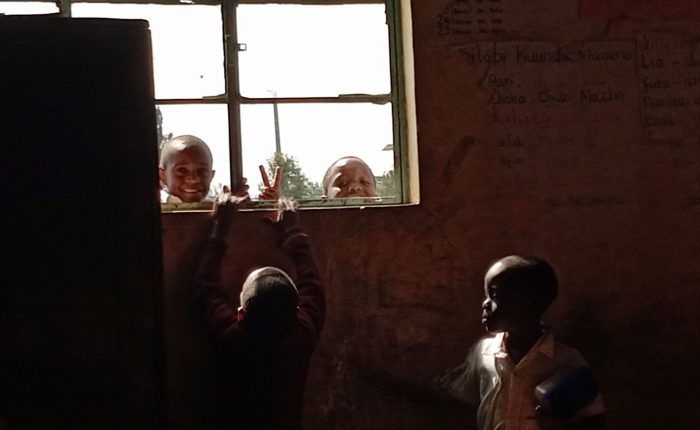
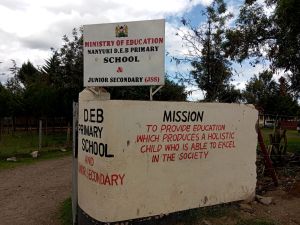 At Nanyuki DEB Primary School, the classrooms may not have the newest technology or the fanciest buildings, but they have something far more powerful…curiosity. Sometimes the best conversations start with the most unexpected questions. In one classroom in Nanyuki, Kenya, a group of ten and eleven year olds wanted to know if I believed in mermaids. A moment later someone asked about Area 51, aliens, and whether dragons are real. Another student wanted to know if I had ever seen Ohio State University. And then, just as quickly, the questions turned deeper: Why do people die? Why do we have different skin colors? They spoke about the challenges young people face growing up in Kenya today. And in the very next breath, someone asked if, when traveling by plane, I had ever seen the end of a rainbow.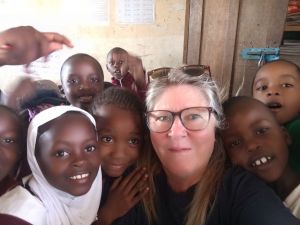
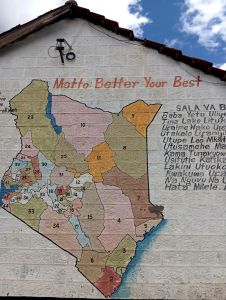
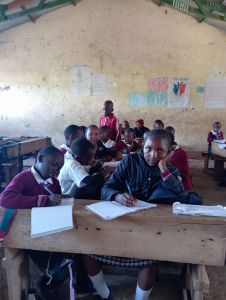
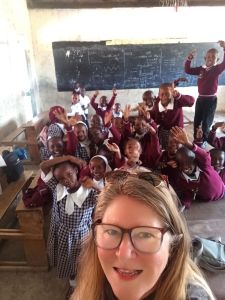
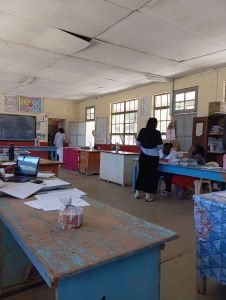
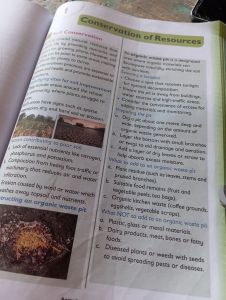
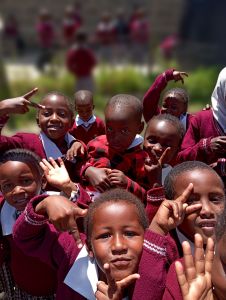
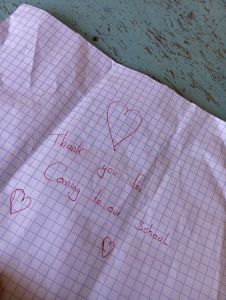

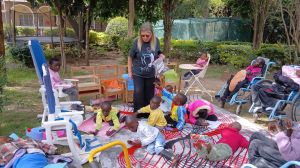
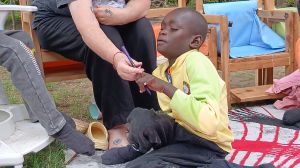
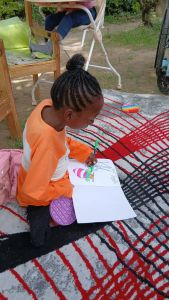
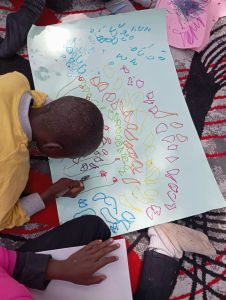
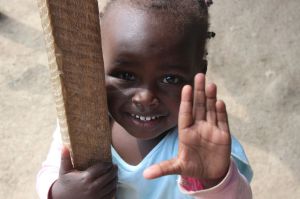
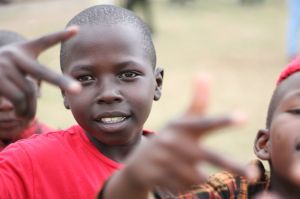
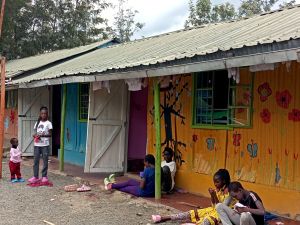
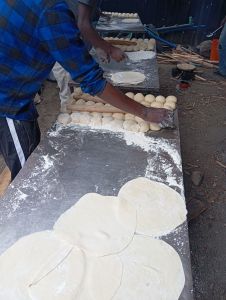
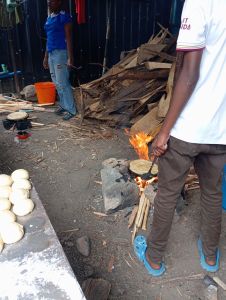
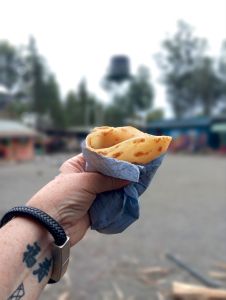

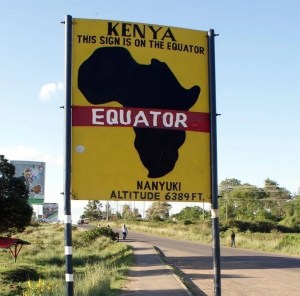
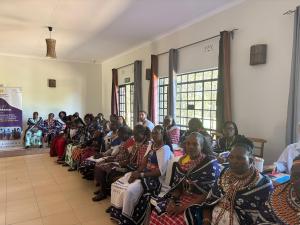
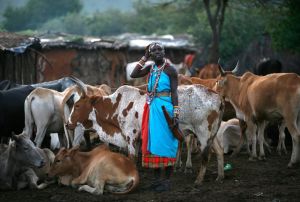
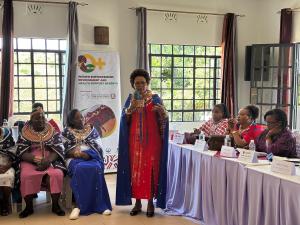
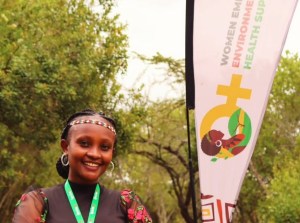
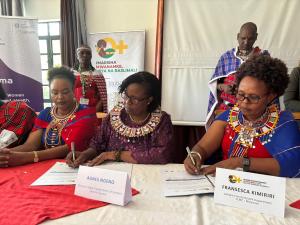

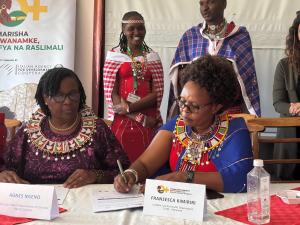
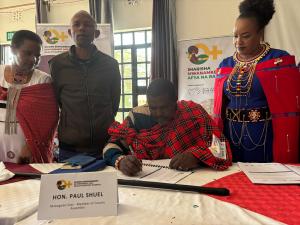
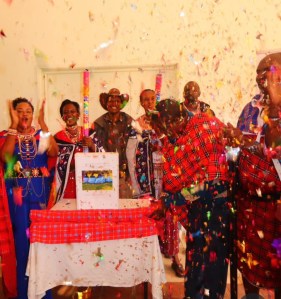


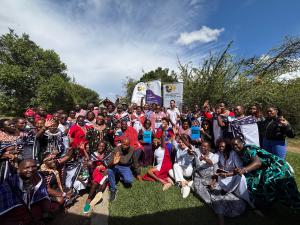
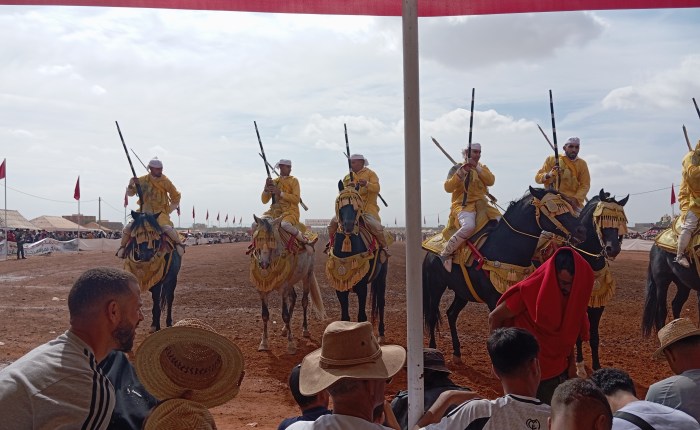
 From Asia to Europe to Africa to small-town America, I’ve seen how different our worlds appear and how alike we truly are. We may cook different meals, pray in different ways, or celebrate under different stars, but what we seek, the connection, the comfort, the laughter is the same. Wherever I go, I find the same joy in gathering, sharing, and belonging. Proof that people are far more alike than different, no matter how far from home we roam.

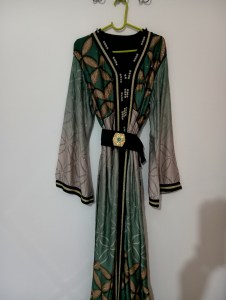
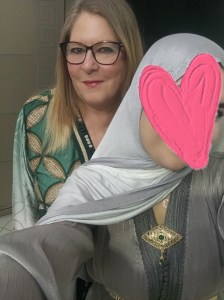

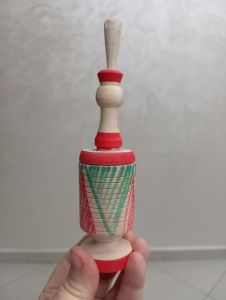

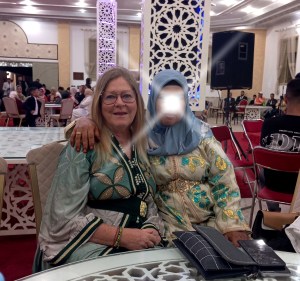
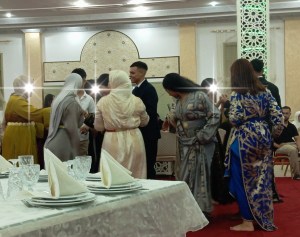


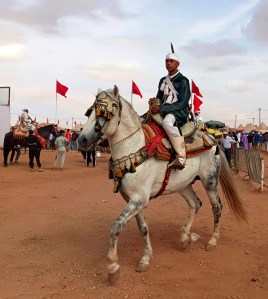


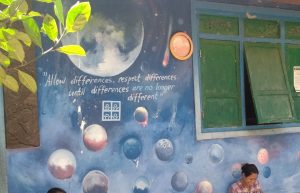
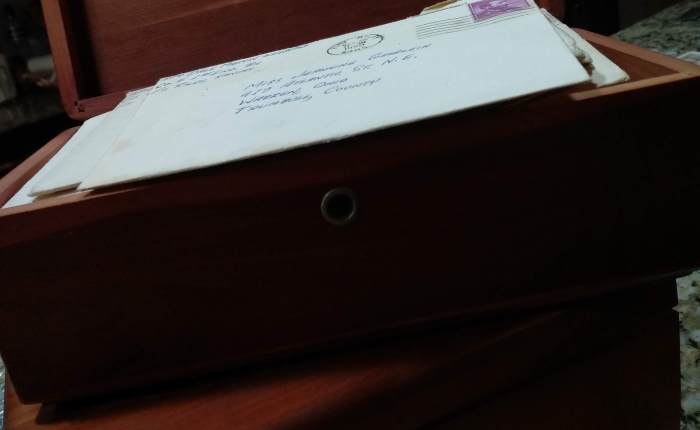

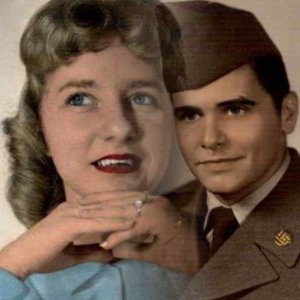
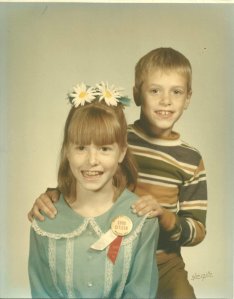




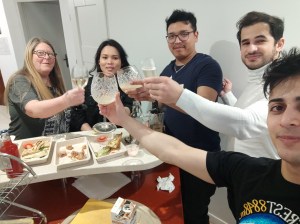


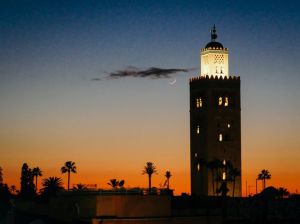


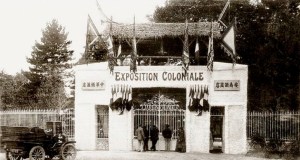
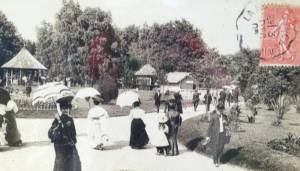


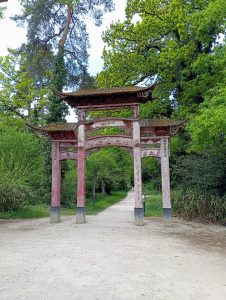
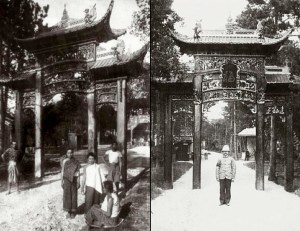
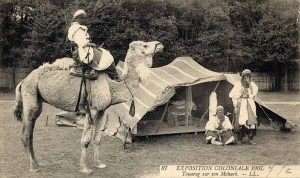
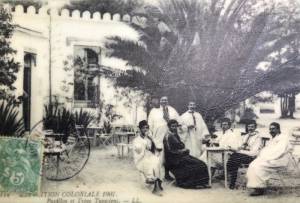


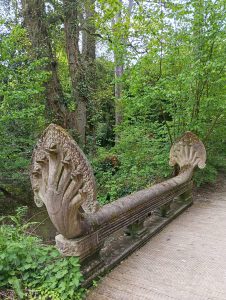


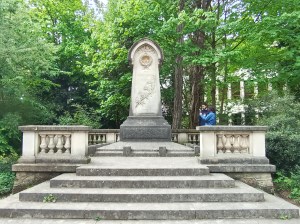

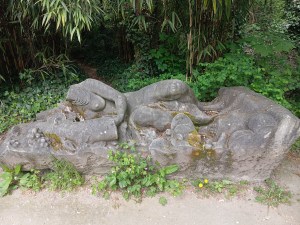
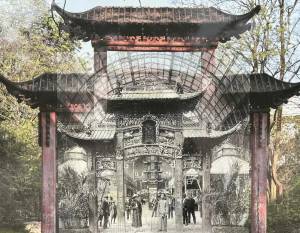

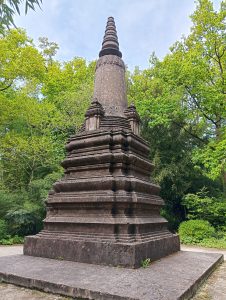
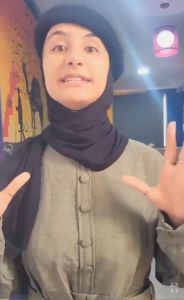


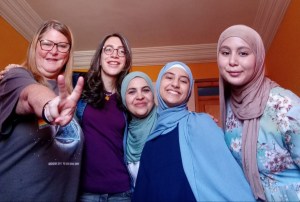

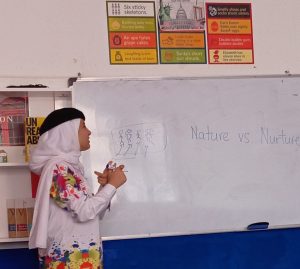


 By the time I landed in Poland, February 3, 2020, I had already lived through years of goodbyes – each one leaving its own ache. Cities blurred into each other, friendships formed fast and ended faster, and I had become practiced in the art of leaving. I thought I knew how to keep things temporary. How wrong I was. China was meant to be 6 months and turned into four years. Poland was meant to be just another stop – Eighteen months, maybe less. But something unexpected happened. I stayed almost five years. Life there unfolded gently. Life in Poland was easy: trams ran on time, quiet cafes where hours slipped by, twenty minutes to the airport and I could be anywhere in Europe in under three hours, and those Friday night deep conversations with people who knew me in a way only time allows. I had roots, rhythms and a sense of belonging I hadn’t planned to find. And then, suddenly it was mid-December 2024, I was in Marrakech, Morocco…a land of heat and dust, where nothing moved quietly. While Poland had been calm and predictable, Morocco pulsed with noise, color, and movement…exhilarating, disorienting, yet comfortably familiar. I had been here before, yet each moment felt newly alive, as if the country were reintroducing itself with every step.
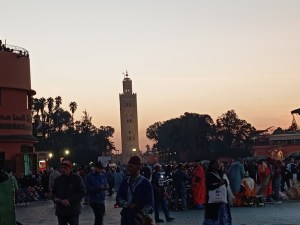
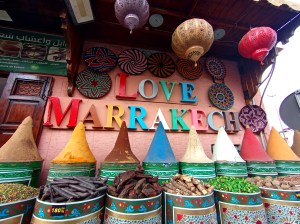

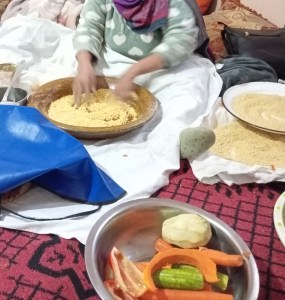


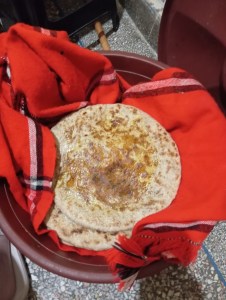
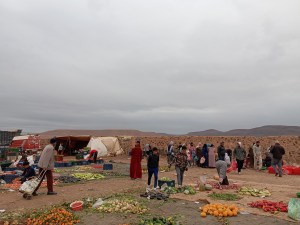


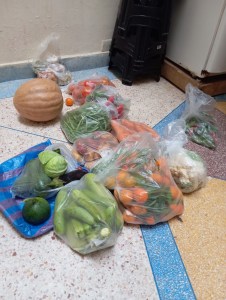


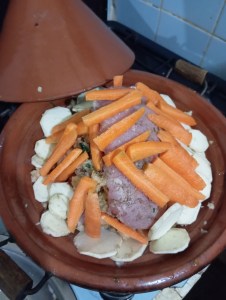


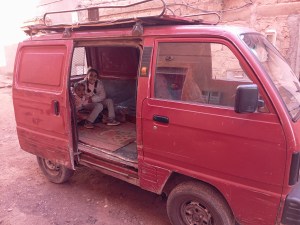


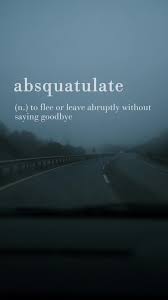

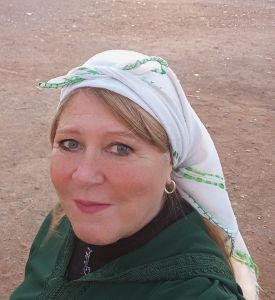


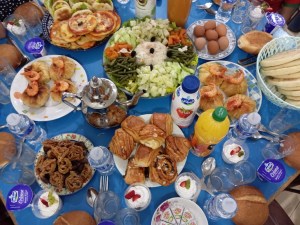

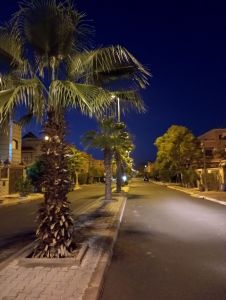


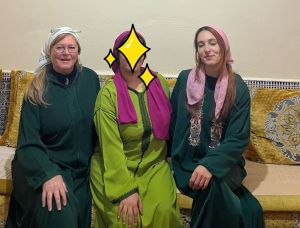

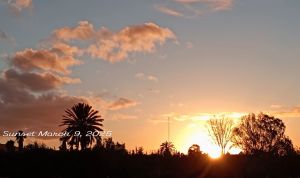






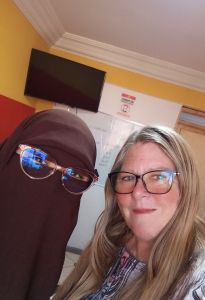



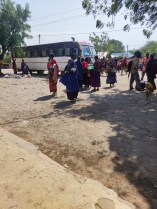

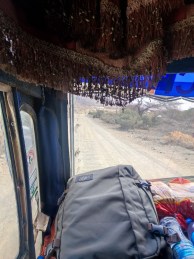


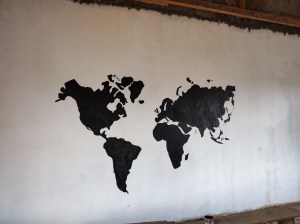
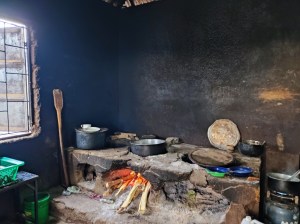


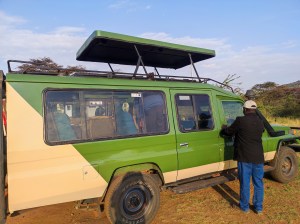
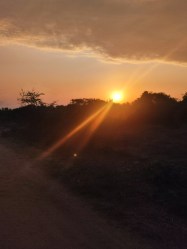
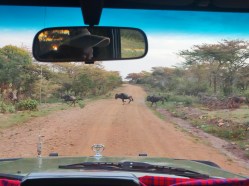
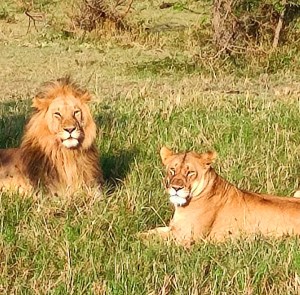
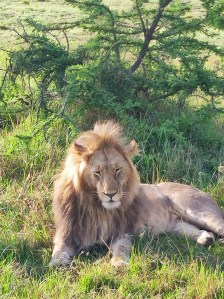
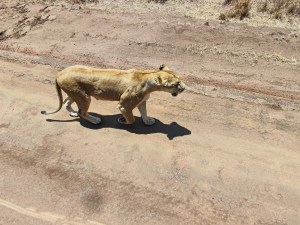
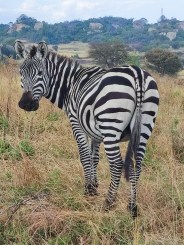
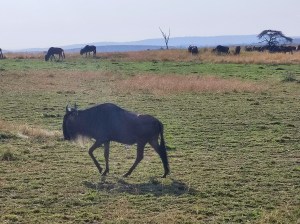

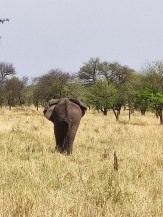
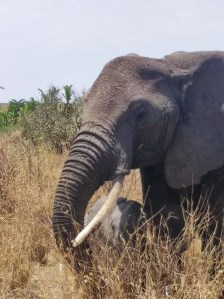
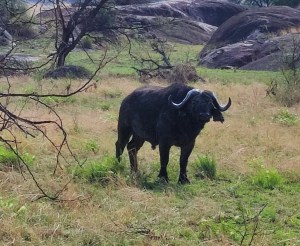


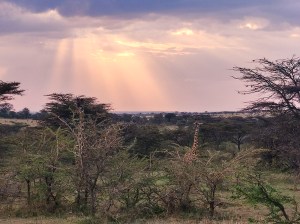

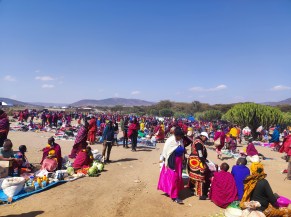
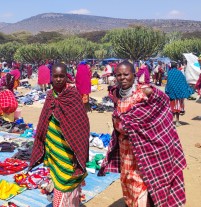

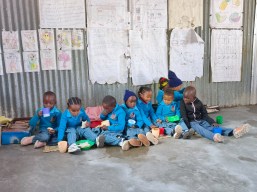


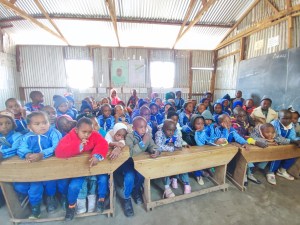
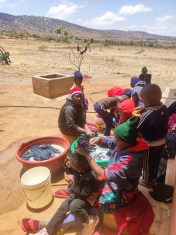




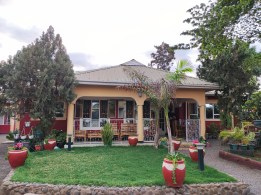
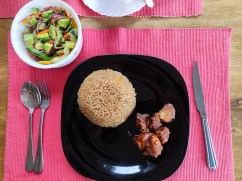


 Down the Rabbit Hole