When most people think of wildlife conservation in Kenya, they picture elephants, lions, and rhinos roaming vast protected areas. What they often don’t see is the complex network of organizations, communities, landowners, researchers, and conservationists working behind the scenes to ensure that people and wildlife can coexist. That’s where the Laikipia Wildlife Forum (LWF) comes in.
Founded in 1992, LWF is a membership-based organization that brings together private conservancies, community conservancies, ranches, tourism operators, researchers, and local communities across Laikipia County. Its mission is to promote the sustainable conservation of wildlife and natural resources while supporting the livelihoods of the people who share the landscape with that wildlife.
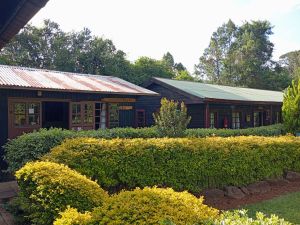
As a volunteer with LWF, I’ve quickly learned that conservation is about far more than protecting animals. It’s about water resources, land management, community engagement, education, conflict mitigation, and creating solutions that benefit both people and wildlife. Laikipia Wildlife Forum’s work spans several key areas of focus, including wildlife conservation, water resource management, sustainable tourism, rangeland management, conservation education, and land-use planning. Together, these efforts support a balanced approach to protecting biodiversity while promoting sustainable livelihoods for local communities. Every meeting, field visit, and conversation has revealed another layer of the challenges and opportunities that come with managing one of Kenya’s most important ecosystems.
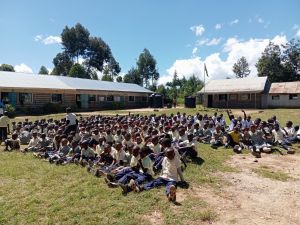
My first field visit was to Nkandone Comprehensive School on World Environment Day, where I joined their Adopt-a-Tree program in partnership with LWF. Each learner is assigned a tree that they are responsible for nurturing, watering, weeding, and caring for it as it grows. The idea is simple but powerful: the tree becomes theirs. Hopefully, years later, they can return to the school and proudly show their family ‘their’ tree.
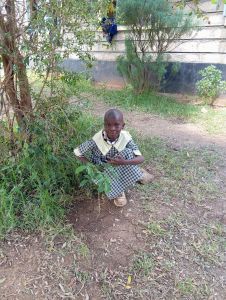
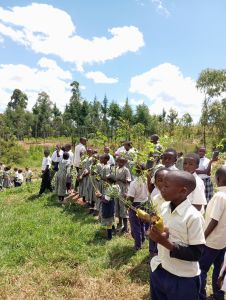
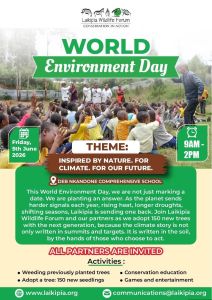
Laikipia Wildlife Forum has found the Adopt-a-Tree program to be highly successful, with around 70% of trees surviving their first year. When learners understand that the responsibility rests with them, they take real ownership of the project, and that sense of accountability is what makes the initiative so effective.
During my volunteer experience, I’ve had the opportunity to learn from conservation professionals and partner organizations, beginning with Soil-Carbon Certification Services (SCCS), where I was introduced to the concept of carbon credits. I learned how changes in land management such as improved grazing practices, tree planting, restoration, and better soil stewardship can increase the amount of carbon stored in soils. These gains can then be measured and verified, allowing landowners and communities to potentially earn income or services through carbon markets while also supporting climate change mitigation and ecosystem restoration.
Next, I was fortunate to sit in on a meeting with Space for Giants. The focus was on human–elephant conflict in Laikipia County, with particular attention to Shamanek Forest. One of the most surprising things I learned was just how significant Laikipia is in Kenya’s conservation landscape. I had no idea that this county is home to Kenya’s second-largest elephant population. The landscape supports an extraordinary diversity of wildlife while also being home to pastoral communities, farmers, ranchers, and growing towns. Balancing these competing needs is no small task, yet it sits at the heart of the work being done by organizations like Laikipia Wildlife Forum.
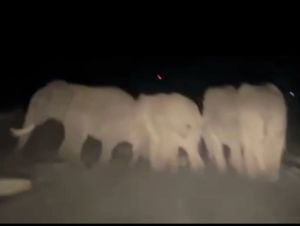
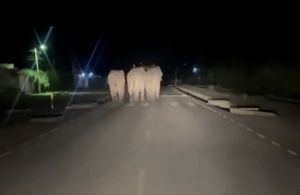
One memorable example discussed was a well-known bull elephant named Naledi, who is often reported raiding crops in surrounding areas, an illustration of the very real challenges of coexistence between wildlife and people living on the same land.
I was also introduced to EarthRanger, a real-time wildlife monitoring system that tracks the movement of collared animals, including elephants like Naledi. Tools like this help conservation teams better understand movement patterns, identify conflict hotspots, and respond more quickly to incidents. In Naledi’s case, monitoring data has shown how he moves between protected areas such as Ol Pejeta, sometimes gathering younger bulls and leading them toward farms. These insights that are crucial for developing strategies to reduce crop raiding and improve coexistence.
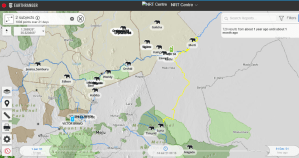
These experiences have given me a much deeper appreciation for how much collaboration is required to protect wildlife corridors, reduce human–wildlife conflict, strengthen community conservation efforts, and ensure that future generations can continue to benefit from Kenya’s natural heritage.
After learning about the large-scale conservation efforts taking place across Laikipia, I quickly realized that protecting wildlife isn’t just happening in boardrooms, conservancies, and community meetings. It is also taking root in classrooms. One of the most encouraging aspects of my time with Laikipia Wildlife Forum has been seeing the investment being made in young people through environmental and conservation clubs in local schools. These programs help students develop a deeper understanding of the natural world around them while empowering them to become future conservation leaders. Over the past weeks, I have had the opportunity to visit schools including St. Moses Conservation Club and Brookwell Harmony School, where I witnessed firsthand the enthusiasm, creativity, and commitment of students who are already making a difference in their communities. Their passion offers hope that the future of conservation in Laikipia is in capable hands.
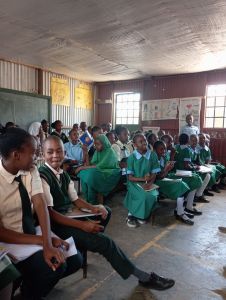
Along with my colleagues from Laikipia Wildlife Forum, I visited St. Moses Primary School and its Environmental and Conservation Club for a day of learning, conservation-themed games, and celebration. We spoke with the students about the importance of creating “green schools”…campuses that promote environmental stewardship through activities such as tree planting, waste reduction, recycling, and conservation education.
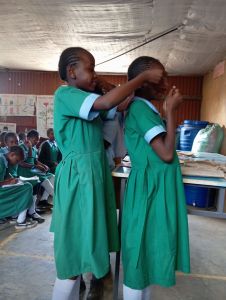
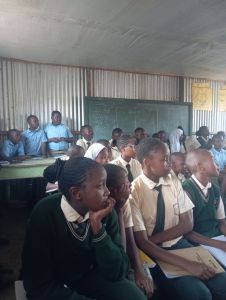
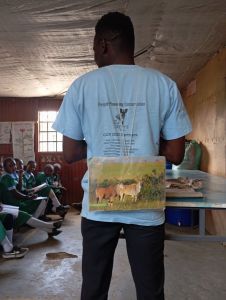
The highlight of the visit was recognizing three outstanding students who were among the winners of the annual Environmental Awareness Competition organized by the African Fund for Endangered Wildlife (AFEW) and the Giraffe Centre in Nairobi. The competition encourages young people across Kenya to learn about wildlife conservation and environmental protection while expressing their knowledge through art, writing, and other creative projects.
This year, 301 students from across Kenya were recognized as winners. Of those, an impressive 17 came from schools in Nanyuki, demonstrating the region’s strong commitment to environmental education. St. Moses Primary School achieved an especially remarkable distinction, placing third nationally among participating schools. One of its students earned first place in Kenya in the Junior Secondary School Art category, while two additional students were also recognized among the competition’s winners.
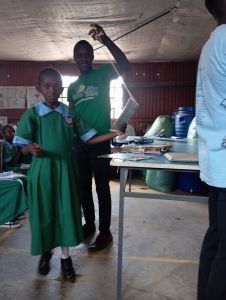
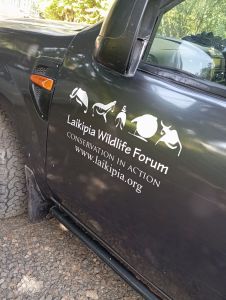
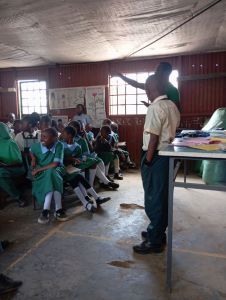
The achievement shows not only the dedication and creativity of the students, but also the commitment of their teachers, school leadership, parents, and conservation partners who continue to nurture environmental awareness among young people. Seeing the pride on the students’ faces was a reminder that conservation is not only about protecting wildlife today It is about inspiring the next generation to become stewards of the natural world.
Congratulations to St. Moses Primary School, the winning students, their teachers, and all the schools in Nanyuki that participated. Your efforts are helping to build a future where both people and wildlife can thrive.
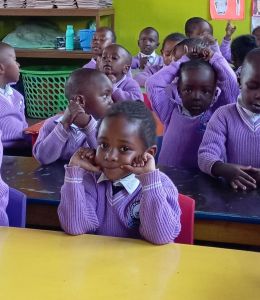
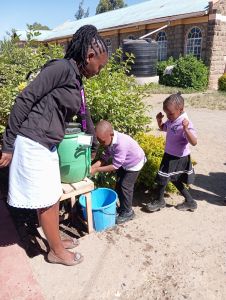
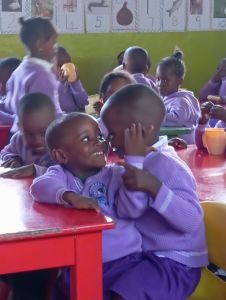
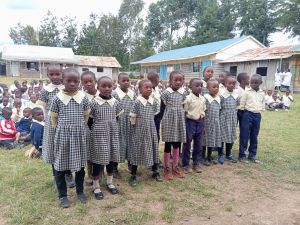
Over the past week plus, I have had the opportunity to spend time at Brookwell Harmony School, primarily with the PP1 class…the four-year-olds. If you’ve never spent a day with 79 preschoolers, let me assure you, they can generate an incredible amount of energy and noise!
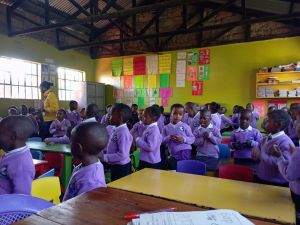
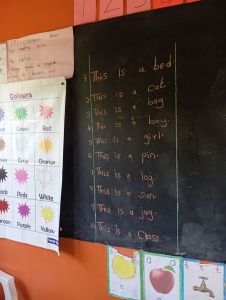
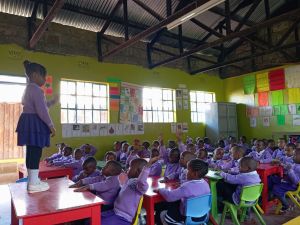
One morning we worked on writing simple sentences: “This is a girl.” “This is a boy.” “This is a bag.” “This is a mat.” After the lessons, we sang, danced, and had plenty of fun. They definitely wore me out, but it was worth every minute. It was also assessment week, which means even these young learners were preparing for exams. Knowing they would soon be expected to sit quietly, focus, and do their best, it felt good to give them a chance to laugh, move, and simply be four years old. The remarkable thing is how quickly they transition. After all the excitement, when their teachers ask them to sit and listen, they do.
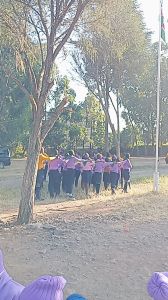
While most of my time has been spent in the PP1 classroom, I have had the opportunity to interact with students and staff throughout the school. Every Monday begins with an assembly where the flag is raised, announcements are shared, and the Scout troop takes the lead. There is a strong sense of community and pride that is evident from the moment the school day begins.
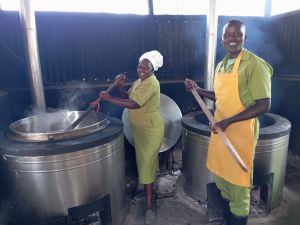
I have also come to appreciate the many people who work behind the scenes to make a school run. The kitchen staff prepare meals for hundreds of learners each day, and their work is every bit as important as what happens in the classroom. They are among the many unsung heroes who help create an environment where children can learn and thrive.
One thing that has particularly impressed me is how well the students care for their campus and their knowledge of the natural world around them. Environmental awareness isn’t simply taught as a lesson; it appears to be an integral part of the schools’s culture.
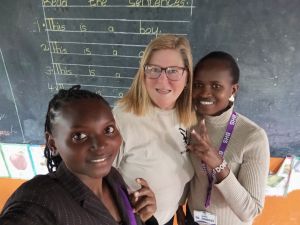
Most of all, I have been inspired by the two PP1 teachers I work alongside each day. Teaching four-year-olds requires endless patience, creativity, and energy, and they bring all of those qualities to the classroom. The love they have for their learners and their passion for their profession are evident in everything they do. Watching them interact with the children has been a reminder that some of the most important work in the world happens in classrooms, one young learner at a time.
My time at Brookwell has been filled with laughter, learning, and a renewed appreciation for the educators who help shape the next generation. The children may leave me exhausted at the end of the day, but they also leave me smiling.
It’s currently mid-term break, so I’m not at the schools, but I did learn about something really special that happened recently. This is the competition I mentioned earlier in the post, and it was also the prize awarded to the learners. With support from LWF, learners were taken to Nairobi where 18 students from schools across Laikipia, Meru, and Nyeri were recognised at the Kenya School of Law as conservation champions through the AFEW Kenya Giraffe Centre Environmental Awareness Competition.
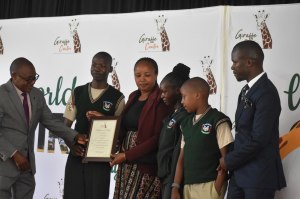
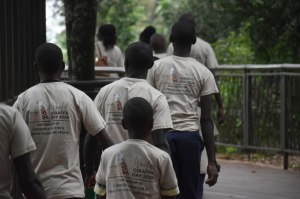
Through art and essays on partnerships in conservation, these students showed a deep understanding of how people, wildlife, and habitats are all connected. It’s inspiring to see young learners stepping into these roles as thinkers and changemakers.
They also visited the Giraffe Centre for a hands-on experience and took part in interactive conservation learning activities. It’s a great example of how impactful conservation education can be when it goes beyond the classroom.
Looking back on my first weeks with Laikipia Wildlife Forum, one thing has become clear: conservation is about far more than protecting wildlife. It is about partnerships. It is communities and conservation organizations working together. It is teachers inspiring curiosity, students finding their voices, and young people learning that they have a role to play in protecting the world around them.
Whether I was sitting in meetings discussing human-elephant conflict, celebrating student conservation champions, or helping four-year-olds write their first sentences, I kept seeing the bigger picture. Conservation is built one relationship, one lesson, and one opportunity at a time. Wildlife conservation does not begin when a ranger steps into the field. It begins when a child plants a tree, learns the value of a giraffe or an elephant, and understands that the future of both wildlife and people are connected.
I am grateful for the opportunity to learn from the dedicated staff of Laikipia Wildlife Forum, the educators who shape young minds every day, and the students whose enthusiasm gives me hope for what lies ahead. I look forward to continuing this journey, strengthening these partnerships, and discovering more of the remarkable work being done across Laikipia to ensure that both people and wildlife can thrive together.
Because in the end, the future of conservation may not rest in the hands of the people teaching today’s lessons, but in the hands of the children listening.

 Down the Rabbit Hole
Enjoyed! All the best.
LikeLiked by 1 person
Asante sana, Sheryl!
LikeLike