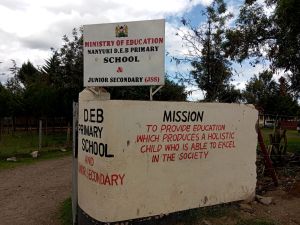
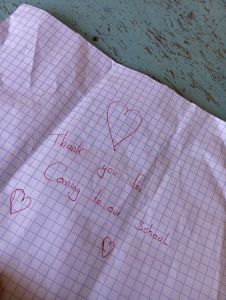
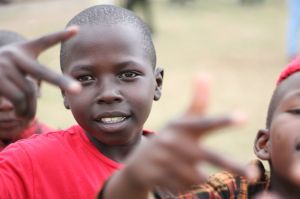
 At Nanyuki DEB Primary School, the classrooms may not have the newest technology or the fanciest buildings, but they have something far more powerful…curiosity. Sometimes the best conversations start with the most unexpected questions. In one classroom in Nanyuki, Kenya, a group of ten and eleven year olds wanted to know if I believed in mermaids. A moment later someone asked about Area 51, aliens, and whether dragons are real. Another student wanted to know if I had ever seen Ohio State University. And then, just as quickly, the questions turned deeper: Why do people die? Why do we have different skin colors? They spoke about the challenges young people face growing up in Kenya today. And in the very next breath, someone asked if, when traveling by plane, I had ever seen the end of a rainbow.
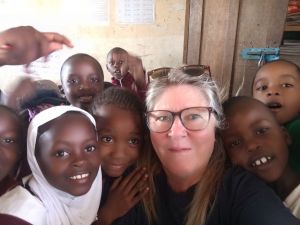
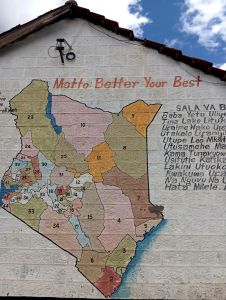
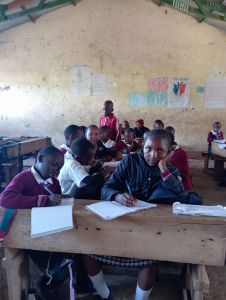
Sitting in those classrooms at Nanyuki DEB School, I realized this wasn’t just a visit to a school. It was a window into the curiosity, imagination, and very real concerns of the young people growing up here. A reminder that classrooms everywhere are filled with the same thing, young minds trying to understand the world.
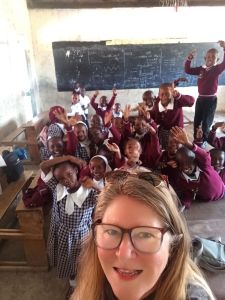
After those questions, the lesson continued. The classrooms are full, desks are shared, and with limited resources, I found myself at the front of the room, chalk in hand, writing on a cracked blackboard. Their voices echoed back in unison, repeating each sentence I had written.
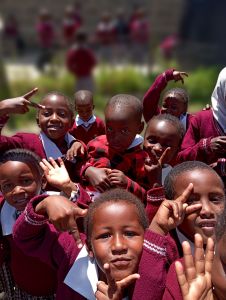
Maybe it’s because I am a visitor, a white woman from the USA, but the eagerness here doesn’t feel limited at all. Hands shoot up quickly. Students lean forward, laugh easily, smile often. They want to know. They want to understand. They want to trace the lines of my tattoos and hear the stories behind them. They reach for my hair, commenting on how “soft” it is. Their curiosity isn’t just about the lesson…it’s about the world beyond it, and about me as a small piece of that world.
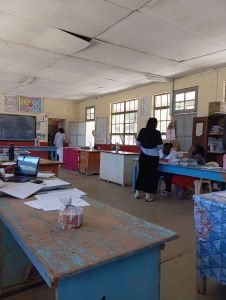
It doesn’t remind me of classrooms back home, filled with the latest technology. I haven’t seen a copy machine here, or a computer, or a PowerPoint projector, things that felt standard even in rural China. In many ways, it couldn’t be more different. And yet, the one thing that carries across every border, every language, every system is that same curiosity I saw in those first questions. And a smile really is a universal language.
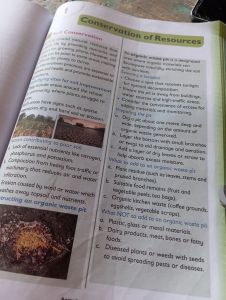
One thing that did surprise me is that, aside from Kiswahili lessons, subjects like math, science, and agriculture are all taught in English. It’s a reminder of how much language shapes access and opportunity.
Over the years of teaching English in different parts of the world, I’ve learned that what matters most isn’t technology or perfectly planned lessons. It’s your time. A nonjudgmental ear. A kind smile. If you take the time to listen, really listen, not just to respond, the young people will meet you there. They will engage. They will share. And more often than not, they will teach you far more than you ever expected to teach them.
For many families in Kenya, especially those living in remote areas or in deep poverty, access to healthcare is not a given. It’s a challenge. The cost of transportation alone can be enough to keep people from ever reaching a clinic. In those cases, families often turn first to traditional healers within their communities for answers and care.
Adding to that reality are deeply rooted beliefs and widespread stigma surrounding disability. This is not unique to Kenya. It exists in many parts of the world, but here it can be especially visible. Some still believe that disabilities are caused by curses, witchcraft, evil spirits, or even wrongdoing within a family. These beliefs don’t just exist in theory; they shape how children are treated. Some are hidden away. Some are neglected, abandoned, or abused. And in the most heartbreaking cases, some are not allowed to live beyond birth.
Organizations like Sang’ida Foundation are working to change that narrative. As described by the Climate Justice Resilience Fund, Sang’ida is a women-led organization advocating for the rights of children with disabilities, their mothers, and primary caregivers in pastoralist communities across Laikipia County. Founded by a mother raising a child with disabilities, it was born out of a need to challenge harmful cultural norms and create space for inclusion, dignity, and care. In a region already facing drought, human-wildlife conflict, and environmental strain, their work ensures that those most often left behind are not forgotten.
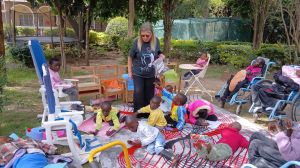
Alongside my time at the primary school, I have visited the Sang’ida Safe House twice. There, I met children whose lives look nothing like a typical classroom experience. Many have been abandoned or hidden away because of severe disabilities. Children who, in some cases, were never given the chance to simply be seen.
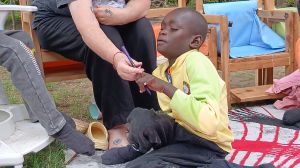
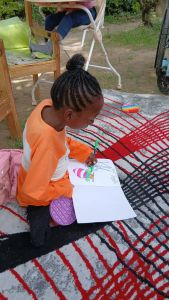
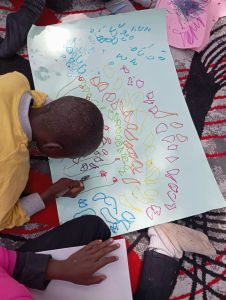
We painted together, at least those who were able. There weren’t many words, but there didn’t need to be. The connection came through color, through presence, through sitting side by side under the shade of a tree. Everyone was included. Even those who couldn’t participate in the painting were part of the moment. Just by being there, just by being seen.
And then there is Furaha Foundation, where a different kind of story unfolds.
The foundation provides a home for children between the ages of two and fourteen, while also continuing to support others who have been reintegrated back into their families and communities. Many of the children who arrive here come from difficult circumstances like loss, instability, or situations where care and protection were no longer guaranteed. Factors like poverty, illness, family breakdown, and the lasting effects of HIV/AIDS have left some without the consistent support every child deserves.
Furaha’s vision is to create a space where these children are not only safe, but nurtured. Where they have access to education, counseling, and the opportunity to grow up with the same sense of possibility as any other child.
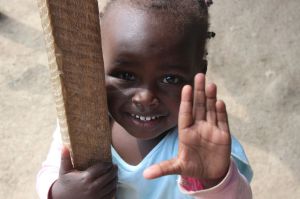
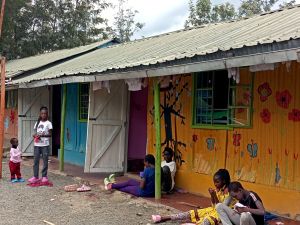
What I saw there were young people living together, not just surviving, but building something that felt like a family.
During my visit, some of them were gathered around open fires, making chapati for the week ahead. There was laughter, teamwork, a rhythm to it all. They handed me a warm piece, fresh off the fire, and for a moment I wasn’t an outsider observing. I was simply included.
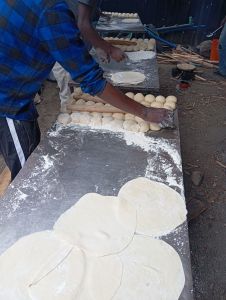
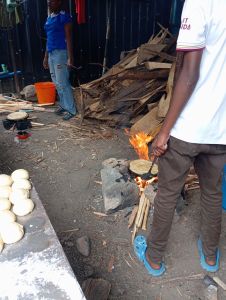
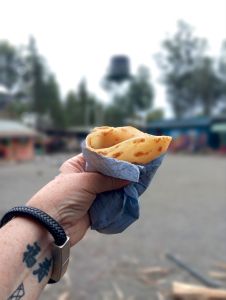
Nearby, others sat quietly reading, or talking and laughing in small groups. Nothing about it felt forced. It felt lived-in. It felt real.
And maybe that’s what stayed with me most. Not just the structure of the place, or even the mission behind it, but the feeling of it. In a space born out of hardship, there was still joy. Still connection. Still something that looked a lot like home. Which, by the way, the word Furaha in Kiswahili means joy and standing there, it felt like exactly the right name.
As I reflect on this first month in Nanyuki, I keep coming back to that word in different forms. In the curiosity-filled classrooms of the primary school. In the quiet presence at Sang’ida. In the laughter around an open fire at Furaha. Different places, different stories, different realities, but all connected by something deeply human. A desire to be seen. To be understood. To belong. And in each of these spaces, in their own way, I’ve been reminded that even in the most unexpected places, joy finds a way to exist and to be shared.


quite an honest review of Nanyuki DEB Primary and Junior School…
we’re glad you came,saw and interacted with our learners
LikeLiked by 1 person
Thanks for taking the time to read and comment. I have enjoyed every moment at the school. Thank you for being so welcoming. I plan to come back if you will have me. 🩷
LikeLike