Mermaids, Aliens, and “the” Ohio State – A Month in Nanyuki

Mermaids, Aliens, and “the” Ohio State – A Month in Nanyuki

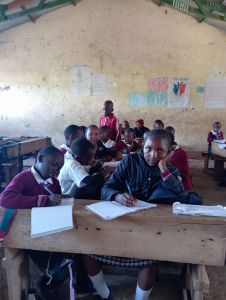
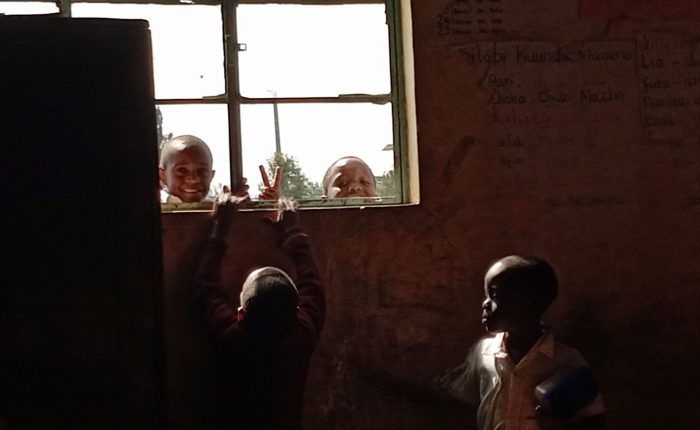
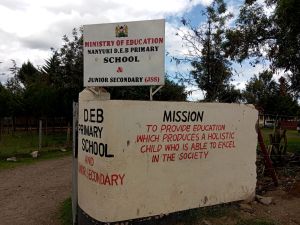
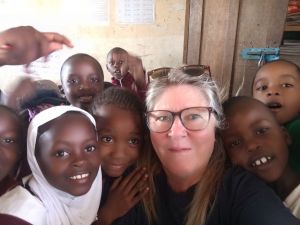
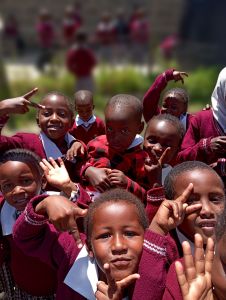
At Nanyuki DEB Primary School, the classrooms may not have the newest technology or the fanciest buildings, but they have something far more powerful…curiosity. Sometimes the best conversations start with the most unexpected questions. In one classroom in Nanyuki, Kenya, a group of ten and eleven year olds wanted to know if I believed in mermaids. A moment later someone asked about Area 51, aliens, and whether dragons are real. Another student wanted to know if I had ever seen Ohio State University. And then, just as quickly, the questions turned deeper: Why do people die? Why do we have different skin colors? They spoke about the challenges young people face growing up in Kenya today. And in the very next breath, someone asked if, when traveling by plane, I had ever seen the end of a rainbow.
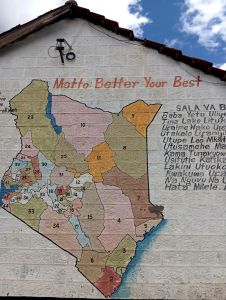
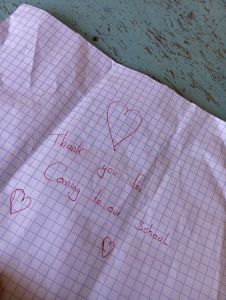
Sitting in those classrooms at Nanyuki DEB School, I realized this wasn’t just a visit to a school. It was a window into the curiosity, imagination, and very real concerns of the young people growing up here. A reminder that classrooms everywhere are filled with the same thing, young minds trying to understand the world.
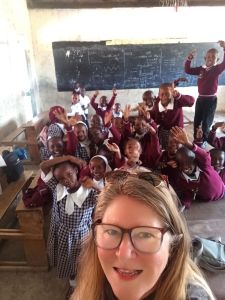
After those questions, the lesson continued. The classrooms are full, desks are shared, and with limited resources, I found myself at the front of the room, chalk in hand, writing on a cracked blackboard. Their voices echoed back in unison, repeating each sentence I had written.

Maybe it’s because I am a visitor, a white woman from the USA, but the eagerness here doesn’t feel limited at all. Hands shoot up quickly. Students lean forward, laugh easily, smile often. They want to know. They want to understand. They want to trace the lines of my tattoos and hear the stories behind them. They reach for my hair, commenting on how “soft” it is. Their curiosity isn’t just about the lesson…it’s about the world beyond it, and about me as a small piece of that world.
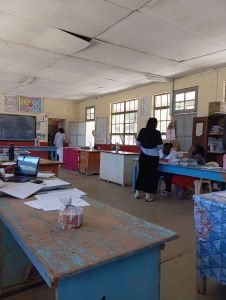
It doesn’t remind me of classrooms back home, filled with the latest technology. I haven’t seen a copy machine here, or a computer, or a PowerPoint projector, things that felt standard even in rural China. In many ways, it couldn’t be more different. And yet, the one thing that carries across every border, every language, every system is that same curiosity I saw in those first questions. And a smile really is a universal language.
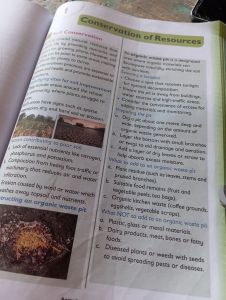
One thing that did surprise me is that, aside from Kiswahili lessons, subjects like math, science, and agriculture are all taught in English. It’s a reminder of how much language shapes access and opportunity.

Over the years of teaching English in different parts of the world, I’ve learned that what matters most isn’t technology or perfectly planned lessons. It’s your time. A nonjudgmental ear. A kind smile. If you take the time to listen, really listen, not just to respond, the young people will meet you there. They will engage. They will share. And more often than not, they will teach you far more than you ever expected to teach them.
For many families in Kenya, especially those living in remote areas or in deep poverty, access to healthcare is not a given. It’s a challenge. The cost of transportation alone can be enough to keep people from ever reaching a clinic. In those cases, families often turn first to traditional healers within their communities for answers and care.

Adding to that reality are deeply rooted beliefs and widespread stigma surrounding disability. This is not unique to Kenya. It exists in many parts of the world, but here it can be especially visible. Some still believe that disabilities are caused by curses, witchcraft, evil spirits, or even wrongdoing within a family. These beliefs don’t just exist in theory; they shape how children are treated. Some are hidden away. Some are neglected, abandoned, or abused. And in the most heartbreaking cases, some are not allowed to live beyond birth.
Organizations like Sang’ida Foundation are working to change that narrative. As described by the Climate Justice Resilience Fund, Sang’ida is a women-led organization advocating for the rights of children with disabilities, their mothers, and primary caregivers in pastoralist communities across Laikipia County. Founded by a mother raising a child with disabilities, it was born out of a need to challenge harmful cultural norms and create space for inclusion, dignity, and care. In a region already facing drought, human-wildlife conflict, and environmental strain, their work ensures that those most often left behind are not forgotten.
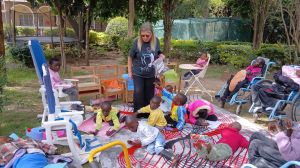
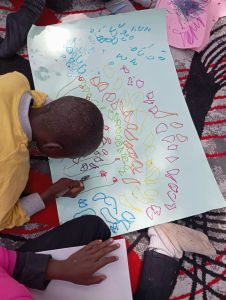
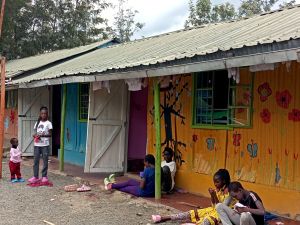
Alongside my time at the primary school, I have visited the Sang’ida Safe House twice. There, I met children whose lives look nothing like a typical classroom experience. Many have been abandoned or hidden away because of severe disabilities. Children who, in some cases, were never given the chance to simply be seen.
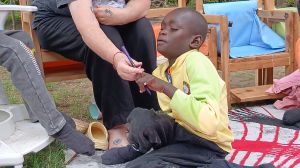
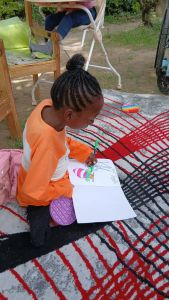
We painted together, at least those who were able. There weren’t many words, but there didn’t need to be. The connection came through color, through presence, through sitting side by side under the shade of a tree. Everyone was included. Even those who couldn’t participate in the painting were part of the moment. Just by being there, just by being seen.
And then there is Furaha Foundation, where a different kind of story unfolds.

The foundation provides a home for children between the ages of two and fourteen, while also continuing to support others who have been reintegrated back into their families and communities. Many of the children who arrive here come from difficult circumstances like loss, instability, or situations where care and protection were no longer guaranteed. Factors like poverty, illness, family breakdown, and the lasting effects of HIV/AIDS have left some without the consistent support every child deserves.

Furaha’s vision is to create a space where these children are not only safe, but nurtured. Where they have access to education, counseling, and the opportunity to grow up with the same sense of possibility as any other child.
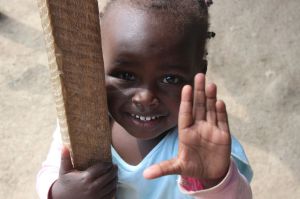
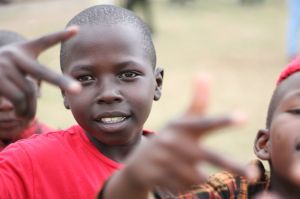
What I saw there were young people living together, not just surviving, but building something that felt like a family.

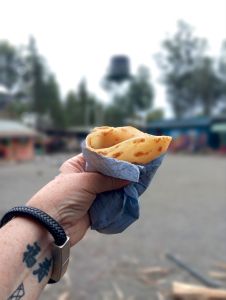
During my visit, some of them were gathered around open fires, making chapati for the week ahead. There was laughter, teamwork, a rhythm to it all. They handed me a warm piece, fresh off the fire, and for a moment I wasn’t an outsider observing. I was simply included.
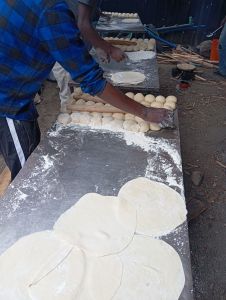
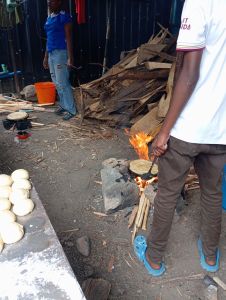
Nearby, others sat quietly reading, or talking and laughing in small groups. Nothing about it felt forced. It felt lived-in. It felt real.

And maybe that’s what stayed with me most. Not just the structure of the place, or even the mission behind it, but the feeling of it. In a space born out of hardship, there was still joy. Still connection. Still something that looked a lot like home. Which, by the way, the word Furaha in Kiswahili means joy and standing there, it felt like exactly the right name.

As I reflect on this first month in Nanyuki, I keep coming back to that word in different forms. In the curiosity-filled classrooms of the primary school. In the quiet presence at Sang’ida. In the laughter around an open fire at Furaha. Different places, different stories, different realities, but all connected by something deeply human. A desire to be seen. To be understood. To belong. And in each of these spaces, in their own way, I’ve been reminded that even in the most unexpected places, joy finds a way to exist and to be shared.

 

A Seat in the Circle – An Unexpected International Women’s Day

A Seat in the Circle – An Unexpected International Women’s Day

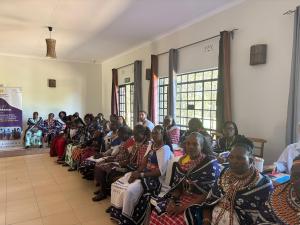
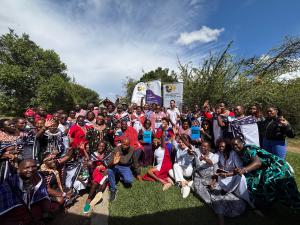
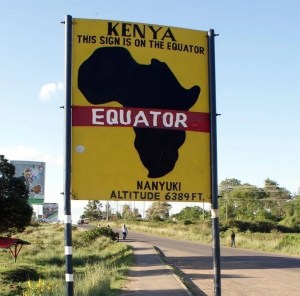
March 1st I arrived in Nanyuki, Kenya, still very much a newcomer and still finding my footing in a new place. Sometimes travel moves slowly, giving you time to settle into a place before it surprises you. And sometimes, just a week after arriving, you find yourself sitting in the middle of a celebration for International Women’s Day with women from the Maasai community.

They had gathered to celebrate empowerment and resilience, sharing stories of strength, change, and hope. I didn’t always understand the language being spoken, but sitting in that circle of women, listening, watching, feeling their energy, I realized I didn’t need to. The joy, the power, and the determination of these women shaping their families, their communities, and their futures spoke clearly enough. In that moment, the language was universal.

It was one of those unexpected gifts travel gives you. The kind where you realize you’re not just passing through a place, but you’ve been invited to witness something important.

But to truly understand the strength in that circle of women, you first have to understand the realities of life in a pastoral community.

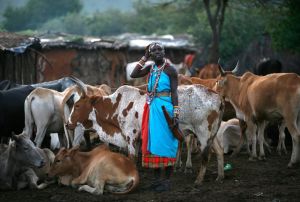
Photo Credit National Geographic

A pastoral community is a social and economic system centered around the herding of livestock, primarily cattle, goats, and sheep. These animals are not just a source of food or income; they shape daily life, social roles, and cultural identity. For Maasai women, being part of a pastoralist society often means a life of intense labor and responsibility.

While speaking with a woman I met in Nanyuki, someone who works closely with Maasai communities and runs a safe house for young people with disabilities, I began to understand some of these realities more clearly. Many of the children she cares for were shunned by their communities, sometimes because disabilities are believed to be a curse, and sometimes simply because families lack the resources to support them.

She also explained how the demands of pastoral life affect families. When grazing becomes scarce, the person responsible for the herd (the mother) may leave the community for months at a time, moving livestock to areas with better pasture and water. During those periods, families rely heavily on extended networks of co-wives, relatives, and elders to care for children and maintain the household.

Before I share more about the IWD gathering itself, it helps to understand a few key aspects of life for Maasai women. Their role within pastoral communities is both central and complex. Women carry much of the daily responsibility that keeps families and villages functioning, yet they often have limited access to resources such as land or livestock ownership. Alongside these economic realities, they also face cultural challenges from traditions like female genital mutilation (FGM) to the pressures of maintaining households in a changing world. At the same time, these roles are slowly shifting, as education, advocacy, and community leadership open new possibilities for Maasai women and girls.

It was against this backdrop that the three-day International Women’s Day gathering was held at Storms Resort just outside of Nanyuki. I was invited by Sharon, who works with Laikipia Permaculture. The event brought together Maasai women from across the region and was funded by the Italian Agency for Development Cooperation – AICS through its Development & Health Support program in Kenya, allowing the women to participate at no cost.

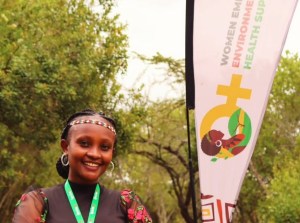
Sharon

At the end of the event, Sharon shared with me a document titled Women’s Memorandum of Issues – Sauti ya Mama Workshop 2026. The memorandum was developed/written during the first two days of the workshop by the participants and outlines many of the challenges women and girls continue to face despite legal protections meant to guarantee equality. It addresses Advocacy and Legal Protection, Land and Environment, Leadership and Governance, Livelihood and Innovation, and GBV (Gender-Based Violence) and SRHR (Sexual Reproductive Health Rights).

As the document states:

“Despite constitutional, legal, and international commitments to gender equality, women and girls continue to face significant and systemic barriers that hinder their full participation in social, economic, and political life. This memorandum outlines critical issues requiring immediate policy, legislative, and social interventions to ensure safety, equality, and dignity.”

Reading those words gave deeper meaning to what I experienced that afternoon.

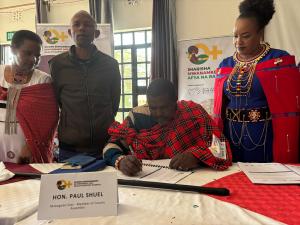
What also struck me that afternoon was the presence of male public officials and respected representatives of the Maasai community. Their attendance and their willingness to sign a document in support of the women’s concerns signaled that the conversations happening that weekend were meant to reach beyond the gathering itself. The memorandum outlined a wide range of issues affecting women and girls.

While the memorandum spans more than twenty pages, a few of the issues it highlighted stood out.

One section addressed “Cultural and Social Barriers to Women’s Land Ownership.” The recommendations called for community awareness and education around women’s land rights, with outreach directed toward men, elders, youth, and the wider community.

Another issue identified was “Low Literacy Levels Among Women,” which can limit women’s confidence and ability to participate fully in community and civic life. Among the recommendations were the introduction of community-based adult literacy programs for indigenous women and stronger support for the education of girls and young women.

The memorandum also addressed the “Exclusion of Women from Decision Making.” Recommendations included implementing affirmative action policies to increase women’s representation and providing training and capacity-building opportunities for women in governance and leadership roles.

Closely related were “Cultural Barriers and Gender Norms” that discourage women from stepping into leadership positions. Cultural expectations tied to marital status and traditional gender roles can restrict women’s participation in public life. The memorandum recommended community education around gender equality and inclusive leadership, along with encouraging greater engagement from men as advocates for equality.

Because women and girls in Narok and Laikipia counties continue to face challenges in accessing quality health services and exercising their Sexual and Reproductive Health (SRH) rights, the memorandum also devoted significant attention to issues related to gender-based violence and reproductive health.

One concern identified was “Myths, Misconceptions, and Cultural Barriers to SRH Services.” Recommendations included community education encouraging safe hospital deliveries and promoting greater use of maternal health services in health facilities.

Another critical issue was “Weak Gender-Based Violence (GBV) Reporting and Justice Mechanisms.” The memorandum called for stronger pathways to justice for survivors through formal legal systems, as well as improved confidentiality and protection mechanisms.

The memorandum outlined the issues and recommendations. That afternoon, I witnessed the voices behind them.

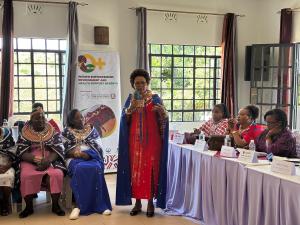
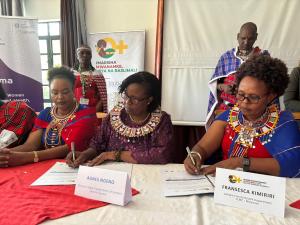
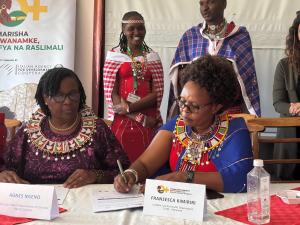
Agnes Ngeno, center, signing the document

In her closing speech, Agnes Ngeno, County Director Gender, State Department for Gender Narok, summed up the purpose of the gathering. She reminded the audience that the theme for International Women’s Day 2026 was “Rights. Justice. Action. For All Women and Girls,” and is a call to move beyond rhetoric. Gender equality, she said, is rooted in fundamental human rights and requires strong legal protections, real justice, and immediate collective action to ensure that no woman or girl is left behind.

She also emphasized that International Women’s Day 2026 is a critical moment to reaffirm Kenya’s commitment to the rights of women and girls. While progress has been made, the world continues to face overlapping crises and an erosion of rights, including the rising threat of femicide. The day, she explained, serves both as a platform to confront systemic barriers and as a moment to celebrate the achievements of women leading the way in areas such as STEM, leadership, and financial inclusion.

Following her remarks, the memorandum was formally signed by representatives present at the gathering: women leaders who helped draft the document, government officials, and male representatives of the Maasai community who voiced their support for the issues and recommendations raised during the weekend.

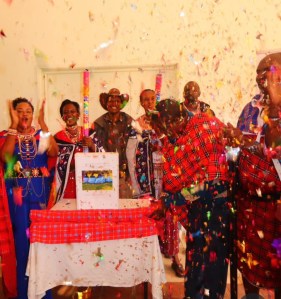
As the gathering ended and the memorandum was signed, the room shifted from solemn determination to celebration. A cake was brought out, and soon voices rose in singing, laughter, and dancing as the women marked International Women’s Day together. Earlier that afternoon, I had sat quietly among them, listening to voices I could not always understand, but by the end of the day, the meaning was clear. These women were claiming their rights, their dignity, and their place in shaping the future of their communities.

Sitting in that circle, I was reminded that “we are more alike, my friends, than we are unalike” (Maya Angelou). Their stories and strength were both unique and universal. And as Margaret Mead said, “Never doubt that a small group of thoughtful, committed citizens can change the world; indeed, it’s the only thing that ever has.” In that room, I saw it happen. Women, steadfast and courageous, shaping the future for themselves, their communities, and generations to come.


What Morocco Gave Me That I Can’t Pack

What Morocco Gave Me That I Can’t Pack

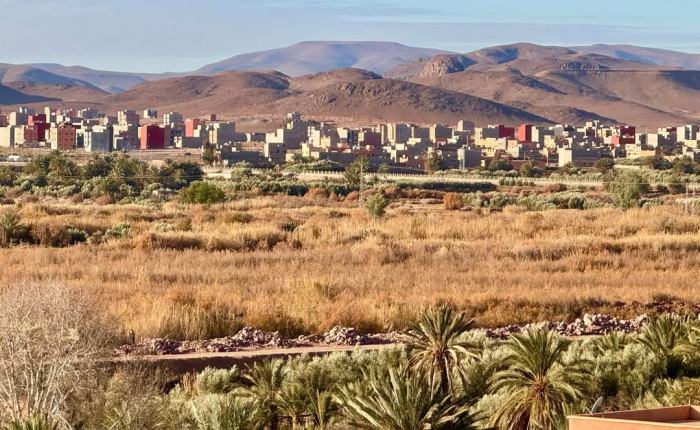
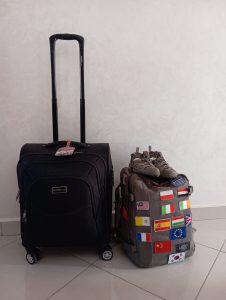
Fourteen months ago, I arrived in Morocco with a suitcase, an open mind and curiosity. I knew that living inside a culture feels different than visiting one, but somehow, this one hit differently. I am leaving with neither the same heart, nor the same mindset, nor the same pace.

For fourteen months, I lived inside its rhythms, its faith, its contradictions, its warmth. Yes, some things frustrated me. But somewhere between the call to prayer echoing over rooftops and café tables, tea poured from impossible heights, and conversations with students that always made me stop and think, I began to understand there was something uniquely beautiful here.

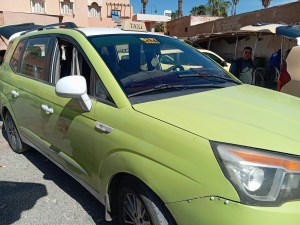
I can’t say I’ve changed. Grown, evolved, refined…those feel more accurate. Maybe it was learning patience in taxi rides and “Moroccan time.” Maybe it was not having the ear or the tongue for Darija, and learning humility through that. Morocco is a place that doesn’t rush, even when you want to.

Now, as I pack to leave, I realize I am taking far more than I brought. None of it fits neatly into a suitcase. And yet, somehow, I carry it all forward.

The Soundtrack of the Place

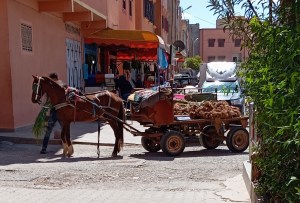
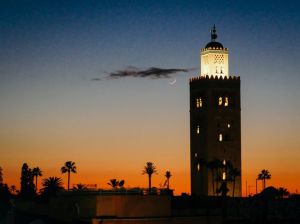
Every place has a soundtrack, but Morocco’s is unmistakable. The call to prayer echoing over rooftops, the hum of scooters weaving through narrow streets, the low murmur of café conversations drifting into the evening air, the sound of tea filling glasses, the clip-clop of horse hooves pulling vegetable carts or carrying passengers in a koutchi, and the voices of early morning street vendors calling out what they are selling.

Over time, those sounds stop feeling foreign. They become the background music of your days. Even when I leave, I suspect a quiet evening somewhere else will feel strangely incomplete…at least until I grow accustomed to the new soundtrack of the next chapter.

Those sounds are more than background noise. They are reminders of something deeper woven into daily life there, faith.

A Deeper Awareness of Faith

Faith in Morocco is not something tucked quietly into private spaces or reserved for Sundays. It is everywhere, all the time, in visible and audible ways, from the call to prayer echoing across rooftops to the stillness of Ramadan. Even for someone like me, who doesn’t follow organized religion, living inside Moroccan culture created a deeper awareness of the role faith can play in shaping a society, a community, and daily life. Living inside that faith in Kelaa also meant learning to move at a different pace.

Patience You Didn’t Know You Needed

Morocco also gave me patience whether I asked for it or not. Taxis leave when they’re full, unless you buy all the seats. Plans shift, often at the last minute. “Moroccan time” is less about the clock and more about the moment. There were times it frustrated me, but eventually I realized the world rarely falls apart because something takes a little longer than expected, even if, in the moment, it still feels frustrating. And truthfully, I never completely got over that.

But that patience and slowing down also means you notice the people and activities around you.

Hospitality That Stays With You

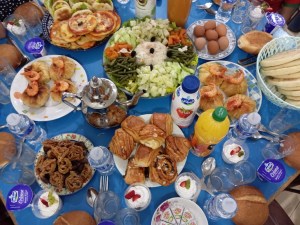
Moroccan hospitality is not a small gesture. It’s tea poured with ceremony, food offered generously, and conversations that stretch long past what you expected. Even when language was limited, the warmth was never in short supply. Being welcomed again and again into small everyday moments leaves an impression that is difficult to describe but impossible to forget.

But being welcomed into a culture also means recognizing the ways you stand apart from it.

The Ability to Be Comfortable Being Uncomfortable

Morocco gave me the challenge of living inside a culture where I didn’t always blend in. A tattoo here, a glass of wine there, habits and freedoms that sometimes made me feel like I was walking just slightly outside the lines. I jokingly called myself the “Queen of Haram,” but beneath the humor was a constant awareness that I was a guest in someone else’s culture. Somewhere along the way, I learned that discomfort isn’t always a bad thing. Sometimes it’s simply a reminder to move through the world with humility and respect.

And perhaps that is part of Morocco’s magic. It’s ability to hold many different realities at once.

The Beauty of Contradictions

Morocco is a place where contradictions live comfortably side by side. Ancient traditions exist alongside modern ambitions. Deep faith shares space with vibrant nightlife in the bigger cities. Chaos and calm often occupy the same street. At first, it feels confusing, but eventually you realize the contradictions are part of the beauty. Not everything needs to be resolved neatly; some places simply invite you to hold complexity without trying to simplify or change it.

As I zip up my suitcase, none of these things will appear inside it. The soundtrack of the streets. The patience learned in waiting. The awareness of faith moving through daily life. The hospitality of strangers. The humility of standing slightly outside the culture. The beauty of contradictions that refuse to be simplified.

These are the things Morocco gave me that I cannot pack, yet somehow, they are the things I will carry with me the longest. Morocco doesn’t fit in a suitcase, but it fits in the spaces you carry inside yourself, and it will never truly leave me.