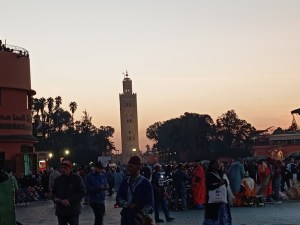
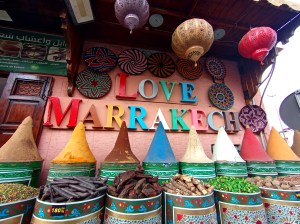
 By the time I landed in Poland, February 3, 2020, I had already lived through years of goodbyes – each one leaving its own ache. Cities blurred into each other, friendships formed fast and ended faster, and I had become practiced in the art of leaving. I thought I knew how to keep things temporary. How wrong I was. China was meant to be 6 months and turned into four years. Poland was meant to be just another stop – Eighteen months, maybe less. But something unexpected happened. I stayed almost five years. Life there unfolded gently. Life in Poland was easy: trams ran on time, quiet cafes where hours slipped by, twenty minutes to the airport and I could be anywhere in Europe in under three hours, and those Friday night deep conversations with people who knew me in a way only time allows. I had roots, rhythms and a sense of belonging I hadn’t planned to find. And then, suddenly it was mid-December 2024, I was in Marrakech, Morocco…a land of heat and dust, where nothing moved quietly. While Poland had been calm and predictable, Morocco pulsed with noise, color, and movement…exhilarating, disorienting, yet comfortably familiar. I had been here before, yet each moment felt newly alive, as if the country were reintroducing itself with every step.

My plan (keyword..plan..because we know about the best laid ones) was to spend around ninety days in Morocco before continuing my travels ahead of a commitment in Bulgaria at the end of June. After some rest and relaxation in Marrakech, I had arranged a WorkAway opportunity near Ouarzazate. I would be living with an Amazigh or Berber family, helping the father build a social media presence for his Sahara tour business and teaching English to his six children.
The Amazigh people are considered the original inhabitants of North Africa predating the arrival of Arabs. Many Berbers prefer to be called Amazigh. Traditionally, many Amazigh/Berber tribes were nomadic within the Sahara Desert. Now, some Amazigh populations have settled in rural areas and rely on agriculture and herding, others maintain a semi-nomadic or fully nomadic lifestyle. The term “Amazigh” means free people in their language. They speak a language called Tamazight, which is part of the Afro-Asiatic language family.

When I arrived at the bus station in Ouarzazate, I was greeted by two of the young girls from the family. With only my limited French and Google Translate to rely on, our communication was strained, but the look on their faces said more than words ever could. They saw me, small rolling suitcase, backpack, and an extra bag in tow, and I could immediately tell something was off. As it turned out, they had walked more than an hour from their home to meet me, and the idea of walking all the way back with my luggage clearly wasn’t going to work.
Sensing the tension, I smiled and said, “No problem, we can take a taxi.” That only seemed to make them more uneasy, until I realized their concern was the cost, which ended up being 50 dirham or about 5 euro. Once I assured them I’d cover the fare, their expressions softened, and we soon set off toward what would be my home for the next five weeks.
About twenty minutes by taxi from Ouarzazate, we arrived at the top of a dusty road in the small village of Tabounte. We unloaded my bags and began a short walk to what would be my new home. The first dirt road gave way to another, narrower one, until we finally stopped in front of a modest, two-story concrete building. One of the girls knocked, and a few seconds later, the door opened…and I stepped into another world.
The Amazigh people live in a way that’s both humble and deeply rooted in tradition. I was about to learn just how simple life here could be. Just inside, to the right, was a large room lined with carpets and low cushions.
Sitting quietly in the corner was an older woman, wrapped in what looked like several layers of clothing and thick blankets. I learned this was the mother of the patriarch Brahim. Though the sun still warmed the afternoon air outside, the house held a lingering cold. One that made her layers of clothing and blankets seem less like comfort and more like necessity.

To the left was a simple bathroom – just a sink and a squat toilet. Further in, to the right, was a large room with a refrigerator and a low table and a stack of plastic stools. To the left of this space was a small kitchen, equipped with a propane stovetop, a sink with only cold water, and shelves lined with spices, dishes and pots and pans. At the far end of the house were two bedrooms: one with a bed for the parents, the other a shared room for four girls, furnished with wicker mats, blankets, and a small wardrobe.
Next, they grabbed my bags and led me upstairs. To the right was a room similar to the one below where the woman had been. To the left was another bathroom, this one with a sink, a squat toilet, and a shower with hot water. Beyond the bathroom was a room with a counter and a propane-fueled oven, which I would soon learn was used daily to bake bread. That oven would become my morning refuge, offering warmth in the chill of the house. Each day, I would join Naima as she baked, sitting near the oven to soak in its comforting heat.
At the end of the floor were two more bedrooms, similar to those downstairs. The room to the left held two single beds for the boys, while the one to the right – with a single bed – would be mine. One more flight of stairs led to a rooftop terrace. Beneath the enclosed section was a washing machine. Outside was a plastic table, two chairs, a web of clotheslines, and a scattering of random toys. I would spend many late afternoons on this terrace soaking up the warmth of the setting sun.
When I arrived, Brahim, the head of the household, was away on a desert excursion. But the rest of the family, including his mother, wife and five of his six children, welcomed me with open arms. With my limited French and the help of Google translate, we managed to communicate. To me, figuring out creative ways to communicate is part of the fun and adventure. The family’s English was minimal, but that only added to the charm of the interactions. I also hoped it was a chance for me to improve my French. Fortunately, Brahim’s brother was visiting from Hawaii and joined us for a late couscous dinner around 22:00 (10 pm). His English made the evening go smoother and allowed for easier conversation. After a meal and a few laughs, I was worn out from the journey. I said goodnight to my lovely new family, already excited for the experience the next several weeks would bring.

After a solid night’s sleep, I woke around 09:00 to the smell of warm, freshly baked bread. Breakfast was simple and satisfying, bread with olive oil, jam, or honey for dipping and a plate of olives served with hot tea. After we ate, we said goodbye to Grandma, who was returning to her home in Zagora with her visiting son.
Once they departed, I watched Naima prepare chicken Tagine we’d have for lunch. She smiled and told me that tomorrow, I would help. As the tagine simmered low and slow, I took a hot shower, washed my hair and headed up to the rooftop terrace to let it dry in the warmth of the seventy-degree sun.
By mid-afternoon, the children returned from school, and we shared the fragrant tagine together. After the meal, I walked around the corner to a little neighborhood shop to pick up a few supplies, and most importantly coffee. I’m not much of a tea drinker. It didn’t take long to discover that in this part of the world, dinner is never a rushed affair, rarely appearing before nine or ten at night. Mornings follow a similar pace, most of the house doesn’t stir before 09:00, save Naima, already up with the dawn to knead and bake the day’s bread, her quiet rhythm is the heartbeat of the household.
The biggest surprise of the day came when Ismail, the oldest son showed up at the front door unannounced. He was on break from his university studies in Agadir and had decided to make the long journey home without telling anyone. Naima’s face lit up and the younger kids squealed and clung to him. There was an instant air of excitement, the kind that comes with an unexpected homecoming. It didn’t matter what plans we had for the rest of the evening, everything shifted to celebration.
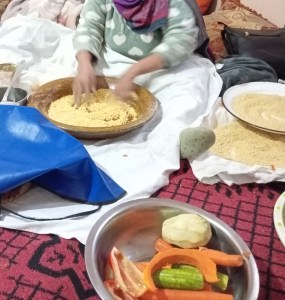
By the time I woke the next morning and made myself a cup of coffee, Naima was already deep into breakfast preparation. A bowl of dough sat nearby, soft and rising. The kitchen was filled with the warm savory aroma of sautéed vegetables. Through a mix of French, hand gestures, and the ever reliable Google Translate, I learned that she was making her version of Berber-style pizza for breakfast. When I arrived in Kelaa, I discovered this was basically like the msemen we ate.

The filling was a fragrant blend of grated carrots and other vegetables, seasoned with herbs and spices and mixed with a small amount of sheep fat…something like lard, rich and flavorful. Naima worked the dough into softball-size rounds, flattening each slightly before adding a scoop of the veggie mixture to the center. Then, with practiced hands (I tried and mine were a disaster), she folded the edges up and sealed the filling inside, reshaping it into a tidy ball. Each one was flattened again and placed on a hot griddle to cook.
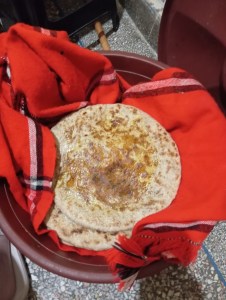
As each pizza came off the heat, she wrapped them in a towel-lined basket to keep warm. When the last one was done we all gathered around the table. Naima, her family minus Brahim, and me shared another simple breakfast. The flavor was earthy, the bread crisp on the outside and tender within. The joy of sharing a morning meal together made me feel as part of the family.
One of the unexpected joys of life abroad is discovering what breakfast looks like beyond the borders of home…dishes that would never make it to an American table, yet somehow feel just right as the day begins, like noodles in Asia.
It was a blustery day in Tabounte, just outside Ouarzazate. It was a cold, grey Saturday that seemed more suited to staying under a blanket than venturing out. There was a light drizzle and the wind whipped through the alleyways like it had something to prove. Though the temperature hovered around fifty degrees Fahrenheit, it felt much colder and I almost wished I had gloves.
After the younger kids went off to school for their Saturday classes, Naima, her eldest daughter Fatima, and I bundled up and made our way toward the weekly souk. A sprawling outdoor market held only on Saturday and just over a kilometer from their home. If we didn’t go now, we’d be out of fresh produce for the entire week.
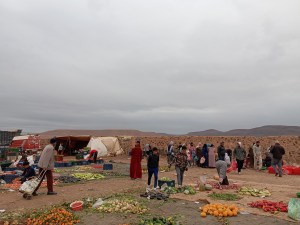

The souk was a blur of color and movement. There were rows of vivid vegetables piled on tattered tarps, vendors shouting prices through chattering teeth and the smell of wet earth and spice filled the air.

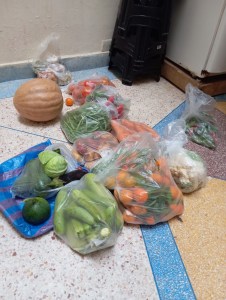
We selected plump tomatoes, root vegetables still dusted with soil, a couple huge pomegranates, and a large bag of mandarins. For just 145 dirhams (14.50 euro) we gathered more than we could comfortably carry. Our arms ached and the bags bit our fingers. Before heading home, we stopped to pick up a kilo of mixed, briny, spicy olives because no Moroccan kitchen is ever truly complete without them.
Sunday morning began with a welcome surprise. Naima, taking a rare day off from making her own bread asked if I’d like to join her on a short walk through the village. We were off to buy the day’s bread…freshly baked not in a propane oven like we had back home, but in traditional, fire fueled clay ovens tended by women from the neighborhood.


The air was crisp, the streets were quiet and peaceful in the early morning. We arrived to find the women working with ease, their hands moving skillfully as they chatted. Laughter rose now and then, suggesting that a bit of village gossip might be sprinkled in the conversation. Their hands were dusted with flour as they pulled the round loaves from the glowing ovens. The intoxicating scent of wood smoke and freshly baked bread was irresistible.
They welcomed me with warm smiles and invited me to step closer for a better look. I was captivated. Soon, with a bundle of warm bread wrapped in cloth, we walked back home. Naima then scrambled some eggs and we filled the still warm bread with spoonfuls of the mixture. Another unforgettable breakfast and another quiet moment of Moroccan life I knew I’d carry with me.

And just like that, it was Christmas. Not my first where December 25th passes like any other day. I was tucked in the life of an Amazigh home in southern Morocco nestled beyond the High Atlas Mountains and known as the gateway to the desert. I was surrounded by warmth, laughter, and a family that had accepted me into their daily life like I had always been there.
Though they didn’t celebrate the holiday themselves, they hadn’t forgotten it was mine. That morning, Naima handed me a small glass jar of Moroccan saffron and wished me “Merry Christmas”. The bright threads were like strands of sunshine, more precious than gold here. My eyes teared up. It wasn’t just a gift. It was recognition. A gesture of love across cultures.
In return, I planned a Christmas turkey tagine. I’d found a huge turkey breast at the butcher shop a day or two earlier. With Naima’s help, because she knows all the secret herbs and spices, we turned it into something worthy of any holiday table,
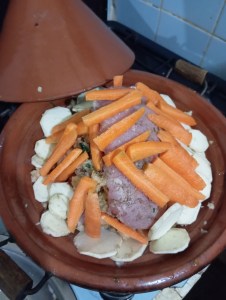
I managed to get in a chat with my brother and sister-in-law that helped bridge the thousands of miles between us. That evening, as we scooped the last bits of turkey from the tagine, I looked around the table and smiled. No lights, no presents, no carols…just a beautiful Christmas. Simple. Joyful. Full of heart.
Life in Tabounte was beginning to take on its routine. Brahim eventually returned from the desert and with him came a new sense of purpose. Rather than lazy mornings next to the bread oven followed by breakfast and afternoons on the terrace, I found myself with a few small tasks to help with his tour business, Caravans, Peaks, and Dunes. Social media updates, a bit of writing and odd jobs that made me feel like a proper digital nomad.

Most mornings started the same. I’d join Naima near the warmth of the bread oven. Then after a simple breakfast, I’d head out to the local coffee shop, just an eight-minute walk from the house. It’s not exactly a place that draws tourists, but I was always greeted with smiles, a few curious looks, and even the occasional free refill.
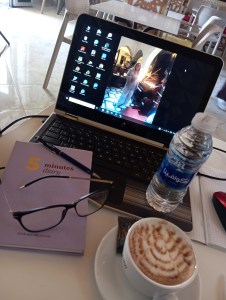
I’d spend a few hours at the café working on my laptop. Sometime after mid-day, I’d get a message from Naima telling me the kids were home and lunch, usually tagine, would be ready soon. That was my signal to pack up and head home.
After lunch, our routine shifted to the rooftop terrace. The house, made of concrete holds the chill of the night air long after the sun has risen. Actually the house never really warmed up and the terrace became our space of sunlight and warmth. We’d sit on the terrace, sometimes sipping tea. While I helped the girls with their English homework, Naima tended to her endless loads of laundry. Hanging everything along clotheslines zig-zagging like a spider web. With a family of eight, the laundry never seemed to stop.
One day I decided to finally do my own laundry. Washed, I hung it on the web of lines and checked it before I went to bed. It was still damp and I left it to hang overnight. Of course, that night, an unexpected rainstorm swept through leaving my laundry dripping. All I could hope for was a breezy, warm, sunshiny day to follow. Lesson learned…don’t trust a desert sky to stay dry.

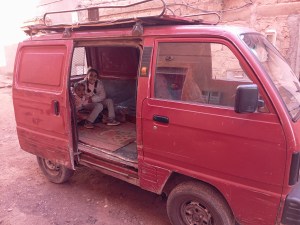
We closed out 2024 with another turkey tagine and a celebratory cake. The first morning of 2025 dawned sunny and clear so we decided to kick-off the year with a picnic several (I didn’t realize how “several” LOL) miles from home. The day was filled with laughter, games, and plenty of good food. Although we had hired a van to get us there, Naima announced we would be walking home. It was more than I bargained for, but somehow, I made it. Rewarded with a stunning sunset along the way made every step worthwhile…almost…I was exhausted by the time we reached home.

A few days into the new year, I had to leave my family in Tabounte and head to nearby Ouarzazate. A friend was coming to visit me in about two weeks, so I needed to find accommodations and get things organized. He’s a magician, and I also planned to look into possible venues where he could perform. Brahim, not being on an excursion, offered to meet me in the city and show me around. He even recommended a few local spots for me to eat.
I spent a few days getting things in order for Eric’s arrival. Brahim did his best to help me arrange performances at local schools and clubs for his magic act, but it turned out to be more complicated than either of us expected, and ultimately, I couldn’t make it happen. So, I let go of that plan and shifted my focus to something simpler…introducing him to the magic of Morocco, one day at a time.
After a long weekend in Ouarzazate, I returned to my family and the familiar rhythm of life in Tabounte. Days passed quietly, each one mirroring the last in its simplicity. Before I knew it, the time had come for Eric’s arrival. I had rented a modest two-bedroom apartment in Ouarzazate to serve as our home base. His journey would take him beyond the tranquility of southern Morocco. He would also be spending time on his own exploring the chaotic charm of Marrakech and the buzzing metropolis of Casablanca. The contrast between those cities and the calm of Ouarzazate and Tabounte would be striking. We also planned a desert adventure, but that’s a story for another post.

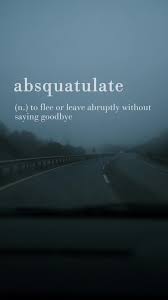
I used to think I had mastered the art of leaving. I was skilled in absquatulating or the Irish goodbye. Eleven years of travel had trained me to move lightly, to slip in and out of places without unraveling. But Morocco, somehow, had undone all of that.
My five weeks in Tabounte were meant to be just that…five weeks. A temporary glimpse into Amazigh life, a cultural exchange, a new story to add to my journey. Somehow, between the shared meals, quiet mornings at the café, and the daily rhythm of family life, it carved out a place in me. I arrived as a guest and left as something closer to family. Leaving felt heavier than I expected.

From Tabounte, I traveled to Kelaa. I told myself I would stay through Ramadan, meet my friends, Dawn and Margaret in Marrakech the first week of April, then fly to Paris where I would meet up with my friend Cathy. I would spend 2 weeks in Paris and then continue my journey to yet undecided destinations.
I returned to Kelaa after Paris, expecting to stay for a little while. That while has quietly stretched into more than six months. And now, I should be on the edge of yet another departure, but, back injury aside, the truth is, the longer I stay, the more Morocco wraps itself around me. Friends and family back home say they can sense it too. How this place has left a deeper imprint, as if Morocco is writing a different version of me.
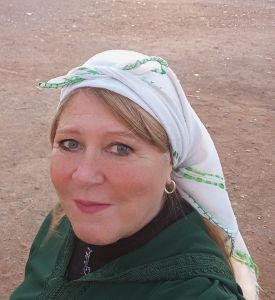
Maybe the art of leaving isn’t about becoming good at goodbyes or slipping away gracefully. Maybe it’s about allowing yourself to be changed and learning how to hold on, even as you go.
And when the time comes to leave Kelaa, that will be Part Two.

 Down the Rabbit Hole
One thought on “The Art of Leaving – Part One – Tabounte to Kelaa”