Be The Change

Be The Change

Change – an act or process through which something becomes different”

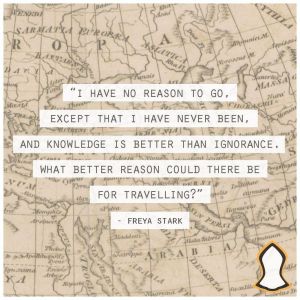
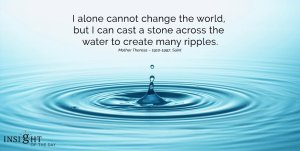
“Be the Change” – I use this phrase a lot in my social media posts along with two of my favorite quotes. The first one is from Mother Teresa, “I alone cannot change the world, but I can cast a stone across the waters to create many ripples”, and the second by Mahatma Gandhi, “Be the change that you wish to see in the world.”
Currently I am living in a predominantly Muslim country. Officially, 99% of the population are Muslim. The second largest religion in the country is Christianity, but most Christians are foreigners. I am living in the town of el Kelaa, Morocco, a smallish town about 80 km (50 miles) from Marrakech.

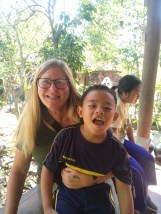
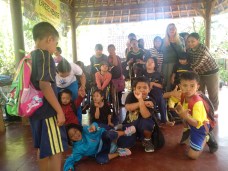
I am here on a WorkAway volunteering at an English school. Students at the school receive 4 hours of English lessons per week from a Moroccan English teacher. Then, depending on the availability of English speaking volunteers (usually native speakers), they can have a one-to-one, one-to-two or a small group session with one of the volunteers. It is a one hour conversation session as most students want to improve their speaking/communication skills. I would like to note that I tell the students if I ever ask any questions they are uncomfortable answering or just don’t have an answer, they can pass. Honestly, I don’t think I have had anyone pass.

Recently, I had the opportunity to have back-to-back one-to-one classes with two lovely teenage girls. After the classes, I went across the street to my usual cafe for a cafe creme. I was lost in thought, the two girls were polar opposites and I had an epiphany. I made a few notes on my phone, but knew I needed to put the pen to the paper and share my thoughts.

I remembered a blog post I had written in 2019 when I was living in Bali. I went back and reread it. Two of the passages are relevant to my current mindset. The first one, “I have been blessed to live and travel to many places around the globe that don’t practice Christianity. I’ve been to Mosques and listened to the prayers of those of Islamic faith. I have sat with monks in Buddhist temples. I have attended a service of Caodaism (cultivating self and finding god in self) in Tay Ninth, Vietnam. I have sat in monasteries in Tibet and read the teachings of the Dalai Lama. I have been at a Hindu cremation ceremony in Kathmandu, Nepal which follows closely to the Hinduism of India.”

The second relevant passage from that blog is, “Growing up Christian, we heard stories of missionaries in far-off lands converting these “pagans”, “non-believers”, and even those of other faiths to Christianity. Through my travels, I have come to question this practice and ask, “Why?” Why do we in the west think that our religion is the one true and right religion that everyone else should follow?” Why do we often seek to change others. Hear me out – this post isn’t about religion, though the idea was lingering in the back of my mind. It is more about understanding and accepting people’s choices, in religion, in relationships, in life.
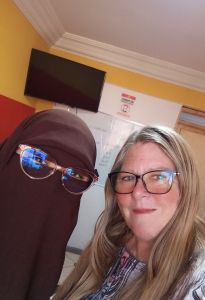
My first student of the day was a 16 year old girl, wise beyond her years. She came into my class in a niqab, which means the only thing I could see were her eyes. Don’t let anyone tell you the eyes can’t smile. I was greeted with the biggest, brightest smile that put an equally big smile on my face. I sat across from her and we went through my usual intro stuff…name, age, are you originally from el Kelaa, etc. I have to be honest here, I had no idea what to expect from this young lady with the beautiful eyes. I had no idea how traditional she was, although based on her dress I had to guess very traditional. Traditional, for example, when approaching a Muslim woman (whether she wears a hijab (head scarf) or not) – it’s respectful to wait for her to offer her hand and give her the opportunity to show you if she doesn’t mind shaking hands, or you can place your hand on your chest as a gesture of polite greeting. I was curious and intrigued with countless questions racing through my mind.

My one-to-one sessions mainly consist of me asking a lot of questions, some easy, some deep, some just fun. I decided to start with my usual opening question, “Why is it important for you to learn English?” She replied that by learning English she would become a more confident woman. She also said that it would help her in all areas of life…her education, job opportunities, travel, etc. Very profound for a young lady without much worldly experience. Another question I ask comes from Twenty Questions to the World. The original concept of 20Q was started in 2016. Since then the same twenty questions have been asked to thousands of people around the world and their answers recorded…from a nomad in Mongolia to the little old man in a coffee shop in Spain to me when I was volunteering in Wasso, Tanzania.

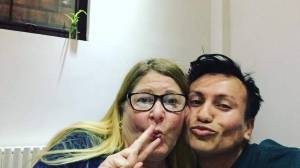
I then asked question 3 from the original 20, “If you could choose one thing to teach in every school in the world, what would it be?” I also usually add, “and why?” She told me she would teach everyone to understand Islam because it is often misunderstood. To which she added, “No offense, but especially in America.” I couldn’t say I disagreed with “especially in America”. We continued to have a beautiful conversation and at some point I asked her what was the best thing about Morocco. She told me, “It is the people and our culture. We are kind, welcoming, don’t judge and most importantly we respect all. That is part of the basis of Islam. I respect your choice of religion and maybe if more people understood Islam, they would respect mine.” Did I tell you she was wise beyond her years? As our time came to an end, she surprised me with a big hug, a thank you, and a request for a selfie.

She had my head spinning but I didn’t have time to process my thoughts because a bubbly 12 year old was walking into the room and was my next one-to-one. She sat down and started talking without even being prompted. When I say polar opposites from the young lady before her, I wasn’t kidding. She came in dressed in western attire…meaning jeans, a sweatshirt, tennis shoes and no head scarf. We chatted about school, her family, their travels. She is one of the few young people I have met that has traveled outside of Morocco. Both of her parents have careers and if I recall correctly she has a younger brother. I change up my questions based on the age and English levels, so one of the questions I asked was, “What do you want to be when you grow up?” Well, the question was barely out of my mouth before she started into a discertation on becoming an airline pilot and how she wanted to see the world. I didn’t need to ask the why is it important for you to learn English question because she answered that in her I want to be a pilot. She knew that English is the language of the skies and she would need it to fulfill her dream. Next, I decided to also ask her the if you could teach one thing question. Not surprisingly she said she would teach that you can be anything you want to be. We finished up talking about Morocco, its culture and religion of which she was very knowledgeable. She also told me about being excited for Ramadan because it is very important in their culture/religion.

I left the school and walked across the street to the cafe to just sit, sip my cafe creme and try to organize my thoughts as they were racing around my head. I immediately started writing this post when I got home. I had just about finished and decided to sleep on the ending until morning. Somehow, when I went to work on it the next day, it was lost in cyberspace as a corrupted file on my SD card. I was crushed and angry but started again fresh. Now it has taken me about 3 weeks to finally conclude. I have had so many interesting conversations with students during this time, I wish I could tell every story.

Every conversation I have gives me deeper meaning to “be the change”. I have a PhD student, a Professor of Philosophy, some 40 something housewives who just want to learn English, and a young teenage boy who asked me what I thought love was, because he thinks he is in love.

I am sitting here tonight on the third day of Ramadan. I am following the fasting for thirty days. No one has said I have to do this. I also have an English version of the Quran that I read a little on occasion. I am doing this not because I want to convert and no one has asked me to, but because I want to see the world, their world, their culture through their eyes, not mine. In turn, I hope I can share with you what I see, what I taste, what I feel. I want to be one of those ripples. I overuse this quote by Gene Wilder, “My only hope is that even for a moment I helped you see the world a little bit different.”

When I say “Be the Change”, I don’t want to change anyone but myself. Be the change isn’t about changing others, but understanding ourselves and our view of the world. Mahatma Gandhi’s quote, “Be the change you wish to see in the world,” tells me that if I make the change within me, I have the power to create a better world.

I want to end on a lighter note with a quote from the Dalai Lama, “If you think you are too small to make a difference…try sleeping with a mosquito.”
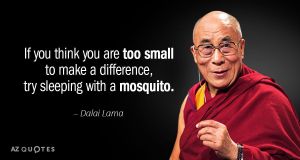
#BeTheChange

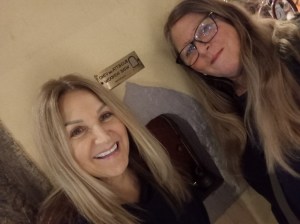
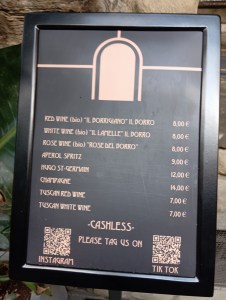
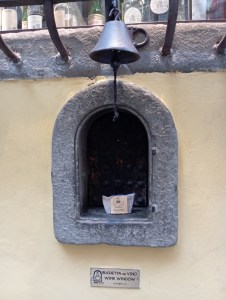
“Buchette del Vino” – “Vinous Adventures: Two Girls and Florence’s Hidden Gems”

“Buchette del Vino” – “Vinous Adventures: Two Girls and Florence’s Hidden Gems”

The Oxford dictionary tells us: Vinous – resembling, associated with, or fond of wine.  In case you didn’t figure it out from the title alone, yes, this is a blog about two girls (I decided against “women” because we ran around Florence like “giddy schoolgirls”) searching for “Buchette del Vino”.

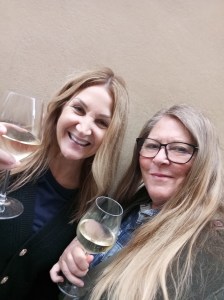
Since I made the decision to leave Poland and ultimately Europe at the end of this year, several friends have mentioned traveling across the pond for a holiday.  So when my friend Teri messaged me earlier in the year and asked me to meet her in Paris in autumn, I didn’t have to think twice.  She also added, “Do you think we can go to Italy, too?”  Once you get on the European continent the rest is easy.  I told her to get to Paris and I would plan Italy.  We decided on Florence with a day trip to Rome.  Once we got dates nailed down, the rest was easy.

First Wine Window

Teri also mentioned a bucket list item – le buchette del vino or wine windows.  Hence this blog.

Before I get to the fun stuff, a little history.  The Medici family was from the agricultural Mugello region north of Florence. Sadly, there are no descendants of the Medici left today.  The family ended with the death of Anna Maria Luisa.  She died in the Pitti Palace on 18 February 1743, at the age of 76.  She was buried in the Medici Chapels, in the San Lorenzo church, where she still rests.  Okay, so what does the Medici family have to do with our quest for buchette del vino?

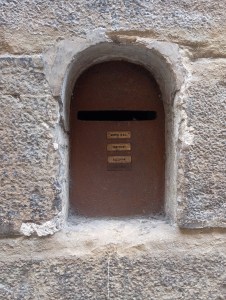
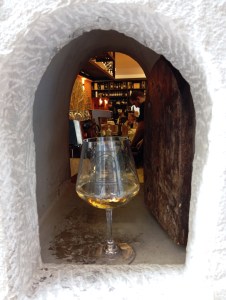
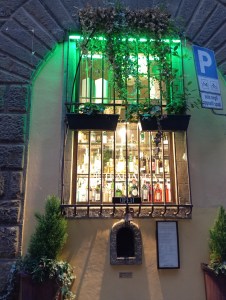
Not to get into their rise and fall and rise to power again, or anything like that, just know the Medici Dynasty returned to power in Florence in 1532.  I don’t know if they were good or bad but I do know that sometime in the middle of the 16th century, Duke Cosimo I de Medici allowed wealthy landowners to sell their own wine directly to customers through the wine windows.  Anxious to take advantage of this opportunity, many noble wine-producing families began fitting their Florentine palazzos with a buchette.  They could sell their own wine to the public through this window/door.  People would knock, and it would be opened by a server who would be handed a vessel.  They would rinse the vessel, fill it with wine, hand it over, and receive money in exchange.  Florence’s nobility, while hungry for profits, weren’t thrilled with the idea of having lower classes or drunken people in their homes, so these wine windows were ideal.  When the bubonic plague hit Florence in 1630, the need for “social/physical distancing” became more important than “class distancing”.

Matteo Faglio, who in 2015 started a foundation for the preservation of these windows, states, “Right after the black plague, in 1634, historian Francesco Rondinella wrote a book in which he recounts the wine windows playing an essential function during those years, namely to allow the contactless sale of wine to prevent contagion.”

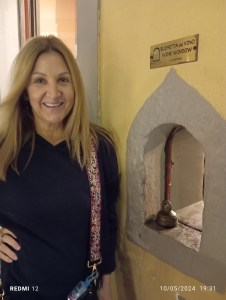
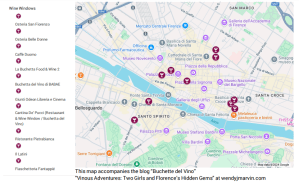
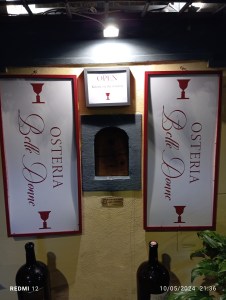
Another fascinating fact I discovered since I have returned home is that if you look at a map of Florence (I will link to a map I have created that documents the windows we visited), several buchette del vino are in one of Florence’s former Red Light Districts. Not really knowing much about them, but having fun trying to find them, on day two in Florence, Teri and I stumbled upon a wine window with a large plaque above it (in Italian of course and we didn’t translate at the time).  The window was on Via Delle Belle Donne (the street of Beautiful Women). Teri knocked and we were disappointed that no one answered.  It was either closed at that time or possibly permanently closed.


“Fake” Wine Window in Phuket

Before I tell you what I discovered about this particular window, let me add that there are over 180 windows in Florence (158 in the historic center) with over 100 in about 30 other localities throughout Tuscany.  These unique architectural features did not exist anywhere else in the world until….drum roll…first, who knew that like the bubonic plague, a global pandemic would make them popular again in Florence, secondly, they would become Instagram famous…good ole social media.  New, fake wine windows are now showing up in places like Buenos Aires, Argentina; Brooklyn, New York; Phuket, Thailand; and Los Angeles, California.

Okay, back to the window with the plaque. On the corner of Via delle Belle Donne and Via della Spada is what was one of the red light district’s most popular buchette del vino with the original marble signage noting the selling time and the period open, “The cellar is open for sale from November first till April from 9 am to 2 pm and from 5 to 8 pm.  From May first till October from 8 am till 3 pm and from 6 to 9 pm.  On holidays open until 3 pm.  I also learned that business had become so good that it became necessary to stop customers from knocking on the doors at all hours of the day and night.  According to Matteo Faglia, “Only soldiers departing for battle or women who had just given birth had the right to purchase wine after hours. It was considered an important source of food.  ‘Wine makes blood,’ as they used to say.”

Window with the Original Marble Signage

Hopefully, you have enjoyed reading a bit about the wine windows of Florence.  Teri and I visited 10 windows which we knew were in service.  However, two were not open when we visited.  The following is our “vinous adventure” to discovering Florence’s hidden gems.  We didn’t follow a set route but searched them out as we strolled the streets of beautiful Florence, Italy. Here is a link to the map I created should anyone want to check them out on a visit to the city.  The windows we visited have a pin in burgundy with a wine glass.

Osteria San Fiorenzo
  1. Osteria San Fiorenzo – Borgo dei Greci 1R 50122  This was the first wine window we visited.
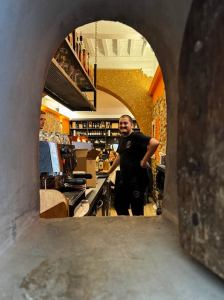
  2. Osteria Belle Donne – Via Belle Donne 16R  50123 
  3. Caffe Duomo – Piazza del Duomo 29 50122

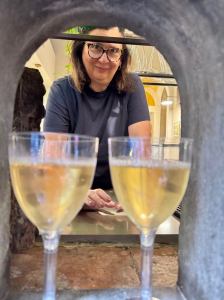
4.  La Buchetta Food and Wine – Borgo Santa Croce 11R 50122  I got to visit this wine window from the inside as well as the outside.

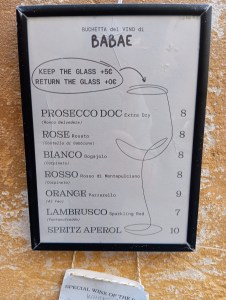
5.  Babae – Via Santo Spirito 21R 50125  Featured in In Episode 5 of CNN’s “Stanley Tucci: Searching for Italy”

6.  Giunti Odeon Library and Cinema – Via Degli Anselmi, Piazza Degli Strozzi 3-5-7 50123

7.  Cantina de Pucci Bar – Via de Pucci 5R 50122  The server loved to make you ring the bell here.

8.  Ristorante Pietrabianca – Piazza dei Peruzzi 5R 50122


Il Latini

9.  Il Latini – Via dei Pachetti 6R 50123  Closed when we were there.  It opens at 19:30 (7:30 pm)

Fiaschetteria Fantappie


10. Fiaschetteria Fantappie – Via dei Serragli 47 50124  Closed when we were there.  Opens at 17:00 (5 pm)


There you have it.  Our trail of buchette del vino.  Yes, the wine is a Euro or two or three higher than in some other places, but the experience…priceless.  Soon we were noticing many now defunct wine windows.  Some had been turned into mailboxes or business signage.  Some are just graffiti collectors, but all are fascinating to find.  We even discovered one serving gelato!

“Here’s to the nights we will never remember with the friends we’ll never forget.” Author Unknown

Saluti and a favorite quote from The Age of Adaline:

Escape My Blog

Escape My Blog

According to Lee SU Kim, lecturer in ESL, “There is a common perception that all learning should be serious and solemn in nature, and that if one is having fun and there is hilarity and laughter, then it is not really learning.  This is a misconception.  It is possible to learn a language as well as enjoy oneself at the same time.  One of the best ways of doing this is through games.”

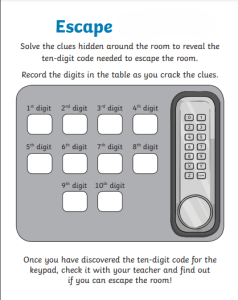
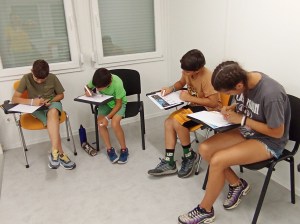
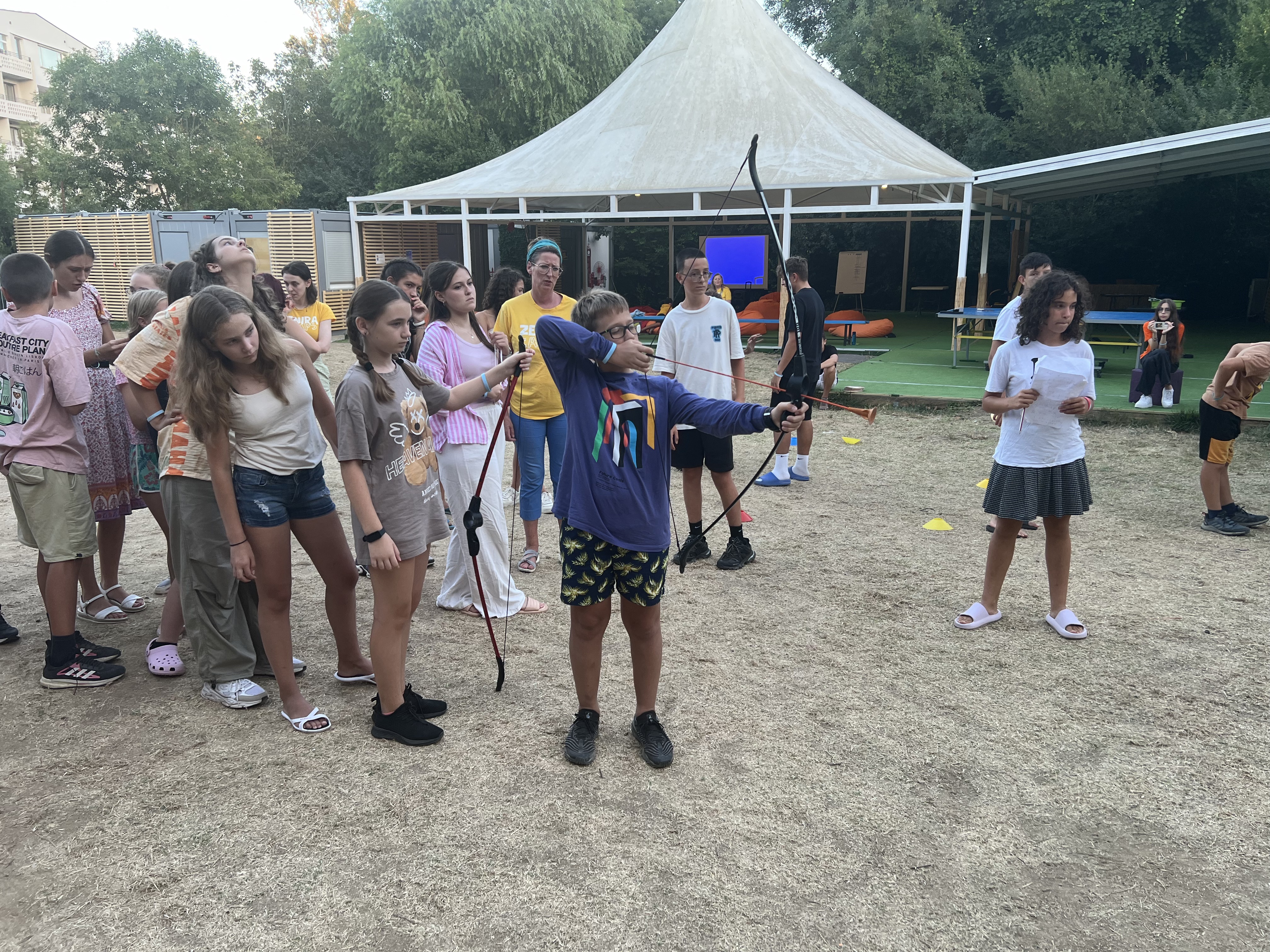
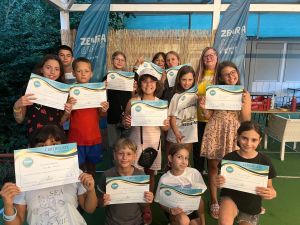
This week at Zenira Camp, my students range from 9-12 years old with A1 and A2 language levels.  Our weekly theme is Detectives and Whodunits.  Wanting to engage and motivate my students while developing cognitive and problem-solving skills I decided to challenge them to an “escape the classroom in time for lunch” English language game.  They had 10 language challenges which would give them a number to the “keypad” to leave the room for lunch.  Of course, there was no real keypad and the door wasn’t locked, but they had a picture of a keypad to insert the missing digits.  Because of the different ages and levels, I allowed them to work together as needed, to ask me questions to help and I wrote some hints on the whiteboard.  We had great fun with this and yes, we escaped in time to go to lunch.  A couple of campers were surprised they didn’t know quite as much as they thought they did.

I now challenge you to test your language skills and Escape My Blog.

Clue for Digit #1:  How many of these words can be used with the word snow to form a real compound word?

bean, ball, cup, storm, yard, flake, bow, man, fire, light, board and shine


Clue for Digit #2:  Make each of these singular words plural.  How many of the plural words use the suffix –es?

dog, wish, peach, boy, box, card, church, bowl, teacher, chair, frog and basket

Clue for Digit #3:  Each of these sentences are missing a piece of punctuation at the end.  How many of them are missing a question mark?

It is scary being stuck in a classroom

How long will I be stuck here

What an unfortunate event this is

I must tell Miss Calvin about this tomorrow

Will the caretaker notice that I am here

How worried will my mother be

I should never have come back into school on my own

 Clue for Digit #4:  Each of these sentences is missing a conjunction.  It is either and or but.  How many sentences are missing the conjunction but?

I will be home late ____ my dad will be worried.

I know I shouldn’t have come back ____ I wanted to do my homework.

The caretaker might be cross ____ I’m sure she will understand.

The classroom is dark ____ it is quite scary.

Mrs. Calvin is my teacher ____ she comes to school quite early.

I have finished my homework ____ I have read my reading book.

I know that it is late ____ I think some teachers might still be here.

Clue for Digit #5:  Some of these words are missing an apostrophe to show that letters are missing.  How many words are missing an apostrophe?

Should, will, cant, must, Im, could, when, shouldn’t, didn’t, Ive, wont and sure

Clue for Digit #6:  The following story is missing some commas.  Add in the commas and count the number that were missing.

Linda Frank and Norman went on a school trip.  They had packed crisps chocolate and sweets for the journey and they shared them with Pat Barney and Kyle on the coach.  When they were halfway there, Linda started to feel a little bit sick.  So did Frank Norman Pat and Barney.  There weren’t enough sick buckets to go around!  Mrs. Calvin Mr. Diaz and Miss Ross told the children that they weren’t allowed to eat any more crisps chocolates or sweets on the coach from now on.

Clue for Digit #7:  Read the clue and write the answer with one letter in each box.  Spell the answers correctly to reveal the hidden number in the pink squares.

ful and –less are both one of these.

      PINK    


Long and sad are both one of these.

            PINK    


Slowly and quickly are both one of these.

     PINK      


Run, hop and jump are all one of these.

  PINK    

Clue for Digit #8:  Read the sentences below and decide what tense they are written in.  How many of them are written in the present tense?

I am stuck in the classroom.

I came back into the school on my own.

I didn’t tell anyone what I was doing.

Now I’m alone and feeling scared.

I am running out of things to do.

I read my book and finished my homework.

I’m wondering how long I will be here for.

Clue for Digit #9:  Some of these root words can be given the opposite meaning by adding –un to them.  How many?

happy, wrong, do, load, fair, lock, honest, well, true, jump, dress, and cry

Clue for Digit #10:  There are lots of capital letters missing from the story below.  Add them in and count how many were missing.

Last thursday, betty went on a trip to london.  She had always wanted to see buckingham Palace and perhaps even see the King!  Betty rode on a big, red bus and went shopping on oxford street.  she had a wonderful time.

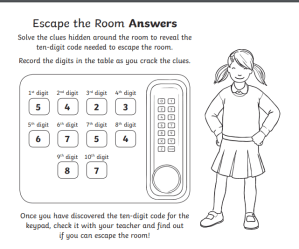
There you have it, the language game my students played today.  Before I give you the answers so you can check to see if you are able to “Escape My Blog”, I hope this gives you a better understanding of how incorporating games into an ESL classroom for young learners not only makes learning more enjoyable but also enhances language acquisition, social interaction, and cognitive development in a well-rounded and effective manner.

Let’s see how you did!

Camp Time

Camp Time

It’s somehow the first Friday in August.  I once wrote a blog called “Time Passages”; how time is a paradox.  I titled the post with Al Stewart’s song in mind.  The lyrics go like this:

“Well I’m not the kind to live in the past

The years run too short and the days too fast

The things you lean on are the things that don’t last

Well it’s just now and then my line gets cast into these

Time passages”

As I mentioned in my earlier blog, which was also a “first Friday”, time moves differently at camp.  One minute it’s day one and the campers are excitedly arriving looking for familiar faces and scanning the crowd to take in the new ones.  Staff are anxiously waiting and bursting with great ideas for activities and lessons.  Suddenly, “BAM”, ← (nice use of onomatopoeia, it is an English Camp after all) we’re wrapping up week 5.  We’ve moved beyond the halfway point and the above lyrics could read, “ The weeks run too short and the days too fast”.

After a hearty breakfast, most camp mornings start with a trip to the beach or once in a while we may just hang out at the pool.  Today happens to be one of those days.  My idea for today’s blog was to spice it up a bit and link you to some music to help you visualize our day.  Even though today is a pool day, I want you to imagine a sandy beach on the Bulgarian Black Sea with the waves rolling ashore and kids playing in the sand or frolicking in the waves.  When you have that vision in your mind, you can click this link to the Beach Boys’, “Catch a Wave”. I hope you enjoy your morning at the beach as much as we do.

After the beach/pool, it’s time for an English lesson. Mind you, we have 25 hours of English classes and English immersion activities per week.  Each week has a theme and I’ll get to that in a minute.  I’m probably going to show my age here, but I was taken back to the mid-80s and the American Rock Band Timbuk 3.  You’re probably asking yourself what could this possibly have to do with Zenira Camp and English.   Well, when you have a group of kids coming to summer camp to learn or improve their English and the camp is located at the seaside of the Bulgarian Coast, their “Future’s So Bright I (They) Gotta Wear Shades”.

After a late morning English class, it’s off to lunch followed by the ever-popular “Buba Bank”.  This is when kids can get some cash to purchase some pre-approved snacks.  When Buba Bank closes for the day, it is time for an afternoon of English classes.

As I mentioned above, each week of camp has a theme.  Coinciding with the 2024 Olympics in Paris, France, this week’s theme is the Olympics.  Because tonight is “Project Night” we spend much of the afternoon working on our projects.  You might think that if we are working on projects we aren’t as focused on English, but you would be wrong.  This gives us a chance to use our imagination, be creative, and still work on our English.  Let me explain, for tonight’s project we will hold a Zenira Olympics.  Camper’s invented their own countries and designed a flag which they will present to the whole camp during “Opening Ceremonies”.  For the younger, less advanced campers this was a great opportunity to teach vocabulary such as population and currency.  They also invented games to be played during the Project Olympics.  Campers will present their countries and games to the rest of the camp, all done in English.  It’s a huge breakthrough for a young child who was basically a non-English speaker when they arrived at camp to get in front of a group of kids, introduce themselves, and give 4 or 5 sentences of information.  It’s also a great time for more advanced campers to increase their vocabulary and work on their pronunciation and delivery. Project night always seems to fly by with lots of laughter and fun.  Then it’s off to bed and the best we can hope for is that the kids are not only having fun while learning English, but they are also making memories that last a lifetime.

In conclusion, I am writing this blog for Roscoe who had to leave camp early.  Since it was his day, I asked for his input.  He asked me to add a quote about time from T.S. Elliot, “Time present and time past are both perhaps present in time future, and time future contained in time past.”

Happy Camping!

Playlist:

Time Passages – Al Stewart

Catch a Wave – The Beach Boys

The Future’s so Bright I Gotta Wear Shades – Timbuk 3

Money – Pink Floyd

Olympic Fanfare – John Williams and the Boston Pops Orchestra

Theme from Chariots of Fire – Vangelis

Photograph – Nickelback

Zenira Camp Has Heart

Zenira Camp Has Heart

I arrived in Kiten, Bulgaria on Wednesday, June 26, 2024, for my fourth year at Zenira Camp.  Kiten, Bulgaria is a seaside resort town on the Bulgarian Black Sea Coast.  When I first agreed to spend the summer at a youth language and sports camp in Bulgaria, I was somewhat surprised to find out it was hosted at a hotel, Hotel Green Park.  Memories of summer camp in my youth, many, many moons ago, were cabins in the woods in the mountains of Pennsylvania with toilet and shower facilities in a separate “cabin-like” building.  We had to bring flashlights in case we needed to use the bathroom in the middle of the night.  I discovered camps housed in hotels are quite common in Europe.  I also thought it would be nothing like the experience I had as a youth at summer camp.  How wrong I was.

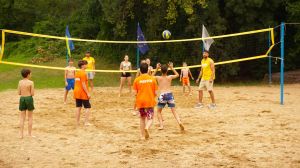
How can camps be so drastically different in appearance, yet be cherished by campers and staff alike?  Why do kids love camp?  Because camp is fun, right?  Sure, we have a lot of great things to do…beach days, windsurfing, basketball, volleyball, football, etc.

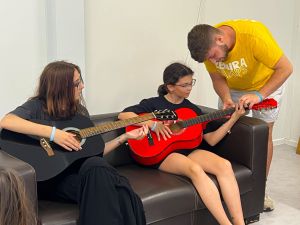
We have specialty clubs like engineering, science, music, British vs American, British slang, drama, debate, and journalism.  Evening activities include the staff vs campers challenge, movie night, board game night, murder mystery, karaoke, project night, award night, and a campfire, to name a few.  We go on amazing off-site excursions each week.

High Ropes

The campers visit Beglik Tash which is a prehistoric rock sanctuary.  They take a boat ride down the Veleka River, visit a camel park and the historic cities of Nessebar and Sozopol.  There is a trip to an Aqua Park and a chance to play mini golf and test their skills on high ropes.   So, the reason kids love summer camp must be because it’s fun???

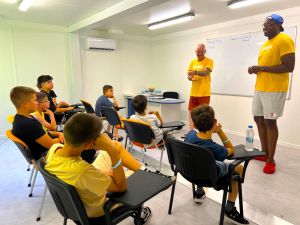
Ahhh, but we also have 25 hours of English classroom lessons and immersion activities per week.  I should also add that screen/phone time is limited to about 30-40 minutes per day.


If it isn’t the fun of the activities that bring kids back every year, what is it?  I am sitting in my room this morning after 08:00.  I am at the end of the boys’ corridor and hear loud singing and laughter coming down the hallway.  It is a group of boys just happy to be here and headed to the morning beach activities.  What is the key ingredient that sparks so much laughter, singing, dancing, and excitement throughout the days and leads to rivers of tears on that last night if it isn’t fun?

Camp is more than just fun.  Through fun, kids unknowingly develop skills they will need later in life.  At Zenira, they spend 2 weeks (sometimes more) in a close-knit community that forces them to cooperate, communicate, and compromise.  Within their day, as they interact with staff, mentors, and fellow campers, they encounter caring, kindness, and understanding.  As the days go by, during “phone time”, you notice campers making that call to mom, dad, grandma, or grandpa, and then they put their phone away instead of using up all their allotted time.  Instead of using screen time as entertainment, they are kept physically active and entertained through creativity and interpersonal engagement. Zenira Camp is a place without the social pressures and expectations to “be” a certain way.

When I say Zenira Camp has heart, you may think it refers to the camp’s emphasis on creating a nurturing, supportive, and enriching environment.  And you would be correct.  We also try to foster a sense of community and prioritize the emotional well-being of campers.  Character-building activities are designed to teach core values like teamwork, respect, responsibility, and kindness.  Campers are encouraged, but not forced, to try new things and take risks in a positive environment without fear of judgment or failure.  Through inclusive activities, Zenira strives to ensure that every child finds something they can enjoy and excel at.  Most of all, we try to create lasting memories through meaningful and fun activities, traditions, and shared experiences. Memories that will last a lifetime and positively shape their future attitudes and behaviors.

All those things shape the heart of Zenira, but to me, when I say Zenira has heart, it is something far more personal. It’s when a camper from a previous year comes up to you and asks if you remember them.  You smile and say, “Of course”.  Then they proceed to tell you their story;  that time the summer before they told you their dream was to go to the USA and live and work.  At the end of that camp, you gave them a one-dollar bill and told them not to give up on their dream.  Then they continue and say they have the dollar taped to their computer and anytime they want to give up on their dream, they look at the dollar and think of you and your words.

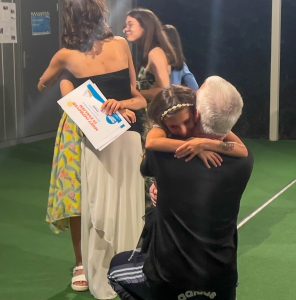
At the end of the last session of camp, on the last night before they head off to bed, one of your students (the one who seemed disinterested, and you didn’t think you got through to) comes up and hugs you and says thank you with wet eyes.  Then you look over and see one of the biggest kids in camp bawling his eyes out and giving a giant bear hug to one of your colleagues, who happens to be 6’ 10”.  The start of this session, a camper came up to me and asked if remembered her.  Again, I answered with, “Of course”.  She then reminded me that we had talked about the book, “Le Petit Prince”.  She told me every time she reads that book she thinks of me and Zenira Camp.  Today at lunch, a young lady sat at my table and reminded me she was in my class 3 years ago.  She said, “I’ll never forget, you gave us mango and that was the first time I ever ate mango.

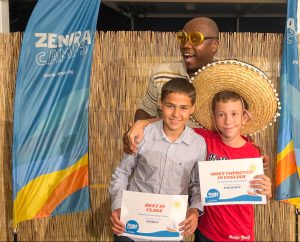
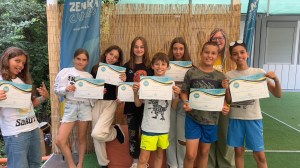
Zenira has heart because you never know what effect you have on these kids just by being you.  Zenira “Camp is where you discover the ‘you’ you never knew existed.” Author unknown


What Long-Term Travel Has Taught Me

What Long-Term Travel Has Taught Me

In a few short months, not only will I celebrate that milestone birthday that makes me eligible for social security, but I will have spent 10 years living outside of my country of birth.  I sat here today staring at maps, calendars, WorkAway options, Visa requirements, and things I will need to consider as I embark on the next chapter.  There are thousands of blogs, articles, and stories about “What Long-Term Travel Has Taught Me”.  I have seen this planet we live on referred to as “The World’s Biggest Classroom”.  For the last ten years, I have mostly had a “home base” and often a job somewhere.  As I was contemplating my next chapter, I started thinking about what I have learned in those years that will help me in what could be a radically different journey.  So, like thousands before me, here are a few, who am I kidding, here are more than a few things long-term travel has taught me.

My “cheese”

About five years ago, I wrote a blog called “No Cheese in China”.  It coincided with my leaving China, and I always say that when I write a book, that will be the title.  As I look back, I remember how much I thought I missed cheese.  There may not be any cheese in China, and I have more cheese than I can eat living in Europe, but I have discovered more than enough wonderful people, places, and experiences in this world to replace it.  I have learned I don’t need cheese.

I have learned to listen to understand, not to respond.  How many times have you been talking with someone, and they say something that makes you want to reply with your own story?  The rest of the time they are talking you go over what you want to say in your head and miss most of what they are saying.  Or, in the worst-case scenario, you interrupt to have your say.  If someone is telling you of their experience unless they ask, don’t tell them how you had the same thing happen to you.  Listen to understand, to learn.  If they want you to reply, they will ask.  Don’t “one-up” their story.   When traveling, communication is important, and more often than not it is with people whose first language is not English.  Sometimes accents are hard to understand, therefore you must listen carefully to understand, or it could lead to big misunderstandings.  You would be surprised how many non-native speakers have pronunciation trouble with “beach” and “bitch” and “six” and “sex”.  Imagine the direction those conversations could go.  Before entering a conversation, I try to silence myself, clear meaningless thoughts and if necessary, calm any emotions.  Listen to understand.

I have learned patience and flexibility.  You will need to trust me on this one.  I can’t think of any specific stories but long queues at airport security, long waits for Visa approvals, no ATMs, canceled flights, language barriers, getting lost in a strange city, navigating public transportation, and local customs and traditions will all at some point try your patience and force you to be flexible.

Long Lines – Train Station China

Food takes on a new meaning when you are outside your home country.  Amy Choi tells us in her article, “What Americans Can Learn from Other Food Cultures” that food is the single great unifier across cultures.  It also tells us that how and why you eat your food is very cultural.  In China, people eat food not necessarily for taste, but for texture. Food in France is about pleasure and food in Italy is love, while food in Arabic cultures is about community. While I have experienced this about these cultures, my food lessons are a bit different.  I have always had a thing for street food.  Tom always told me one day it would bite me in the ass.  Knock on wood, I have avoided, Bali Belly, the Thailand Trots, Costa Cramps, Montezuma’s Revenge, or anything else it may be called.

Street Corn Istanbul

My first food lesson is cheap food (i.e. street food) tastes the best!  My cheap bowls of Lanzhou LaMian in China or my 2€ crepe fromage in Paris, the $1 ear of roasted street corn in Istanbul…simply delicious.

Fresh Picked Guava

Before moving to China I never encountered, let alone heard of durian or dragon fruit.  I discovered many new fruits and vegetables in Asia.  I have learned that you have not really tasted an avocado or a mango or a guava, etc. until you have tasted it picked fresh off the tree.  When I was in Wasso, Tanzania at Bright English Medium School, they spent approximately 280,000 shillings ($120) to feed 300+ students, teachers, and volunteers 3 meals per day.  Can you imagine feeding that number for $120?  The teacher’s and students’ meals consisted of porridge for breakfast and beans and rice for lunch and dinner.  It was the same 7 days per week.  We as volunteers got chapati, fresh fruits, rice, spaghetti, and sometimes stew. It was difficult not to feel guilty, but I learned that food can be used to show appreciation. 

Eggplant Stew

Living abroad teaches you that traveling is a privilege.  I am not inferring wealth with privilege.  You don’t have to be rich to travel.  You do need a certain amount of freedom, especially for long-term travel and you need a passion for it.  I have also learned that you shouldn’t feel guilty about this privilege because I hope that I can use my privilege to inspire and educate others and maybe even change lives.

I have learned to always carry toilet paper or tissues.

I have learned to appreciate the beauty of language.  I don’t mean the ability to say hello or order a coffee in multiple languages.  It is the beauty of hearing someone say “foot fingers” because their language doesn’t have a word for toes or calling an apostrophe a “flying comma” or saying they work “elastic” hours because that is how it translates in English.  The “sweetness of doing nothing” is much more beautiful in Italian, “dolce far niente”.  It’s much sexier to hear, “Anni, amori e bicchieri di vino.  Non si contano mai, than Years, lovers and glasses of wine. These are things that should never be counted.


I have learned that my problems are small when compared to other people and parts of the world.

When I lived in Dong’e, China my co-workers were amazed when they happened to see inside my wardrobe.  I had more clothes and shoes than all of them put together. I am learning to simplify my life.  I’m not quite there yet, but my plan when I leave Poland is to go with a small roller carry-on and a small backpack.

Some of the happiest people I have encountered had no television, no cell phones, no tablets or handheld electronic devices.   They kicked a smashed-up water bottle around the yard when they didn’t have a soccer ball.  They used overturned 5-gallon buckets for drums.  Although I think I already knew this, my experience in Tanzania reinforced that things do not equal happiness.

We all smile in the same language.

The dictionary tells us that ordinary means with no special or distinctive features; normal.  A few synonyms are usual, common, standard, and routine.  It also tells us that extraordinary means very unusual, remarkable, amazing, spectacular, and sensational.  I often hear folks say that I live an amazing life.  I will admit that I do, but living abroad for ten years, every day isn’t a “WOW”.  Some days are even humdrum.

Surprising Lenore in Rome

Friends think it is extraordinary that I jump on a plane and go to Paris on a Friday evening and home on a Sunday evening, or I can surprise a friend in Rome with a 36-hour visit.  That’s the beauty of life in Poland (Central Europe), it’s ordinary.  I have learned that my ordinary can be someone’s extraordinary and vice-versa.

I have learned never to feel guilty about wasting a whole day.

Last week I wrote about becoming a C.O.W. (Citizen of the World) and the concept of home.  You can read my thoughts in the preceding link, but I have learned that “home” takes on a new meaning when you travel long-term, and often, people just don’t get it.

More People Than Seats

I spent 53 hours on a train going to Tibet.  I took an uncomfortable nine-hour journey on a local overcrowded, hot, dusty bus with more people than there were seats, some chickens, giant bags of rice, plus everyone’s luggage. It once took me over 50 hours to get from SE Asia to the United States because of a visa error and missed flights.

My Toilet for Six Months

One of my homes in China only had a squat toilet. Alone, I broke my back and needed a six-hour surgery in rural China.  I have learned that long-term traveling isn’t always easy and it isn’t for everyone.  In my case, I have also learned that in the end, it is worth the hardships I’ve encountered.

I’m going to try and wrap it up here because I could go on and on.  The world is indeed the biggest classroom.

This next one, although I was taught this as a child, travel has reinforced it. I have learned I can do anything I put my mind to.

Travel has taught me to accept and appreciate differences because, in the end, we are more alike than we realize.

I, alone, am responsible for my happiness!

This last one is hard to admit.  It’s a real learning experience seeing your home country from afar and through the eyes of other people and cultures.  Back in 2019, I was living in a communist country and I wrote a blog called “Living Abroad, Why I Sometimes Get Mad at America”. It had nothing to do with the political climate.  I love my country and most of the time, when asked, I am proud to say, “I am American”. The American Dream is still out there in the minds of so many around the world.  I hear it all the time, “My dream is to go to the United States”.

Chicago O’Hare

To be honest, there’s nothing like getting off your plane after several years abroad seeing the American flag, and hearing the immigration officials say, “Welcome home”.  Now for the hard lesson…the more I travel and the longer I am away, I have learned that it’s scary to think about going home.  When I next return, it will probably be around six years since I have last set foot on American soil.  I think about reverse culture shock.  My friend Cathy sent me a Giant Eagle supermarket flier.  It was just WOW when I compared it to the cost of things in Poland and other places I have traveled.  I see the prices my friends are paying when they go out for dinner and drinks.  I haven’t driven a car since February 2020.  I didn’t renew my license, mainly because America, or at least Ohio needs to play catch-up in the technology field.  I currently rely solely on public transportation which won’t be an option when I return. Even though we have video chats and people text and email, I am not a part of daily life in Warren, Ohio.  Sometimes it’s scary to think about sliding back into that life and how long it will be before I get the itch to set off again.

I can’t change Warren, Ohio, USA, or the world with my blog posts, but I can share my thoughts and experiences, good and bad.  I can share a smile with a stranger.  I can live more simply and I can continue to learn because as Rick Steves said, “Travel is rich with learning opportunities, and the ultimate souvenir is a broader perspective”.

The Meaning of Home – How I Became a C.O.W.

The Meaning of Home – How I Became a C.O.W.

Seven years ago, I wrote a blog post that started like this:  Is it possible I have lived in China for two years?  Can I say China feels like home to me now?  Can one’s own country feel like a foreign land?…..yes, yes, and yes!  Where is home?  It is said, “Home is where the Heart is”; “Home is where the bra isn’t”; “Home is where you hang your hat”; “Home is where the Wi-Fi connects automatically”; and “There’s no place like home”.   So where is home for me?  Home, my roots, will always be Warren, Ohio, but living and traveling abroad for roughly 3 years (if you count my stint in Paris), I honestly have to say, I feel like home has been so much more than Warren, Ohio, I have left my heart in so many places.

Seven years later, along with Paris, France, and four cities in China, I have added Bali, Indonesia, and Warsaw, Poland to places I call home.  But, what about Zenira Camp, in Bulgaria?  Or the Maasai Giraffe Eco Lodge and Bright English Medium School in Tanzania?  How about that cute little Airbnb I called home in Istanbul, Türkiye?  And don’t forget about…well, you get the idea.

It’s nearly the end of April 2024 and I am sitting here thinking about packing up remnants of the last four-plus years of my life in my current home, Warsaw.  Since I have made it known that I am leaving Poland at the end of this year, I have heard the question, “Where to next?” many times over.  Where to next?  That’s a big question that doesn’t have a clear answer.  Although I believe I became a C.O.W. a long time ago, I am about to truly live that title.  For those of you who don’t know what it means to be a C.O.W., it’s not the one grazing in the fields of the mid-west USA, even though I did eat like one of those tonight or did I eat one of them…anyway, a vegetarian or vegan is not me.

Socrates (469-399 BC) concurred: “I am not an Athenian or a Greek, but a citizen of the world.” A revolutionary thought for the time.  According to Wikipedia, a Citizen of the World, or C.O.W. is the idea that one’s identity transcends geography or political borders and that responsibilities or rights are derived from membership in a broader class: “humanity”.  To me, more simply, it means that no matter where I am in this one universe of 8 planets, 7 continents, 195 countries with 8 billion people, I feel at home.

Let’s talk about the meaning of that four-letter word… “home”.  I’ve come to the conclusion that home isn’t a place, but a mindset, a feeling.  I often believe that I have lived other lives, how else can I explain my comfort levels even in the far corners of the world?  As a child, spending a week in the Pennsylvania mountains at Seneca Hills Church Camp was a joy even if I didn’t always know anyone else.


Nine years ago I landed in a rural village not knowing the language and very little about the customs.  I was “yellow hair” (that’s what some of the kids called me) and blue eyes in a sea of black hair and black eyes.  But I forgot I looked different…until I took a walk through the village and people pointed and small children hid behind their parents because they never saw a foreigner or I saw a photo of me with my class.  Yet, I never felt uncomfortable.  That was my first home in China and it will always be near and dear to my heart.  I felt like I belonged there which is why 6 months turned into 4 years.

Back to the home of my roots, Warren, Ohio.  I am proud to call Warren, Ohio home.  It was a great place to grow up and it will be a great place to return to one day.  Yes, Bill Duda, I am coming back one of these days.  I think my 10-year-old self would be proud of my 61-year-old self.  My 10-year-old self had dreams of Paris and visions of baobabs, zebras, giraffes, elephants, and epic sunsets behind massive acacia trees.  You know, straight out of Nat Geo.  Nothing felt out of reach and I never thought those places would be uncomfortable…  Comfortable, home is where you feel comfortable.  I am often asked how many countries I have visited.  I’ve stopped counting.  I mean there is the US list of recognized countries, the UN list of member countries with 2 recognized independent nations (Vatican City and Palestine), and then you have the list of dependencies and autonomous regions.  It’s complicated…I have visited Hong Kong, Puerto Rico, and Tibet yet if I go by UN countries, these don’t count. Now I just answer, “A lot or over 40 if a number is necessary” and that seems to be an acceptable answer.

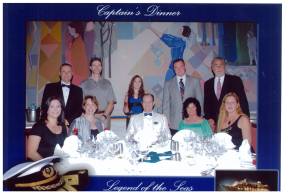
I have traveled on four of the seven continents, lacking South America, Australia, and Antarctica. I have been camelback in the Gobi Desert, slept in a tent with 4 strangers (who became friends) at Mount Everest Base Camp, been moved to tears at Pura Besakih, the Mother Temple in Bali, pedaled a bicycle built for 15 around the streets of Paris drinking wine with complete strangers, touched the Great Pyramid of Giza, stayed with a classmate in Tokyo that I hadn’t seen in over 35 years, slept in the home of a co-worker in rural China that had no indoor plumbing to celebrate Chinese New Year, took bucket showers with water heated over an open fire in Maasai country in remote northern Tanzania, and dined with the captain of a ship floating around the Mediterranean. The list goes on, but the bottom line is that I felt comfortable or “at home” in all of these places.  At those moments in time, there was nowhere else I would rather have been and that’s what home feels like.  As Maya Angelou said, “I long, as does every human being, to be at home wherever I find myself.”

Other than Warren, Ohio, Warsaw, Poland is the place I have called home the longest.  I spent 4 years in China but lived in 4 different cities.  When I finally leave Poland, Warsaw will have been my home for nearly 5 years.  It’s comfortable, but it’s time to move on and become a true citizen of the world.

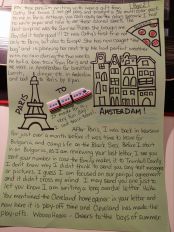
My home will no longer have a physical address, so Lynn the next lines are for you.  I hope to continue our “PenPal” correspondence. Without a physical address, I am hoping you will consider sending letters to my aunt who will hold them for my return.  I will continue to write you from the road which will be my home.

As I have discovered, home isn’t defined by four walls.  When my journey takes me to the road, I will find “home” in the people, places, and activities I encounter. For me, home doesn’t know geography.  I can feel at home anywhere.  It doesn’t know time.  I have felt at home spending one day or 4 years somewhere.  And, it knows no language or religion.  Home comes from inside you.  That’s why goodbyes are difficult and I avoid them at all costs.  A master of absquatulation or the Irish Goodbye.

Home will find me wherever the road leads.  It is most likely going to be one with a lot of solitude but home will rise to meet me.  Early on, I mentioned the cliché phrase, “Home is where the heart is”.  Maybe not so cliché after all considering I have left pieces of my heart in all the places I have traveled.  As the Japanese Poet Masuo Basho said, “The Journey Itself is My Home”.


Day Thirty – My Hopes for My Blog

Day Thirty – My Hopes for My Blog

Well, I made it to day thirty.  It has been a challenge.  It was a lot more difficult than I imagined considering I was given topics to write about.  I love to write.  Somedays the words flow and on others, I sit and stare at a blank screen for an hour lost in my thoughts.  The difficulty of this challenge wasn’t so much writing every day, but having to complete something every day that I would publish on my website. Not counting today’s blog, in the twenty-nine previous days, I have written 31,471 words and had 519 visitors to “Down the Rabbit Hole”.  Going in with zero expectations, I am happy with those statistics.  But, what’s next?

I started “Down the Rabbit Hole” in 2014 when I moved to Paris so my family and friends could follow my day-to-day life and experiences.  When I returned to the USA from Paris, I neglected to maintain my domain and I also didn’t consider writing anything from Warren, Ohio.  Therefore, all was lost.  I didn’t start writing seriously again until I moved to Dong’e in 2017, and “Down the Rabbit Hole – My Adventures in the Middle Kingdom” was reborn.  I later changed it to “…the Middle Kingdom and Beyond” when I left China.

What started as simply a way to share my experiences with family and friends has grown into something more for me.  It is a record of my life.  Through writing about the people I have met, I hope I can show that our differences aren’t so different.  Maybe we speak a different language or practice a different religion, but I have met some of the most interesting, kind, smart, and amazing people that I want to introduce my readers to and share their lives.  When I write about the places I have been, the big cities, the remote villages, and places some people only dream of seeing, I want my readers to see the colors and imagine the sights, sounds, and smells.  When I share my experiences I hope you feel you are right there with me sharing the excitement, the chaos, the peace, the whatever.  I hope you take something away, a feeling or a thought.  I hope you learn something because my experiences have taught me so much.  I hope seeing the world through my eyes inspires someone to follow their dreams.
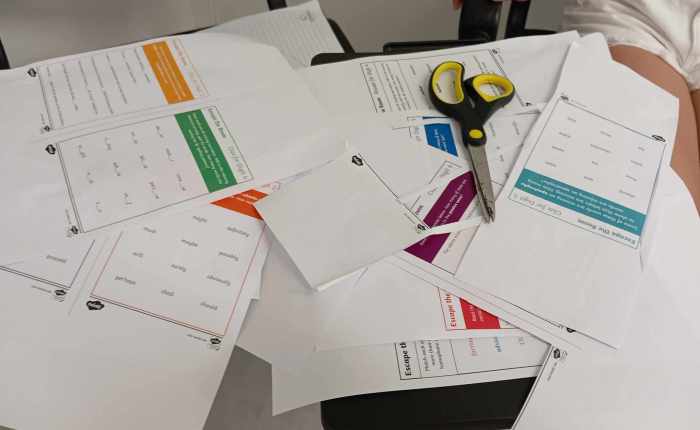
Teri, Nick and Lucy

Throughout my travels, I have been blessed with family and friends who give me so much support.  My dear friend Lucy has made copies of seven years’ worth of my blogs and put them in binders.  She and many others know of my dream to put my blogs, my words, my thoughts, and my life into print.  This thirty-day challenge has opened my eyes to what it means to be a writer.  The dedication and time involved. What I accomplished in the last thirty days, I couldn’t keep up with…yet.  I do believe it will encourage me to write something every day even if it is just a few sentences.  I will continue writing my blog and thanks to Lucy, one day when I get back to the States, I will have the outline for my book.  Yes, my book…the ultimate hope for my blog.

For those who have followed my thirty-day challenge, thank you!  For those who have followed my blog from the get-go, thank you!  I couldn’t do it without you.  You inspire me, you give me ideas to write about, you encourage me.  As Ernest Hemingway said, “My aim is to put on paper what I see and what I feel in the best and simplest way.”

Day Twenty-Nine – Talk About Places You Have Lived – Part Three

Day Twenty-Nine – Talk About Places You Have Lived – Part Three
My Neighborhood

If I get asked one question more than any other since I have lived in Warsaw, it is, “Why Poland?”.  My original plan was to stay in Asia or more specifically SE Asia, but circumstances brought me here, to Warsaw.  I thought I would probably stay in Poland for a year or a year and a half, but thanks to the pandemic I have been in Poland for over four years with plans to leave at the end of this year.  During this time I have discovered more and more reasons as to, “Why Poland?”.

I have probably mentioned that Warsaw is a great city. Poland’s capital is home to about 1.8 million people.  Called the “Phoenix City”, 85% of Warsaw was destroyed by the end of WWII. Most of Old Town Warsaw, including the Royal Castle, was destroyed. It was meticulously rebuilt using as many original bricks as possible and studying original architectural plans, photos, and postcards. The rubble was even sifted through to gather reusable decorative items which were returned to their original places. Warsaw is home to over 50 museums and 71 universities offering 983 study programs. It’s no wonder it attracts a large number of international students. Warsaw ranks in Europe’s top ten greenest and most eco-friendly cities. One of my favorite things about Warsaw is the fabulous public transportation system.

The rest of Poland boasts 17 UNESCO World Heritage Sites with the Historic Center of Krakow being the first recognized in 1978 and in July 2021 the Ancient and Primeval Beech Forests of the Carpathians were added to the list.

The first time I came to Warsaw was October 31, 2014.  I was living in Paris and a friend from the States was in Poland.  We were to meet up in Warsaw, this friend will remain unnamed as the meet-up didn’t take place…what can I say…shit happens.  I arrived in Warsaw and he ended up somewhere in the mountainous region of Poland training for a fight.  I didn’t let this little hiccup spoil my trip.  I have no idea where I stayed, other than it was on the outskirts of the city.  I took a bus from near my hotel and remember getting off and seeing the Palace of Culture and Nature.  It was cold, grey, and gloomy…the city looked as I expected an Eastern European city to look.  Now that I look back on that, and I remember thinking that exact phrase about Eastern Europe, it sounds pretty, I don’t know, prejudiced.  So, I ask you, do you have a preconceived idea of an Eastern European country/city?  If you do, as I did, let me tell you my first impressions of Warsaw were wrong.  Also, Poland considers itself Central Europe, not Eastern.

Concert in the Park

Warsaw is a vibrant, cosmopolitan, ever-expanding city.  Warsaw has so much more to offer than Old Town, the Chopin Museum, the Palace of Culture and Nature, the Uprising Museum, and the Polin.  During the spring and summer, Sunday afternoons offer free Chopin concerts in the beautiful Lazienki Park.  In the Praga district, you will find quirky urban art, trendy cafes and restaurants, and pre-war buildings.

Warsaw is becoming known for its food scene.  The December 2023 issue of National Geographic Traveller (UK) said, “Reshaping its culinary identity with a blend of heritage recipes, classic flavours, and fresh techniques, the Polish capital is ready to shed its reputation for dumplings and vodka.”  The author visited Warsaw’s only Michelin Star Restaurant, NUTA, whose, Chef Andrea Camastra, comes from Bari in Italy originally, but moved to Poland 12 years ago.  When asked about Warsaw’s food scene, Camastra pointed out how Warsaw’s dining scene has changed in the years he’s lived here. “It’s much more cosmopolitan than I remember.  There are some extraordinary restaurants in Warsaw — we have all different kinds of cuisine here.”  Camastra continued his praise, saying that Warsaw is a great place to live and that it has an exciting, creative buzz.  He speaks of sentiments of loss through war and communism. “That’s probably why everybody cares so much about the city,” he says.  I have to agree and I have a few favorites of my own.

Food Town Fabryka Norblina

I can’t believe how many buildings have gone up in the four years I have lived in the city center.  My neighborhood was somewhat quiet in February of 2020.  Now it is a bustling area and one of the most popular places to live and work.  With the award-winning Fabryka Norblina, a short three-minute walk down my street, and the Browary Warszawskie a five-minute walk in the opposite direction, I am never at a loss for places to go.

As you can probably tell, I could go on and on about all the great things about Warsaw and Poland.  Most people don’t have Poland on their travel radar.  If someone tells me they are going to Europe, that most likely means Italy, France, Spain, or the UK, not Poland.  Poland does have it all.  We have historic cities, beautiful mountains, and the Polish seaside on the Baltic.  I have had family and friends visit me in Poland and I think they would all tell you they were pleasantly surprised and it was more than they expected.  So back to my original musing…..Why Poland?  When I moved here in February 2020, I would have said, “I don’t know, it’s Europe…I can run off to Paris for a weekend…I like Europe… I had a job offer.”

Poland is a beautiful and amazing country and I immersed myself in its culture.  Now I can say, “I like it here, I feel at home….why Poland? Why not Poland?”

There you have it, Part Three and the conclusion of Places I Have Lived.  In closing, I had to decide to make a plan to leave Poland.  I love living here, but it was never my intention to stay. It is a very easy place to get comfortable which makes leaving all the more difficult.  I plan to spend the summer on the Black Sea in Bulgaria and then start to eliminate almost everything I have accumulated over the last four years.  Some things I will ship back to the USA and much I will give away.   Hopefully, I will be left with only what I can carry as I embark on extended travel to parts of the world that will be new to me.  Also maybe visiting some of my old stomping grounds.  As Hans Christian Anderson said,  “To move, to breathe, to fly, to float, To gain all while you give, To roam the roads of lands remote, To travel is to live.”

Day Twenty-Eight – Talk About Places You Have Lived – Part Two

Day Twenty-Eight – Talk About Places You Have Lived – Part Two
Moon Over Qingdao

August 3, 2016, phase three of my China life found me back in Shandong Province in a large by American standards, not so large by Chinese standards, city of 9 million on the Yellow Sea called Qingdao.

Champa Flower Kindergarten – By the Sea

Woohooo, I would be at a kindergarten located right at the seaside.  I was very excited to be moving on to life in Qingdao, China.  Teaching kindergarten, the principal was from the States, the kindergarten was right on the sea, the city had many Western restaurants and supermarkets, and life would be good.  I arrived in Qingdao and the school put me up at a hotel until they found accommodations for me. It took six weeks and I ended up living with the principal and his wife for one month which was awesome.  I started at the school the day after I arrived as the other foreign teacher had gone on holiday.  They had brought in a second teacher (me) because enrollment at the school had increased.  Imagine my surprise when I was informed after 2 weeks that the other teacher had decided not to return.

Erwin – My Bestie

Thankfully, Erwin arrived at the beginning of October and we became besties.  The kindergarten was great, I had no more than eight students at a time.  It was also a bit posh as one little girl came in a Bentley with a chauffeur and another little boy’s mom or dad dropped him off in a McLaren. You get the idea.  My flat was near a tattoo studio and 3 of my tats are from my life in Qingdao.  Qingdao had a good-sized airport and I would take off for weekends in Seoul about once a month.  Life in Qingdao was good, but I missed rural China.  I finished out the semester and my agent found me my last home in China.

Dong’e County, Shandong Province a countywide population of about 400,000 and is located on the left or northern bank of the Yellow River.  The city of Dong’e had about 80,000. The county is regionally and nationally renowned for Ejiao, donkey-hide gelatin used in traditional Chinese medicine.

Sunset from my flat in Dong’e

The city of Dong’e is surrounded by many small villages and farmland.  The closest train station is about an hour away in Liaocheng but doesn’t have high-speed or bullet trains.  For high-speed trains and an airport, I had to travel two to two and a half hours to Jinan, the capital of the Province.  I arrived in Dong’e in February 2017.  Again, I stayed in a hotel while Peter (the person who brought me to Dong’e) and I looked for an apartment.  After about a week or ten days, I had a room with a view. I was on the 24th floor overlooking a river, which I later found out was actually a lake.  Economic development in the area had cut off a branch of the river and turned it into a lake.  I don’t think Peter expected to have a teacher come to this small community so quickly.  For the first month to six weeks, I didn’t have a job.  Thankfully, I was still paid.

Eventually, I started teaching 4 days a week in three different kindergartens, one in the city and two in the countryside.  Life in Donge was great. I had a motor scooter, I had my favorite noodle shop, and got massages 3 or 4 times a week.  At $5.00, I was addicted.  Then I had my accident on September 7, 2018.  I ended up in the hospital with a broken back that required surgery.  During and after my recuperation, I only did tutoring at my home.  As I was coming up on two years in Dong’e I was starting to think about moving on.  My initial plan was to move to Vietnam at the beginning of 2020.  However, that didn’t happen.

I decided to leave Dong’e in July 2019 at the end of the semester. While researching my upcoming trip to Paris, I realized I missed Europe and decided along with SE Asia, to look at opportunities in Europe. After putting in my criteria, a company called English Wizards based in Krakow kept popping up.  It looked interesting, a young company with hopes to expand outside of Poland, so I contacted them and committed to relocating to Poland end of January 2020.   But first, a trip to Vietnam for pure pleasure since now I didn’t need to job hunt then on to the place that took my soul, Peliatan, Bali Indonesia.  I would call Bali home for about five months before heading home to Warren for the holidays and the grand re-opening of the Robins Theatre.

Sunset progression at Kenari House


Bali…Island of the Gods…Island of a Thousand Temples…The Last Paradise…whatever name you choose to call it. Bali is a feast for the senses…vivid colors, temple music, fragrant flowers, and incense await you at every turn.  Stepping off a plane in Denpasar, day or night, the first thing you notice is the warm, humid air almost immediately turning to moisture on your skin. Yes, it is the same in all tropical destinations but in Bali, it is just the beginning.  Since I am talking about “feeling” Bali on your skin, I often had a Balinese massage. Balinese massage is a full-body holistic treatment. It uses a combination of gentle stretches, acupressure, reflexology, and aromatherapy to stimulate the flow of blood, oxygen, and “qi” or energy to bring a sense of well-being, calm, and relaxation.

One of the next things you notice is small baskets with various flowers placed everywhere. They are on statues, bridges, steps, and doorways. They are canang sari or daily offerings.  Canang is a small woven basket from palm leaves and sari means essence.  Broken down further can = beauty (like you feel the view) nang = purpose and sari = source.  Typically, a family places about 15 offerings per day, more on special ceremony days. With over 25,000 species of plants in this tropical climate, you may also notice the flora. The vivid colors of bougainvillea and lotus flowers then the sweet scent of my favorite the frangipani are everywhere you turn. Outside of the roar of motorbikes, you will also hear the entrancing sound of gamelan music.

Gamelan Lessons with Koming

The gamelan is the traditional ensemble music of Javanese, Sudanese, and Balinese in Indonesia, made up of mostly percussive instruments. The predominant instrument is the metallophone which is played using a mallet. On Sundays, I would attend gamelan lessons and Balinese dance lessons with the Kirana and Kiara from my homestay. I said earlier, that Bali is a feast for the senses. I have covered sight, smell, hearing, and touch. That leaves taste, the taste of Bali. Ketut, from my homestay family, was a chef before they opened their homestay. That means I learned a lot about Balinese foods and traditional spices during my stay. I love the spiciness of the food in Bali and the sambal that comes as a condiment with most dishes is a blend of chilis and spices.  Oh, and I must mention the avocados (sometimes as big as my head, well, almost). You haven’t tasted avocado until you eat one plucked right off the tree. The same holds to eating the fruits….mango, papaya, dragon, guava….there is nothing like it!  In case you can’t tell, I loved #mybalilife.  I spent my days doing nothing but enjoying the Balinese lifestyle.

I also should mention there are strict immigration rules for Bali and I won’t get into them here.  For me to stay for an extended period, there were many hoops to jump through, documents to fill out, and a couple of trips to Denpesar to the foreigner’s office.  While I was in Bali, I also wanted to find a “purpose” for part of my time on the island.  Yayasan Widya Guna School for Special Needs Children is an Indonesian non-profit organization whose focus is its children’s learning center.  It serves Balinese children who come from unfortunate situations.  They have taken in orphans and provided them with food, shelter, and an education.  They support children with all ranges of physical and/or mental disabilities, including but not limited to; downs, autism, and cerebral palsy. They also offer English lessons to the village children after their regular school day is over, free of charge.  Their mission is to: Educate the underprivileged Balinese children to be independent and bring them a better future with their knowledge, culture, and skills.  I decided I had found my “something”.   I contacted the Yayasan, they welcomed me to volunteer and I spent six amazing weeks with them. I took a quick trip to Singapore one weekend before returning to Kenari House to spend my last five weeks in Bali before I would take off to Warren, Ohio.

Stay tuned for Part Three