
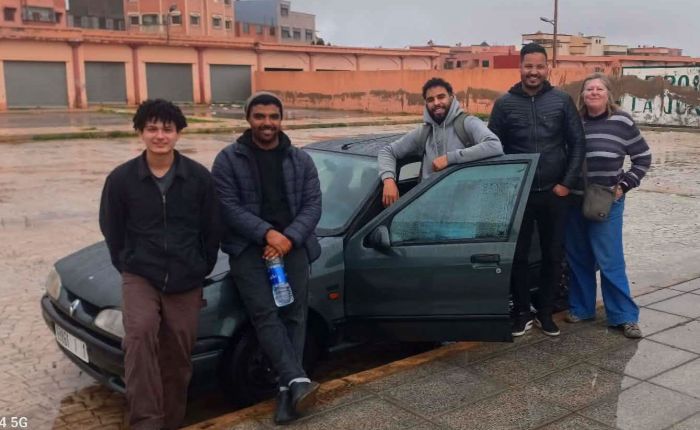
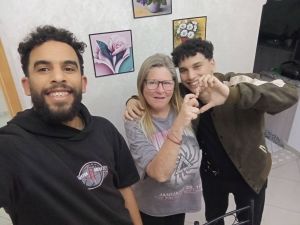
I’m packing tonight. The suitcase is open. The call to prayer drifts through the window. Someone just sent me a message I won’t answer the same way once I’m gone.
Tomorrow, I leave Kelaa.
Like every place I’ve left, it won’t look dramatic from the outside. No airport epiphanies. No cinematic soundtrack. Just dust on my shoes and thoughts in my head. And in that solitary ride to the airport, I’ll hear the voices of café conversations and the laughter that doesn’t stop just because I’m leaving. Life will continue in Kelaa exactly as it did before I arrived. Nothing looks monumental.
And yet, I feel it.
Maybe it’s not the energy that follows me. Maybe it waits in places like Kelaa. In side streets and shared taxis. In cafés where tea glasses and nos nos outnumber words. In young men standing at the edge of their future.
I joke about being an “accidental Wendy.”
But in Kelaa, it didn’t feel like a metaphor.
It felt like responsibility.
Like realizing you’re standing at someone else’s crossroads, and they’re watching…not for you to rescue them, but to see which direction you believe they’re capable of taking.
If the Global Edition is about energy, Kelaa is also about presence. It’s what happens when you don’t simply pass through the Lost Boys…
You sit with them.
And in Kelaa, that presence had a name.
Said.
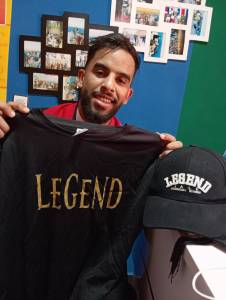
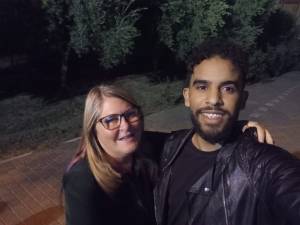
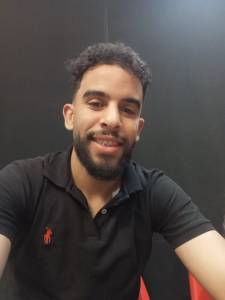
He was the first person I met when I stepped off the bus, tired and uncertain, scanning the station after the ride from Marrakech. Before I knew the cafés with the best nos nos, before I learned the streets or which souk sold the freshest vegetables, I knew his constant presence.
There is something poetic about that…that the first face to greet me in Kelaa will also be the last one I see, as he places my suitcase into the taxi and sends me off on the quiet, solitary ride back to Marrakech, alone with my thoughts and the memories of fourteen months in Morocco riding beside me.
Some people don’t change your life by doing something big. They show up at the beginning and the end, and somehow, what happens in between becomes everything.
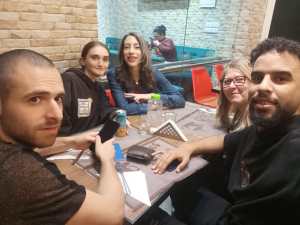
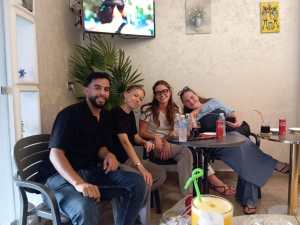
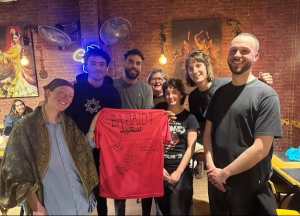
When I first met Said, I thought he was older than his twenty-four years. There was a confidence about him as he stepped in and took charge of my introduction to Kelaa, the English school, the culture, the rhythm of daily life. He coordinated the volunteers, handled the details, and quickly became the person everyone turned to when something was needed.
But to me, he became far more than that.
He didn’t just help me navigate logistics. He became my closest friend in Kelaa. The one I confided in. The one who walked the city with me, showed me its corners, helped me find what I needed before I even knew how to ask. When I injured my back, he was simply there with no hesitation, no question. Somewhere along the way, he stopped being just a friend and became family.
My story in Kelaa wouldn’t be complete without Said.
I mentioned in the China edition that sometimes the “Lost Boys” saved me. In Kelaa, I think the truth is simpler. We were there for each other. In fourteen months, I can count on one hand the days we didn’t see or at least speak to each other.
Then everything changed.
Because of my back injury, I couldn’t travel by plane, and my visa was expiring. I needed to go north to the Spanish enclave of Ceuta located on the African continent. The plan was simple in theory. I would cross from Morocco into Spain on foot, turn around, and walk back into Morocco to reset my ninety days.
But getting there was another story.
The journey was roughly 500 miles, about 850 kilometers, and would take close to ten hours by car. After finding a driver, Said told me he would come with me.
Partly to help me.
And partly because he had made a decision of his own.
He was leaving the English school, ready to step into something new, though I’m not sure either of us could have fully said what that meant yet. The plan was to travel together… and then leave him to go on to Tangier.
Because we were heading into the heat of summer, we decided to travel through the cooler hours of the night. The road stretched ahead of us in darkness, the world was quieter, slower, and yes, cooler. Around 1 a.m., we stopped for BBQ at roadside stand. It was one of those moments that stays with you. After that, the rhythm of the drive took over, and we both slept through much of the remaining journey.
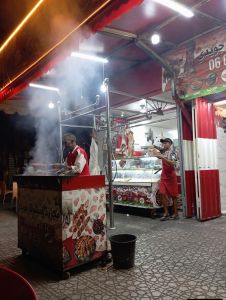
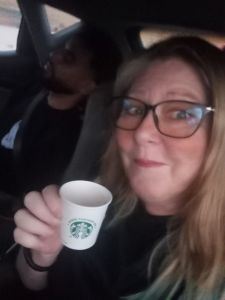
By late morning, we reached the border.
With my back still not fully healed, the walk across and back was slow. Each step reminded me I wasn’t at full strength, but I made it. My passport was stamped, and just like that, I had another ninety days.
Simple in theory. Harder in reality.
Before taking Said to the bus station to continue on to Tangier, we made one last stop at the beach. The guys went for a swim. It was a carefree moment. I stayed back, watching, somewhere between the present and already remembering it.
Then, we grabbed something to eat, stretching out the time just a little longer, and then headed to the station.
At that point, I thought it was goodbye or as I prefer to say, until we meet again.
I was still holding on to the plan that I would recover, make my way to Bulgaria, work the summer camp I had committed to.
But life, as I’ve learned, doesn’t always follow the plan you’ve so carefully laid out.
I wasn’t well enough to go. Not to travel, and certainly not to do the work waiting for me there.
And Said…
Not long after we parted ways, he experienced an unexpected loss in his family. Whatever new chapter he had been preparing to step into was put on hold, and he, too, found his way back to Kelaa.
Because somewhere between leaving and returning, something had changed, not just in us, but in what Kelaa had become to me.
The villa I had been living in was changing hands, and suddenly I needed a new place to land. With help from the English school, I found myself settling into another villa. It was a bit farther out, removed from the neighborhood I had grown used to, and no longer within walking distance of the main part of town or my go-to spot, Café Simple.
That café had become more than just a place to sit. The owner and her husband had become friends, and I found myself there several days a week, sharing time more than just coffee. But getting there wasn’t always simple. Zenib couldn’t always come to pick me up, and I quickly realized I needed something more reliable.
As always, Said stepped in.
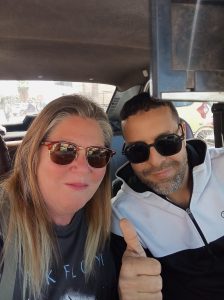
He found a taxi driver we could call. Someone dependable, someone who would come whenever one of us reached out, sometimes even using his personal car. It was a small thing on the surface, but it became part of my days, another link that held everything together.
And through Said, my world in Kelaa continued to expand.
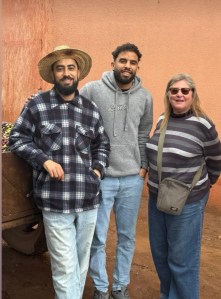
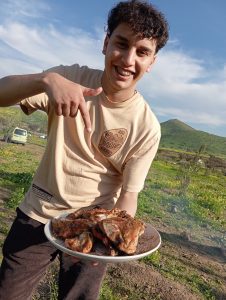
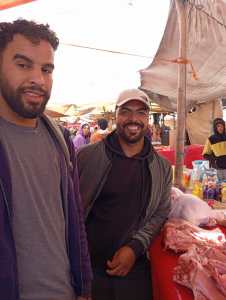
He had slowly been introducing me to others, Nassro, Rida, Ayoub, Mohamed… a few more “Lost Boys,” each carrying their own story. What began as passing conversations turned into something more. Nos nos for me, tea for them. Short drives that turned into road trips. Evenings that stretched longer than expected. Visits to an olive farm, wandering through Marrakech, experiencing the Tbourida, shared moments that didn’t feel significant at the time but somehow became exactly that.
And before I realized it, it wasn’t just Said and me anymore.
Somewhere along the way, without ever naming it, we had become something like a team.
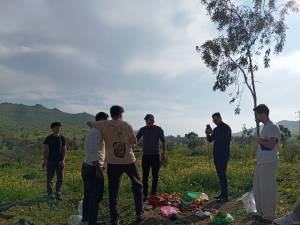
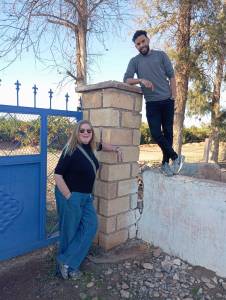
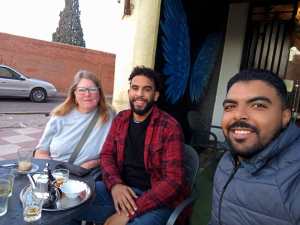
Nassro, Said’s cousin, helped me with my French, switching effortlessly between languages and patiently guiding me through the ones I stumbled over. Rida often returned to the countryside to work on his family’s farm, but when he was in Kelaa, there was a calm presence about him. He was also an imam, and when he recited the Quran, his voice carried a beauty that made everything else fade into the background.
Whenever they came to my home to eat, there was an unspoken routine. I would cook, and they would insist on cleaning, leaving me no choice but to sit, talk, and be part of the conversation. It was never even a discussion. It was just how it was done.
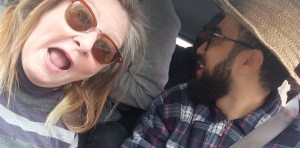
Ayoub, also an imam, split his time between Kelaa and Italy, where he led prayers at a mosque. When he was in town, he brought an energy that usually meant we were going somewhere. He practiced hijama and ran a honey shop, but what I came to know most was that when Ayoub was around, we were getting in a car and heading out, no detailed plan required.
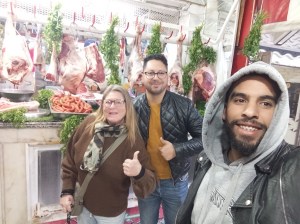
Mohamed was different in his own way. He was the one who leaned into conversation, the kind that goes a layer deeper than expected. He would drive us to Marrakech for the day, and somewhere between the road and the return, we’d find ourselves in discussions that stayed with you long after they ended.
Each of them brought something distinct to the group. Different paths, different responsibilities, different ways of seeing the world, but somehow, it all fit together.
And then there were the ones who passed through.
I can’t wrap up this chapter without mentioning two of the many volunteers, Trace and Eric, both from the U.S., who arrived in Kelaa toward the end of my time there. Not at the same time, but each, in their own way, became part of our circle.
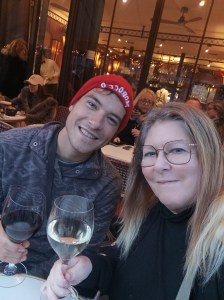
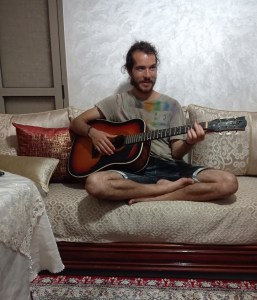
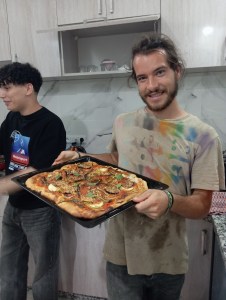
After Trace left, our paths crossed again in Paris. We spent a day together there in early December, and I found myself introducing him to my favorite spots in a city that had once, many years ago, been new to me.
Eric and I connected in a different way. His work with YMCA camps mirrored my own past, thirty-four years at my local YMCA, and there was an immediate understanding in that shared background. Some connections don’t need much explanation.
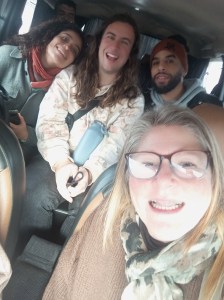
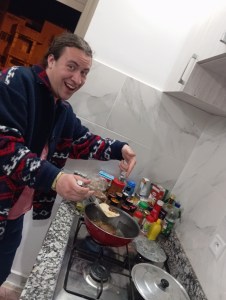
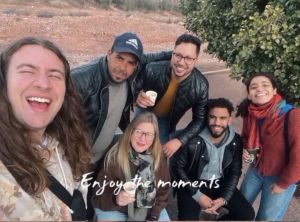
They were only with us for a short time, but like so many moments in Kelaa, their presence lingered longer than expected.
I joke about being an “accidental Wendy.”
At first, it felt like a lighthearted way to describe something I didn’t fully understand. A passing comment, a metaphor that fit just enough to make people smile.
But somewhere along the way, it stopped feeling like a joke.
Because being there in Kelaa, really being there, was never about rescuing anyone or having answers. It was about showing up. Sitting at the table. Listening to dreams that were still taking shape. Believing in possibilities that didn’t always feel within reach.
It was about presence.
And maybe that’s what a Wendy really is.
Not someone who leads the way… but someone who reminds you that there is a way.
When I left Kelaa, I carried all of them with me, the conversations, the laughter, the road trips, the routines that somehow became everything. I knew life would continue there, just as it always had.
But I also knew something had changed.
Not just for me.
For all of us.
Sometime after I had gone, I received a message from Nassro.
“We are lucky to have a great friend like you, thank you the best Wendy for everything.”
The thing is… he had no idea about the story. No reference to Peter Pan. No context for the name I had been carrying.
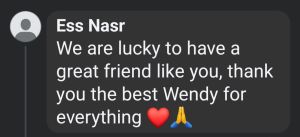
And somehow, that made it mean even more.
Because maybe it was never about the story at all.
Maybe it was just about what happens when people find each other, for a moment in time, at exactly the point they need to.
And in the end, it came back to where it all began.
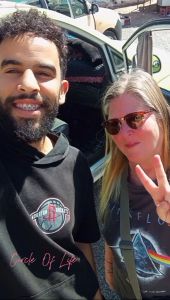
Said.
The same presence who met me at the bus station when I first arrived in Kelaa was there again on the day I left. No big moment. No dramatic goodbye. Just the familiarity we had always shared.
He lifted my suitcase and placed it into the taxi.
We didn’t need to say much.
Some goodbyes don’t ask for words.
I got in, closed the door, and as the car pulled away toward Marrakech, I found myself alone with my thoughts, just like I had imagined the night before while packing. The road stretched ahead, familiar and uncertain all at once, while behind me, life in Kelaa continued on… just as it always would.
Nothing looked monumental.
And yet, I felt it.
 Down the Rabbit Hole