
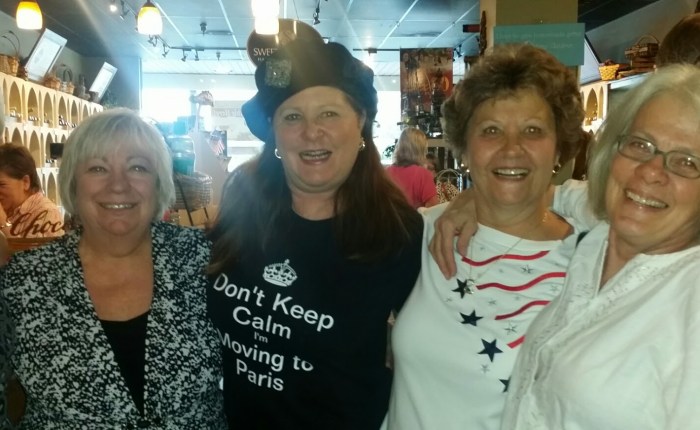
 Eleven years ago I packed a single suitcase, certain I was chasing one adventure. Somewhere between missed trains and ever-changing addresses with a revolving door of flatmates, the adventure became my life. Four continents later, the borders blur. Once unfamiliar spices drift through my memories. Friendships, some with fellow travelers who drifted in and out of my days, others with locals whose roots I briefly shared, have become the landmarks of each place. What follows isn’t a checklist of places but a scattering of moments, fragments of the many worlds that now live inside me.
Living abroad is…
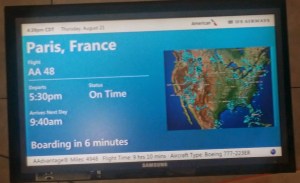
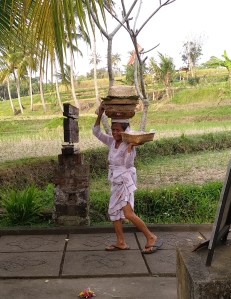
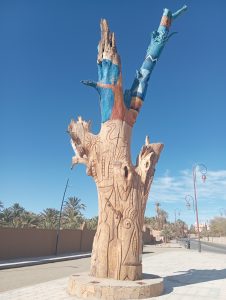
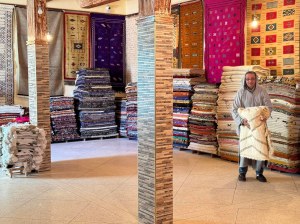
…Realizing you have built a life across multiple worlds. When I left Warren, Ohio with a one-way ticket to Paris, I thought I was starting a chapter. I didn’t realize it would turn into an entire book, each place a different world, each world reshaping me. Paris gave me my first taste of life beyond the familiar; China challenged me to navigate rhythms, a language, and rituals utterly unlike my own; Bali offered a slower cadence and a kind of spiritual hospitality; Poland and Bulgaria grounded me in history and resilience; Tanzania gifted me a warmth and joy that pulsed through everyday life; and Morocco, where I now find myself, wraps me daily in color, dust, and deep tradition. Somewhere along the way, I stopped belonging to just one place. My life became a patchwork, not unlike the quilt I sent home from Bali, stitched from many worlds, each one alive within me.

…Discovering that “home” is no longer a single dot on the map but a constellation of places and people. For a long time, home was one address, one skyline, one set of familiar streets. But after years of crossing borders, I’ve come to see it differently. Home is no longer fixed. It’s a constellation scattered across the globe, each place a bright star in my night sky. Paris sparkles first, like the Eiffel Tower each evening, where I first dared to step into another life. China flares bold and unblinking, filled with lanterns, fireworks, language, and endless lessons in patience. Bali glows softer, a star of stillness and incense drifting on the air. Poland and Bulgaria shine with the steady light of history and community. Tanzania blazes warm with laughter, rhythm, and the kindness of strangers who became family. And Morocco, the newest star, burns vibrant with color, call to prayer, and the scent of mint tea rising with the dawn.



Each one is a second star to the right, leading me not toward Neverland, but toward many lands, each holding a piece of me. Together, they sketch the map of a life I never planned but now can’t imagine any other way.
…Speaking three languages in one sentence and forgetting which one holds the right word. Fluency is a tricky thing when you’ve lived across continents. I’ve learned just enough of each language to charm waiters, confuse taxi drivers, and occasionally get myself into trouble.

My best party trick? The ability to order coffee in at least seven different languages. Sometimes with such confidence that I don’t realize I’ve chosen the wrong one until the barista gives me that confused smile.
In Morocco, I never know what language the kids on the street will toss my way. It could be “salaam,” “hola,” “bonjour,” “hello,” even “ciao.” I answer back with whatever greeting leaps first into my head, never quite sure which language my tongue will choose.


But the real tangle comes after moving between countries. Months in Poland, then a quick trip to Paris, and suddenly the wires cross. I’ve replied to “bonjour” with a cheerful “dzień dobry,” or found myself blurting “dziękuję” instead of “merci” or “au revoir.” Once, without thinking, I even slipped out a “xièxiè” left over from my years in China. These moments always catch me mid-word, leaving me smiling at the puzzled look across from me.
Even small choices carry weight, like how to say the name of a country. Is it Tan-Zan-Ya, the way it sings on the lips of those who live there, or Tan-Za-Nia, as I first learned it back home? In that hesitation, I discover the beauty of a word that belongs to two worlds at once.
This shifting language of mine is far from fluent, far from perfect, but it is alive and I do try. It comes from encounters, from voices that have touched my journey, and from the places that continue to shape the way I speak the world. Along the way I’ve gathered favorite words and phrases, each like a keepsake tucked into my memory: lala salama in Tanzania, a gentle blessing of “go in peace”; chrząszcz in Poland, a tongue-twisting word for “beetle” that still makes me laugh at its impossible cluster of consonants; enchanté in France, where even an introduction feels like a little charm; suksama in Bali, a thank you that carries a sense of grace; and here in Morocco, the phrase I return to most – mashi moskil, “no problem.” Two simple words that hold the warmth and resilience of the culture, reminding me daily that the heart of a place often hides in its everyday language


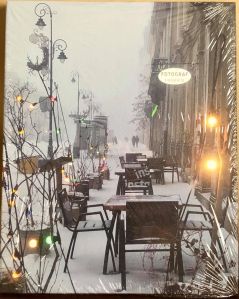
…Carrying spices, tea, traditional clothing and stories in your suitcase instead of souvenirs. I don’t bring home the usual trinkets. Instead, I take with me the pieces of each place that have shaped me. My condo back in Ohio holds photos I’ve had made into canvas, reminders of the lives and landscapes that became part of mine. Prayer flags wait to be strung above the fireplace, whispering blessings into the air. From China, I carried delicate white tea for my sister-in-law, a taste of the life I spent there.

From Türkiye, a small cezve or ibrik, ready to brew thick coffee that tastes of conversations stretching into the night.

Morocco has given me flowing jallabas and caftans, Bali the temple clothes of a kebaya and kamben, Tibet a chupa that feels like a second skin when I slip it on.

And always, from Paris, I carry back beurre sel de mer, salted butter, impossibly French, impossibly simple, to wherever in the world I happen to be living next. These things are more than objects. They are echoes that taste, sound, and feel of the places I’ve lived and visited. And still, they are only the surface. What I truly bring with me are the stories. More stories than I could tell in a lifetime and the comfort of knowing they will never run out.
I write them into postcards, too, stamped, sent across oceans to friends and family. Each one a small reminder that I was here, I thought of you, and this moment now belongs to us both.
… Celebrating Holidays That Shift With Each Country. One of the surest ways I know I’ve built a life across borders is by the way my calendar keeps changing. In China, the year truly began with the thunder of firecrackers and the red glow of lanterns at Spring Festival, where streets pulsed with music and families gathered around banquets that stretched late into the night. In Morocco, the rhythm of the day bends to Ramadan and the slow afternoons, the waiting for sunset, and the joy of Iftar, breaking the fast together over dates and mint tea.
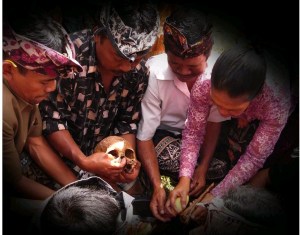
In Poland, Christmas is marked not by Christmas morning but by Wigilia, the Christmas Eve feast. The table is laid with an empty place for an unexpected guest, the first star in the sky marks the beginning, and dishes like pierogi and carp bring centuries of tradition to life. France, by contrast, has given me long, elegant holiday dinners with champagne and oysters. In Bali, the cycle of life and death itself is honored through the Ngaben ceremony, a cremation ritual where families and entire communities gather to accompany the spirit on its journey. It is not a day of mourning but of celebration, color, and music. A reminder that in some places, even endings are infused with joy.
Each country has handed me its own rituals, and with them, its own meaning of celebration. I’ve learned that holidays are less about the date on the calendar and more about the people who opened their doors, the flavors passed across the table, and the stories that anchored us, even far from where we were born.
…collecting friends like postcards. Every country I’ve lived in or passed through has left me with a multitude of friends. Some were fleeting companions I know I will never see again, yet they’ve left indelible marks on my heart. Others remain in touch, and I know that if I landed in their country tomorrow, they would open their homes and their arms without hesitation. There are even friends I’ve never met in person, friends of friends, or voices found through social media, who still bring something meaningful to my journey.


So many I long to see again, though I know deep down that reunion may never come. That is the bittersweet rhythm of this life abroad. To love deeply, then to let go. With time, I have learned, almost mastered, the art of leaving. Not because I wanted to, but because I had no choice. Each farewell has taught me resilience, though the truth is the goodbyes never get easier; in fact, they weigh heavier with every year.


And yet, like postcards, they remain vivid in the albums of my memory: their laughter, their kindness, their presence, each one a snapshot of a moment that will always belong to us. Even as the years carry us in different directions, their colors don’t fade. They are the companions of my journey, the proof that no place was ever lived alone.

…Feeling like a local and a stranger at the same time. To live abroad is to carry two truths in the same breath. I slip into the rhythm of a place until it feels like second nature. Buying fruits and vegetables from the same stand each morning, knowing the café will bring me my nos nos (coffee) without my even needing to order, and walking streets that no longer need a map. In these moments, I feel like a local, moving as if I have always belonged..
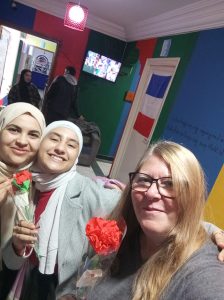
But then something reminds me. I catch a glimpse of a photo or a reflection in a window and realize I am the only light-haired, blue-eyed person in sight. Or I notice I am the only woman without a hijab, the only person whose tattoos peek from beneath her sleeves. In those moments, I am again the stranger. Welcomed, yes, but never fully of the place.
It doesn’t matter whether I am in Paris, China, Bali, Bulgaria, Poland, or Morocco; the feeling follows me everywhere. I stand both inside and outside at once, rooted and unrooted, at home and away. Perhaps that is the beauty of this life: to see the world with both sets of eyes…the ones that belong, and the ones that will always be passing through.
…Measuring distance not in miles but in time zones and late-night calls. When you live across continents, distance stops being about geography. It becomes a matter of clocks. In Morocco, it’s just five hours between me and Ohio, an easy subtraction until I forget about the adjustment during Ramadan. When I was in Poland and a friend calls when I’m winding down with a glass of wine and they’re only just pouring their morning coffee. In China, the distance stretched further still, twelve hours apart, as if we lived on opposite sides of time. The awkward math of time zones becomes second nature, yet mistakes are inevitable: missed calls, sleepy “hellos,” messages arriving in the middle of the night.

But there’s a strange intimacy in it, too. I’ve learned that closeness can travel through glowing screens, voices stretched across oceans, laughter exchanged between dusk and dawn. Sometimes, those conversations feel sharper, more precious, precisely because they require effort and timing. Living abroad teaches you that connection isn’t measured in miles. It’s measured in how far voices are willing to reach.
…Understanding that leaving and returning are just different forms of belonging. My greatest fear has never been boarding a plane to somewhere new. It has always been the return. In eleven years, I’ve only gone back to Warren, Ohio four times, the longest stay just two and a half months. When I finally step back on American soil again, it will probably be more than seven years since I last walked those familiar streets, since February 3, 2020. No one talks about how hard it is to leave one home in order to go home. To leave friends in one place so you can see friends in another.
The question that follows me is: how do you slide back into a life that once was yours, when you’ve been stretched and changed by the journey? The people I return to have lived through their days without me, their routines, their joys and heartbreaks, their ups and downs. I have done the same, but in other languages, other landscapes. My mornings no longer look like theirs, my words carry the rhythm of places most have never been.
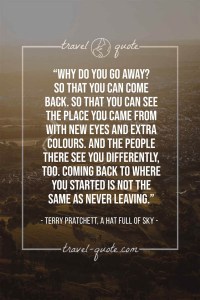
It will be impossible to feel as if I never left. And maybe that’s the point. Terry Pratchett wrote, “Coming back to where you started is not the same as never leaving.” I return not as the girl who left, but as the woman who carries Paris in her nights, Morocco in her mornings, Bali in her prayers, China in her patience, Poland and Bulgaria in her resilience, Tanzania in her warmth.
Leaving and returning are not opposites; they are different forms of belonging. Each departure has stretched me, each arrival has reshaped me, and together they have given me more than one home, more than one self. Perhaps the question isn’t where do I belong? but rather how extraordinary it is to have worked for, and earned, the chance to belong in so many places at once.
When I first set out with one suitcase, I never imagined it would carry me across four continents and more worlds than I can count. And though I don’t yet know where the road will lead me next, I am certain it will continue to change me. My only hope is that in return, I have left some small mark on all the places and all the people that have left their mark on me.




















 Down the Rabbit Hole