

In the first part of my blog, Ramadan in Morocco: A Journey of Reflection and Cultural Awakening, what might have appeared as a mere cultural curiosity, has, in reality, unfolded into a profound lived experience, giving valuable lessons in patience, presence and belonging.
What began as an intent to observe, to learn, and to respectfully witness the sacred rituals of another culture that I knew little about, gradually transformed into something far more personal.
The holy month of Ramadan ended on Sunday, March 30, 2025. After fasting the entire month, I was privileged to spend my final Iftar (breaking of the fast) with co-workers from the English School of Kelaa and the staff and young people of the Center for Children in Difficult Situations here in Kelaa. Together – with the support of colleagues and friends on Facebook – Said and I raised funds to provide a beautiful meal for that evening.

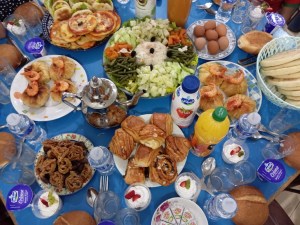

After everything I learned and experienced throughout the month, I can’t imagine a more meaningful way to have spent the final night of Ramadan.
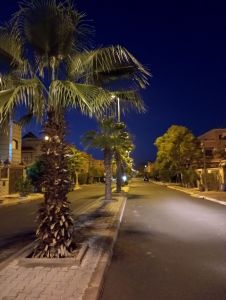
That evening was nothing short of magical. Walking home through the warm night air, the crescent moon – the same moon that marked the start of this journey – hung once again in the sky. As the scent of orange blossoms drifted through the air, I smiled – grateful to have been not just welcomed, but embraced. I had been invited into traditions whose depth and beauty I no longer simply observed, but had begun to understand in a way that felt deeply lived.
Yes, the fasts had ended – but something, hopefully lasting, had settled within me.
I didn’t come to Kelaa on purpose. My original plan had me somewhere else entirely- another city, another path. But life, as it often does, unfolded on its own terms. After spending two days in the desert, led by the patriarch of the Berber family from my first WorkAway, followed by a 4.5 hour bus journey over the High Atlas Mountains, a middle ear infection sidelined me for one week in Marrakech. It rerouted my plans and quite literally forced me to pause. It was that pause, uncomfortable and unwell at first, that opened the door to something quieter and more meaningful.

When I accepted the last-minute WorkAway in Kelaa, I had no idea I was stepping into a chapter that would realign me. I thought I was simply filling a void in my travel itinerary – but what I found was a sense of stillness. Life here moved slower. There was time to notice things: the rhythm of the Adhan (call to prayer), the way the light changed in the afternoon, the sweet scent of orange blossoms, the patience it takes to truly listen – to others, to myself.

I mentioned in part one that in January I found myself two days deep in the Sahara, sitting beside the dying embers of a fire with the moon still hidden beyond the horizon. Out there, the silence wasn’t just quiet. It was deafening. Stripped of noise, distraction, and even the need to speak, I looked up at the Milky Way stretched across the sky like a river of ancient light. In that vast stillness, something inside of me settled.
There was no need to reach or strive. Just breath. Just stars. Just being.
Morocco – and perhaps that night in particular – wasn’t asking me to do anything. It was inviting me to be. To simply exist with what was right in front of me.
Ramadan is traditionally divided into three ten-day sections known as Ashra an Arabic word meaning “ten”. Each Ashra represents a distinct spiritual focus. The first ten days are known as the days of Mercy – Rehmat.
For me, the mercy came slowly.

Those first ten days – especially – the first five – were the most difficult. I struggled to find my rhythm. My body resisted the sudden change in pace and nourishment. Iftar, the evening meal to break the fast, became a daily milestone I deeply looked forward to. After hours without food or water, simply sitting down to sip cool water and taste the first sweet bite of a date felt like a quiet celebration – succulent, grounding, and deeply satisfying.
The exhaustion, in part was my own doing. My sleep schedule was off, and I missed Suhoor the pre-dawn meal meant to sustain you through the long day. Without that nourishment, the fast felt especially long and difficult. Eventually, I found a pattern that worked: a small bowl of yogurt, a few nuts, and some water in the early hours of the morning before falling asleep around 2 or 3 am.
Gradually, something began to shift. My energy returned, and with it came a sense of clarity. I started to understand the “vibe” of Ramadan that so many had mentioned – the quiet sense of purpose, the feeling of unity, the slowing down. It wasn’t just about abstaining from food and drink. It was about intention…following through. About carving out space in the day for reflection, gratitude, and presence.
By the end of the first Ashra, I wasn’t just surviving the fast – I was stepping into its rhythm.
The second ten days of Ramadan, known as the Ashra of Forgiveness – Maghfirah, mark a deepening of spiritual focus. If the first ten days were about finding rhythm and mercy, the next ten called me to open more fully – to others, to grace, to gratitude.
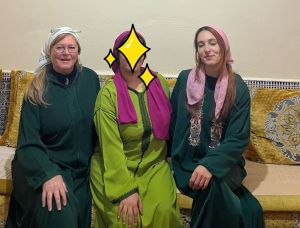
It was during this Ashra that I was invited to my first Iftar at the home of a student. Iftar is more than just a meal – it’s a celebration of faith, gratitude, and community. It’s a moment that transcends borders, languages, and cultures. Each night across the globe, millions of people pause to share food, conversation, and reflections. And it’s not just a practice among Muslims. One of the most beautiful aspects of Iftar is the way it invites others in. Friends, neighbors, colleagues – regardless of faith – are welcomed with open arms.
I was deeply honored to receive such an invitation. My student Hajar, extended her home and her heart, and I couldn’t have been more excited to experience this sacred tradition with her and her family. My colleague Maria and I arrived at Hajar’s home with eager anticipation – and were immediately invited to change into traditional Moroccan garments. Slipping into colorful jellabas and headscarves felt festive and fun, but we had no idea the garments were actually gifts. The gesture of generosity was just the beginning.
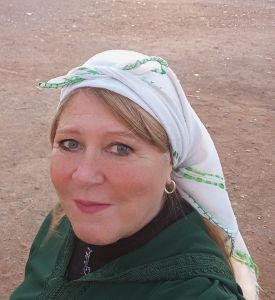


Before the meal, we crossed the street to a nearby field where children kicked a soccer ball back and forth and women gathered around a traditional clay oven, baking msemen – a traditional Moroccan flatbread. One of the women handed us some, still warm from the fire. As the golden light of evening began to soften the sky, we stood there, bread in hand, watching the sun lower itself behind the horizon. A cannon blast signaled the breaking of the fast, and moments later the Adhan, the call to prayer echoed from the nearby mosque.
Back at the house, we began the meal as tradition dictates – with dates and water. Then came the feast: tajine, harira, fresh breads, sweet and savory dishes passed with joy and laughter. It wasn’t just delicious, but filled with intention. The kind of meal that nourishes more than hunger.
After dinner, we stepped outside to sit under the moon and stars. The night air was crisp and despite language barriers, the conversation flowed easily. I remember walking home with Maria afterward, the familiar scent of orange blossoms surrounding us. Once again, I felt that unmistakable magic of Morocco – an enchantment that felt like a scene from the Arabian Nights, blurring the line between myth and reality.

That night marked the first of several Iftar celebrations I would be invited to before the end of Ramadan. Each one a window into the soul of a culture that continues to surprise me with its hospitality, warmth and depth.
In the second Ashra, I began to understand that Ramadan isn’t just about personal reflections – it’s about connection. And in that connection, forgiveness doesn’t just mean seeking pardon – it means opening your heart wider to others.
The final ten days of Ramadan – known as the Ashra of Salvation – Nijaat– came upon me faster than I could have imagined. Time, which had been slow and heavy during the first days of fasting, now moved with a kind of lightness.
I found myself more grounded, more attuned – not just to the rhythm of the fast, but to the subtle energies around me: the unspoken kindness in a neighbor’s smile, the quiet reverence before sundown, and the hum that seemed to vibrate throughout the city as we neared the end of this sacred month.
I’ll never forget the excitement in a stranger’s eyes when they learned I had been fasting the entire month. It wasn’t just surprise – it was joy and pride. In that brief exchange, I felt seen not as an outsider observing a tradition, but as someone who had genuinely participated. That moment reminded me that shared experience can transcend background, belief, and language. It was acknowledgement: You walked with us. You felt what we felt. And that connection – unexpected, sincere, and deeply human – was one of the greatest gifts of Ramadan.
As the final days ticked by, the streets of Kelaa pulsed with festive energy. Markets were alive with color and chatter as families shopped in preparation for Eid al-Fitr, the celebration that marks the end of Ramadan.
In a time when the world often feels divided, Morocco – and Ramadan – showed me a different truth: that human connection transcends borders, languages, and beliefs. Morocco gave me magic. Somewhere between the desert stars, the scent of orange blossom, and the sound of a stranger’s voice saying “Eid Mubarak”, I didn’t just come to Morocco – I became part of it. Because the magic I found – the kind that lingers long after the crescent moon fades – is only revealed when we surrender to the present and let life show us where we are meant to be. I came here by accident, but stayed on purpose.

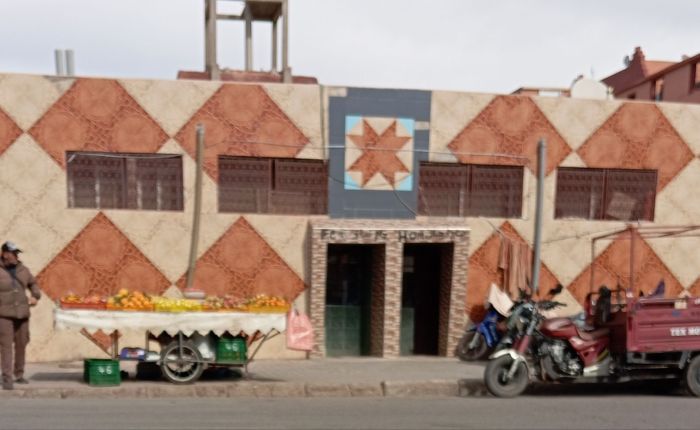
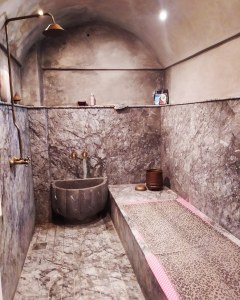 Back in September 2021, I wrote a piece titled
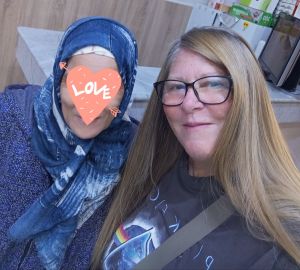 These days, although my hammam is still inside a spa, I have my own kessala. A kessala is the woman who performs the scrubbing ritual in the hammam. Mine is named Fatima. She’s Moroccan and only speaks only Darija (the dialect of Arabic spoken in Morocco), a few words of French – maybe even fewer than I do – and she can’t read which rules out Google translate. Still, we smile in the same language and somehow, we always understand each other.

 Down the Rabbit Hole