
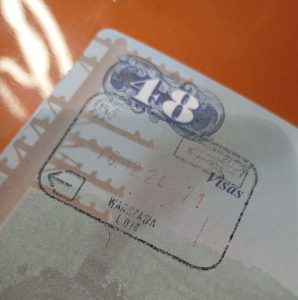
 Sometime last year, as I made the decision to leave Poland, a few WorkAways in Morocco caught my eye. WorkAway is the largest and safest community for cultural exchange, working holidays, volunteering, and house-sitting in 170 countries. I bid my farewells and departed Poland on December 16, 2024. Upon arriving in Marrakech, I took a few days to catch my breath as I prepared for a new chapter in my life. My original plan—though it has since changed—was to stay in Morocco until April 9th, when I would head to Paris to meet a friend.
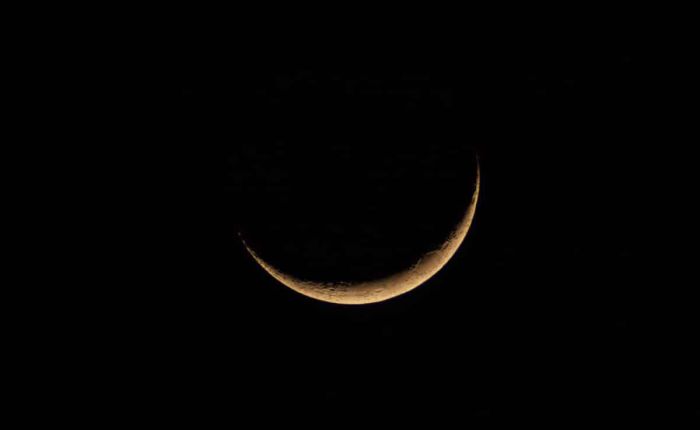
There were a few reasons I chose April for my departure. First, since I was no longer a resident of Poland, I had to adhere to the Schengen Visa rule of 90 days within a 180-day period. Although I had reapplied for temporary residency in Poland, my application was still pending when I left, meaning I couldn’t enter any Schengen countries before March 15th. Secondly, a friend was coming to Marrakech for a yoga retreat in early April, and I wanted to see her while she was here. Lastly, Ramadan, the ninth month of the Islamic calendar, was set to begin on March 1st or 2nd, depending on the moon sighting. I couldn’t think of a better way to immerse myself in the culture than by experiencing this sacred month firsthand.
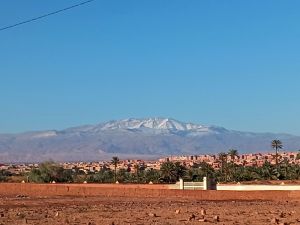
On December 19th, I boarded a bus with all my belongings for a 5-hour scenic ride over the High Atlas Mountains to Ouarzazate, Morocco, the Gateway to the Desert, for my first WorkAway. I was met at the bus station by two young ladies, 2 of the daughters from my WorkAway family. The Berber family with whom I would spend the next 5 weeks, but that’s another story for another time. However, they are part of the inspiration for this post.
When my time in Ouarzazate came to an end, I returned to Marrakech, where I developed an inner ear infection that sidelined me for about a week. That unexpected turn of events ultimately led me to El Kelaa on January 28, 2025, for my current, unplanned WorkAway – though that’s a story for another time.

El Kelaa is a small city in central Morocco with a population of around 100,000, known primarily for its olive tree cultivation. After spending a few weeks here, I realized it would be the perfect place to experience Ramadan.
As this month-long celebration now nears its close, I felt inspired to write this short introductory piece while walking home from the English School a couple of nights ago.
El Kelaa, isn’t a tourist destination, so there’s a good chance I’m the only person with blonde hair in town. As a result, I’m easily recognized as I go about my day. I walk everywhere since taxis are rarely necessary-living near the city center means everything is in walking distance: my school, my souk, my spa, the laundry service, and plenty of cafes and restaurants. Except for about 7-10 days near the start of Ramadan, when it rained every day, the weather has been quite temperate, even for late night walks.

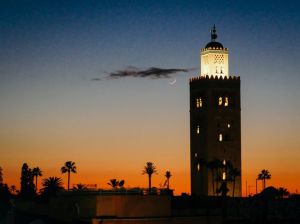
For some reason, on my way to school, around 20:30 (8:30 pm) that evening, it struck me – I was walking down a street in North Africa, in a town that now felt like home. As I walked, the call to prayer echoed from the mosque and as I rounded the corner, I took a moment to really notice the 50+ men praying both inside and outside. I pass this mosque everyday, but that night, I truly reflected on how deeply woven it is into the fabric of their culture. As I continued on, turning the next corner, a group of young boys kicked a soccer ball back and forth. They greeted me, as they always do, with cheerful calls of “Hello”, “Ciao”, “Hola”, “Salaam”, and “Bonjour”. Sometimes, they even kick the ball my way. But that night it made me think about how fortunate they are to grow up multi-lingual – here, it is common for kids to speak two to four languages with ease.
 A few moments later, I arrived at the school, ready to teach a late-night English class. Even though we don’t finish until 22:30 (10:30 pm), my students were eager to learn. Our lessons often lead to meaningful conversations, and more often than not, I find myself learning just as much as they do.
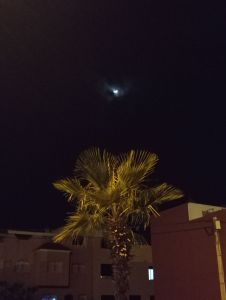
El Kelaa has little light pollution, and as I was walking home from school that night around 23:00, the sky was crystal clear, filled with stars that even the glow of the last-quarter moon couldn’t diminish. The streets were fairly quiet and as I turned onto my street, lined with orange trees, a gentle breeze rustled the branches, carrying the intoxicating scent of orange blossom through the air.
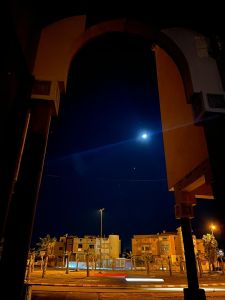 When I arrived home, I went up to my rooftop terrace, the scent of the orange blossoms still lingering in the air as I gazed up at the night sky. I have always been fascinated by the stars, and that night, I was reminded of three other times when I was overwhelmed with emotion looking towards the heavens.
 The most recent was during a two-day journey deep into the Sahara, led by the Patriarch of my Berber family. I was sitting by the dying embers of a fire, the moon had yet to rise, and the words of the Eagles’ Peaceful, Easy Feeling came to mind: “I wanna sleep with you in the desert tonight with a billion stars all around”. Out there, 50 km deep in the desert, with zero light pollution, the Milky Way stretched across the sky so vividly it felt like I could reach out and touch it. And in that moment, it truly looked like a billion stars above me.

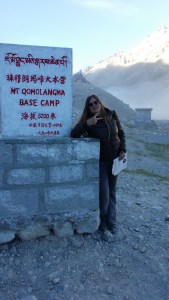
In 2016, I camped at Mount Everest Base Camp on the Tibetan side. Around 04:00, I stepped out of my tent, and despite the biting cold at 5,200 meters (17,060 ft), I stood mesmerized for nearly 20 minutes, unable to tear myself away from the breathtaking beauty before me.
The final memory that came to mind was from the early 2000s, on a mountaintop in Fornalutz, on the island of Mallorca. A little drunk on wine and lost in love, we lay on a blanket for hours, watching shooting stars and passing satellites, feeling as if we were the only two people on Earth witnessing such magic.
So, what does all of this have to do with Ramadan?

Ramadan is a time of deep spiritual reflection, self-discipline, and a strong sense of community.
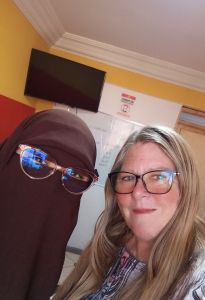
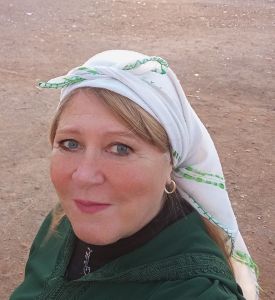 Over the past couple of weeks, friends have made a few comments that stuck with me. One told me I’ve never looked more vibrant. Another said Ramadan seems to have made me more introspective – that I was glowing. A third friend agreed. Maybe their words led me into a deeper reflection that night, or maybe it’s simply the energy of Ramadan itself.
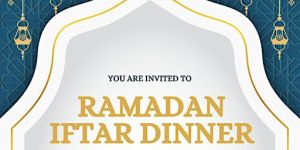
As for self-discipline, I have been fasting for 25 days now, and by the end of Ramadan, it will be 30. And the spirit of community? I feel it every day, especially when I have been invited to share Iftar, the meal to break the fast at sunset, with students and friends in the community.

I’ll share more about my month-long expereince in Part II of this post after Ramadan comes to an end. For now, I’ll leave with a quote I’ve often turned to from Gene Wilder, “My only hope is that even for a moment, I helped you see the world a little bit different.”






 Down the Rabbit Hole